Undoubtedly, yes. How many Mormons do you know? It is not the sedentary lifestyle that many defenders of the practice try to paint. These are some of the top distance talents in the country, how long do you think it takes them to get back aerobic fitness? Not 3-4 years, that’s for sure. And then they reap the benefits of being 25-26 year olds in their athletic prime.
Amen. LRC is the place that allows the least informed and least experienced. Physical development occurs regardless of the (running) training levels during those two years. How many times do injured runners come back better than ever during extended training breaks? Often.
Puberty is a powerful training enhancer, regardless of the actual training. Ever look at pictures of yourself during the growth years? Not just pictures of yourself in your hs running gear, but pictures of headshots? At 14, 16, 18, 20, 22? You look entirely different from year to year. I saw a team photo from my freshman year of college. I looked like a little kid who snuck in the photo.
Only in the LRC fantasy world do they think Mormons lose irrecoverable fitness due to the mission. It doesn't happen. I've said before in this thread, I wished that I took off a year or two before starting college. It would have made a huge difference.
Just to make sure anyone doesn't misinterpret what I've said. I admire what Eyestone and BYU has done. I like the whole clean living thing. There is a lot to be said about it. But when it comes to complaining about over-aged Kenyans, Eyestone should just zip it. He's the last NCAA coach who has a bona fide complaint.
malmo Registered User Look, I know this is going to make some of you clutch your pearls, but someone needs to say it: more high school runners should take a couple years off before jumping into college running.
Before you start hyperventilating, understand what “taking time off” means. It does not mean two years on the couch with a Costco-sized tub of cheese balls. I’m talking about two years of growing up, building a foundation, learning how to train like an adult without a helicopter coach tracking your mileage on spreadsheets.
Every year we get the same story: Kid runs 9:20 for 3200, signs with a mid-major, shows up in August, immediately gets thrown into 80-mile weeks because “that’s what the team does.” By October he’s hurt, by January he’s burnt out, and by March he’s wondering if he should switch to triathlon.
Here’s the dirty little secret no one likes to acknowledge: most 17- and 18-year-olds are not physically or mentally ready for collegiate training. You’re still growing. You’re still figuring out who you are. And college coaches — bless them — don’t have time to babysit 20 freshmen who can’t handle anything harder than tempo pace without blowing a gasket.
Take a year or two and do the following: Learn how to train consistently. Not hero weeks, not Strava-bait workouts, just consistent, sensible training. Get stronger. Your body will thank you later. Learn discipline without pressure. No conference meets. No trying to impress upperclassmen. Just you and the work. Let your aerobic system mature. Yes, that’s a real thing. Biology is undefeated. Arrive at college as a grown-up, not a project.
The NCAA will still be there when you’re 20. Your eligibility clock doesn’t evaporate. And guess what? Coaches love runners who show up durable, developed, and ready to contribute — not kids they have to bubble-wrap.
I’m not saying everyone should do this. The phenoms will be fine. But for 80% of you? A runway is better than a crash.
Is there a team of pure blood native Americans? Otherwise it’s all foreign talent
Unless humanity started in North America or they sprang up out of the ground, 'Native Americans' came from somewhere else. What year does 'Native inhabitants' start for you in any country??
Look what Eyestone got from Mantz. When he was 22, he ran 3:45 1500. When he was 24, he ran 3:37. BYU certainly preferred the 24yo 3:37 guy than the 22 yo 3:45 guy.
Yes, BYU preferred Mantz as senior over Mantz as a sophomore. You’ve made an astounding argument.
To add to the “older vs. two years off” discussion, Conner Mantz has all of his training online.
He was in 17:30 5k shape at the end of his mission, having gained 30 pounds during the trip. He hit an all-time high in weekly mileage two months after returning, ran 4 miles at 4:49 pace in Provo four months after returning, and was back to his peak high school track fitness 5 months after returning.
Obviously this is just one example and not necessarily indicative of every runner who takes a mission
So 2 years and 5 months after graduating high school, Connor was in the same shape he was in… in high school. I ask again, where’s the advantage? This simply shows that from a beginning baseline at his high school fitness level, he then competed for four years.
Well you can say “2 years and 5 months after graduating high school” to make it sound unfavorable, or you could say that he was a 21 year old freshman rapidly coming back to top form. In the spring season he would improve his 5k pb by 32 seconds and qualify for NCAAs.
Most people 2 years and 5 months removed from high school are juniors. Most freshmen are 18 or 19, and many don’t even find their high school form right away. See the UW runners this year or many of Stanford’s recent additions including Leo Young.
Relative to his high school performances and other freshmen transitioning to the NCAA (mission or not), I would say that Conner had a very good freshman year, and he then had the benefit of competing until he was 25.
Maybe he would’ve progressed all the same if he hadn’t taken two years off and been a world beater as a 21 year old senior. It’s hard to make any definitive claims with hypotheticals like this
Amen. LRC is the place that allows the least informed and least experienced. Physical development occurs regardless of the (running) training levels during those two years. How many times do injured runners come back better than ever during extended training breaks? Often.
Puberty is a powerful training enhancer, regardless of the actual training. Ever look at pictures of yourself during the growth years? Not just pictures of yourself in your hs running gear, but pictures of headshots? At 14, 16, 18, 20, 22? You look entirely different from year to year. I saw a team photo from my freshman year of college. I looked like a little kid who snuck in the photo.
Only in the LRC fantasy world do they think Mormons lose irrecoverable fitness due to the mission. It doesn't happen. I've said before in this thread, I wished that I took off a year or two before starting college. It would have made a huge difference.
Just to make sure anyone doesn't misinterpret what I've said. I admire what Eyestone and BYU has done. I like the whole clean living thing. There is a lot to be said about it. But when it comes to complaining about over-aged Kenyans, Eyestone should just zip it. He's the last NCAA coach who has a bona fide complaint.
malmo Registered User Look, I know this is going to make some of you clutch your pearls, but someone needs to say it: more high school runners should take a couple years off before jumping into college running.
Before you start hyperventilating, understand what “taking time off” means. It does not mean two years on the couch with a Costco-sized tub of cheese balls. I’m talking about two years of growing up, building a foundation, learning how to train like an adult without a helicopter coach tracking your mileage on spreadsheets.
Every year we get the same story: Kid runs 9:20 for 3200, signs with a mid-major, shows up in August, immediately gets thrown into 80-mile weeks because “that’s what the team does.” By October he’s hurt, by January he’s burnt out, and by March he’s wondering if he should switch to triathlon.
Here’s the dirty little secret no one likes to acknowledge: most 17- and 18-year-olds are not physically or mentally ready for collegiate training. You’re still growing. You’re still figuring out who you are. And college coaches — bless them — don’t have time to babysit 20 freshmen who can’t handle anything harder than tempo pace without blowing a gasket.
Take a year or two and do the following: Learn how to train consistently. Not hero weeks, not Strava-bait workouts, just consistent, sensible training. Get stronger. Your body will thank you later. Learn discipline without pressure. No conference meets. No trying to impress upperclassmen. Just you and the work. Let your aerobic system mature. Yes, that’s a real thing. Biology is undefeated. Arrive at college as a grown-up, not a project.
The NCAA will still be there when you’re 20. Your eligibility clock doesn’t evaporate. And guess what? Coaches love runners who show up durable, developed, and ready to contribute — not kids they have to bubble-wrap.
I’m not saying everyone should do this. The phenoms will be fine. But for 80% of you? A runway is better than a crash.
Stop rushing. The sport will wait.
— malmo (fictional)
what school is going to add a kid who just sits out for 2 years?
one thing is certain, your suggestion is definitly fictional.
“If you make a stink about it, someone will say you’re racist,” says Eyestone. “But I’d take a Kenyan (recruit) if he was born in the U.S. Actually, we’re currently recruiting one. Some coaches have decided to take a shortcut by taking foreign talent. Many are older and developed. I always felt I’d be embarrassed to have seven foreigners on the team. The NCAA is definitely the way we develop talent in this country.”
I highly recommend everyone reads the whole article, Ed also complains about Solomon Kipchoge, says coaching in this environment ruined the fun of coaching, and much more. Other coaches need to get the courage to take a stand against the international recruiting problem that is objectively bad for the sport.
So 2 years and 5 months after graduating high school, Connor was in the same shape he was in… in high school. I ask again, where’s the advantage? This simply shows that from a beginning baseline at his high school fitness level, he then competed for four years.
Well you can say “2 years and 5 months after graduating high school” to make it sound unfavorable, or you could say that he was a 21 year old freshman rapidly coming back to top form. In the spring season he would improve his 5k pb by 32 seconds and qualify for NCAAs.
Most people 2 years and 5 months removed from high school are juniors. Most freshmen are 18 or 19, and many don’t even find their high school form right away. See the UW runners this year or many of Stanford’s recent additions including Leo Young.
Relative to his high school performances and other freshmen transitioning to the NCAA (mission or not), I would say that Conner had a very good freshman year, and he then had the benefit of competing until he was 25.
Maybe he would’ve progressed all the same if he hadn’t taken two years off and been a world beater as a 21 year old senior. It’s hard to make any definitive claims with hypotheticals like this
That’s my point though. People say things like he was a 21 year old freshman and then compare him to other freshman as if there were in the exact same position only Mantz was older. Everyone seems to dismiss the fact that Mormon missionaries don’t train for two years as irrelevant when it so obviously isn’t.
As been said on here countless times, the solution is simple. Impose a sensible age cap and implement a rigorous testing program for the top runners in each conference. And let football/basketball pay for it lol
I'm leaning toward a 6 years window of eligibility (to use 4 years of competition) for all American student-athletes. This takes away the BYU age advantage.
How about dropping the eligibility window for foreign athletes to 4 years.
Well you can say “2 years and 5 months after graduating high school” to make it sound unfavorable, or you could say that he was a 21 year old freshman rapidly coming back to top form. In the spring season he would improve his 5k pb by 32 seconds and qualify for NCAAs.
Most people 2 years and 5 months removed from high school are juniors. Most freshmen are 18 or 19, and many don’t even find their high school form right away. See the UW runners this year or many of Stanford’s recent additions including Leo Young.
Relative to his high school performances and other freshmen transitioning to the NCAA (mission or not), I would say that Conner had a very good freshman year, and he then had the benefit of competing until he was 25.
Maybe he would’ve progressed all the same if he hadn’t taken two years off and been a world beater as a 21 year old senior. It’s hard to make any definitive claims with hypotheticals like this
That’s my point though. People say things like he was a 21 year old freshman and then compare him to other freshman as if there were in the exact same position only Mantz was older. Everyone seems to dismiss the fact that Mormon missionaries don’t train for two years as irrelevant when it so obviously isn’t.
Convince me that starting as a 21 year old freshman after a few months of getting back into shape is not an advantage.
That’s my point though. People say things like he was a 21 year old freshman and then compare him to other freshman as if there were in the exact same position only Mantz was older. Everyone seems to dismiss the fact that Mormon missionaries don’t train for two years as irrelevant when it so obviously isn’t.
Convince me that starting as a 21 year old freshman after a few months of getting back into shape is not an advantage.
Back into high school shape you mean. The argument is obvious once you accept the facts.
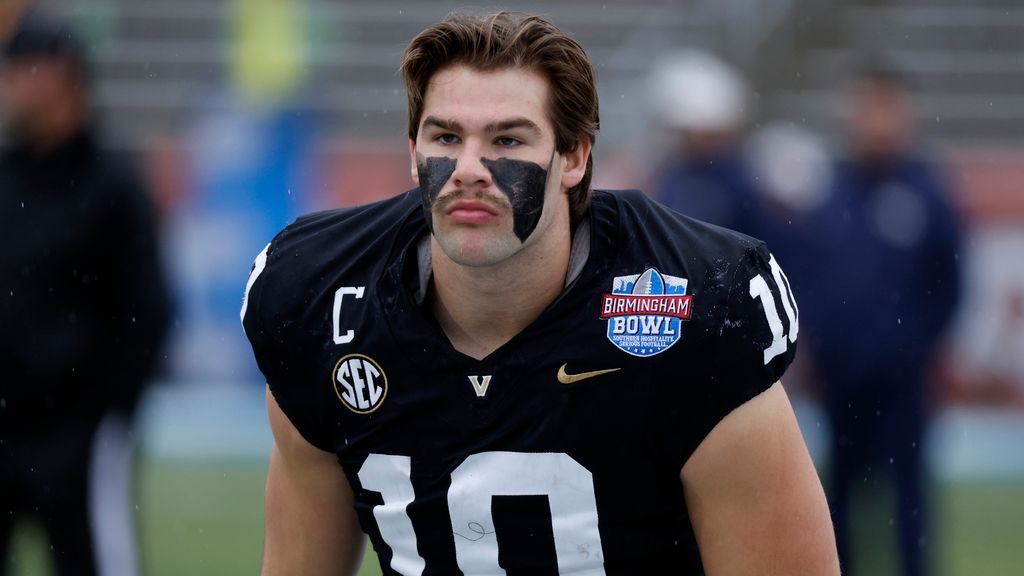
A pair of Vanderbilt football players are among 10 athletes suing the NCAA in an effort to force the association to allow college athletes to compete for five seasons.
Three of the Wisconsin Badgers senior starters are trying to get another year of eligibility from the NCAA. Tight end Lance Mason, kicker Nathanial Vakos and lo
That’s my point though. People say things like he was a 21 year old freshman and then compare him to other freshman as if there were in the exact same position only Mantz was older. Everyone seems to dismiss the fact that Mormon missionaries don’t train for two years as irrelevant when it so obviously isn’t.
Convince me that starting as a 21 year old freshman after a few months of getting back into shape is not an advantage.
You have to look at the whole group of BYU and other Utah State schools’ return missionaries over the last couple of decades to get a good picture of this.
All of them.
As a casual observer from Utah, it just doesn’t appear to bear out very often that there is an actual advantage. You can cherry pick and find a few here and there that look better than you would have expected coming out of high school, but it’s a very small percentage that is frankly closer to the percentage of non Mormon runners who outperform high school expectations. Look at the over 22 runners on BYU’s team right now - nothing unexpected or better due to age.