Do you agree or disagree?
Canadian running wrote:
Because the Stade de France also hosted rugby competitions during the Games, the athletics track was apparently built with a slightly altered radius–one metre longer on the bends and three metres shorter on the straights in comparison to a standard athletics track.
Amandine Aftalion, a mathematician at Université Paris-Saclay who studies the physics and statistics of human kinetics, says this subtle design change may have given the eventual Olympic champion, Cole Hocker of the U.S, an advantage.
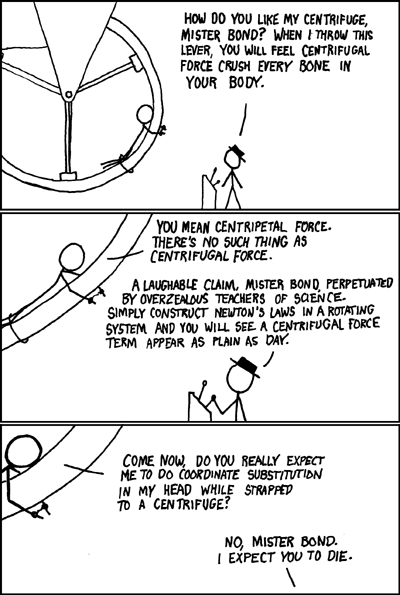
According to Aftalion, the longer bend increases the centrifugal force, which is the outward force a person, object or thing experiences while turning. Centrifugal force makes it tougher to maintain speed in the curve. In the final 200 metres of the Olympic final, Kerr used Lane 2 to move ahead of Norway’s Jakob Ingebrigtsen, while Hocker hugged the inside of Lane 1 and waited for a hole to open up.
“The longer bend meant more time under force,” Aftalion said. “Kerr’s move into Lane 2 [the longer route] may have cost him momentum, while Hocker conserved speed and energy by staying tight on the inside.”
She adds that on a standard track, with shorter turns, Kerr might have been able hold off Hocker. But that extra metre could have been the margin that put the gold into Hocker’s tactical hands. The two athletes were separated by just over a tenth of a second, with Hocker winning gold in an Olympic record of 3:27.65, and Kerr taking silver in 3:27.77.