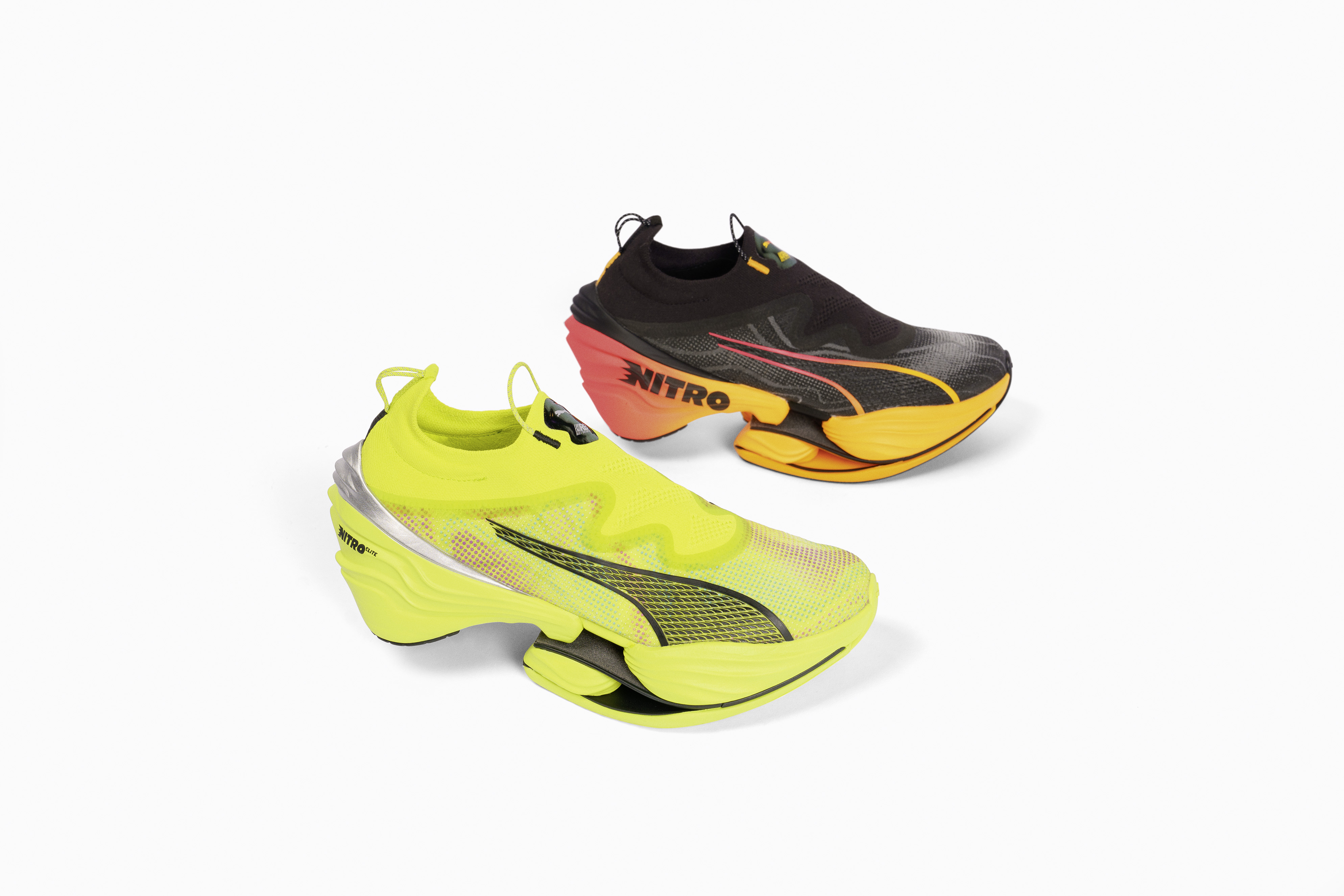
Double down on race day with the FAST-R NITRO™ Elite. A cutting-edge, two-part midsole features best-in-class NITROFOAM™ Elite for supreme responsiveness and innovative PWRPLATE technology to ensure maximum running efficiency...
Yes, I know there was another thread on this yesterday but I'm starting my own as that one was so negative. When I saw the press release, I was impressed by it. I thought, "Yes the shoes are illegal to race in but might there be an advantage to training as fast as possible?"
I was just thinking about this a few days ago, are we going to reach a point where shoe technology becomes so good that you can run crazy mileage in training with little to no fatigue and injury risk, but that those shoes are banned in competition so that there will be major injury risk when pushing yourself in races?
I don't think they're even supposed to be fast. Saw a vid somewhere where a puma designer said they're really more of a 'concept' shoe, something to show all the different kids of tech puma has and just throw it all together like a statement art piece. Anyone intending to try to race in these is likely gonna be disappointed.
I was just thinking about this a few days ago, are we going to reach a point where shoe technology becomes so good that you can run crazy mileage in training with little to no fatigue and injury risk, but that those shoes are banned in competition so that there will be major injury risk when pushing yourself in races?
The risk won't be any greater than racing in flats or spikes. Most elite athletes already do most of their easy/base training in higher-stack cushioned shoes, and only throw on the lightweight flats/spikes for track workouts and races.
It will come down to the weight on shoes like this. At some point, yes you have five plates and 80mm of foam but how much does it weigh?
The best super-shoe, in my opinion, was the VaporFly 2 Next% because it was better than the VF4% but lighter than all the super-shoes that came after it.
When I saw the press release, I was impressed by it. I thought, "Yes the shoes are illegal to race in but might there be an advantage to training as fast as possible?"
Illegal for who to race in? Pros in a World Athletics or USATF sanctioned event, sure. But do you know how many rich dentists would have no qualms about dropping $350 to be a few seconds faster in their local turkey trot? Compared to how much these wannabes spend on their triathlon bikes, that's pennies.
Yes, I know there was another thread on this yesterday but I'm starting my own as that one was so negative. When I saw the press release, I was impressed by it. I thought, "Yes the shoes are illegal to race in but might there be an advantage to training as fast as possible?"
The secret is in the statement from PUMA themselves and the fact they are only selling 1000 of them.
Smart brands do this stuff - it's a really smart marketing technique. Success in the sporting goods industry and innovation are synonymous - why? Because people associate innovation with improved product and improved product with an improved athletic experience (performance, feeling, whatever you want from sport).
The real secret - the performance of the innovation doesn't even matter when compared with the perception of it. The perception is of these shoes is that the simply must make you run faster. They are "banned in competition", PUMA is making a "limited amount only" - this stuff drives perception through the roof.
Like in reality what do we have here - a shoe that is so high off the ground it is surely at the cusp of being inherently dangerous to run in given must people run around curves, corners and on uneven terrain (even roads). A shoe that has so many layers of stuff that force transfer to the ground (what makes you run fast) is likely very inefficient (so many layers of "stuff" that have to compress and rebound and it all loses energy along the way) and there is no way a shoe with that much midsole can possibly be that light - it's 335g (!!!!) so compared with a shoe 100g lighter it's already 1% less efficient when it comes to running economy.
But again - it doesn't matter, it's a perfect statement of intent that the average person sees and now associates PUMA with innovation - even if it isn't solving a single real-world problem - which at it's essence is what innovation is supposed to be right?
I love it though. I would never wear them - I like staying healthy and these would probably slow me down, but it's not the point of them to begin with. This is a perception/mind-space play and it's done really well.
It will come down to the weight on shoes like this. At some point, yes you have five plates and 80mm of foam but how much does it weigh?
The best super-shoe, in my opinion, was the VaporFly 2 Next% because it was better than the VF4% but lighter than all the super-shoes that came after it.
One other claim I see there is 7.5% more "raw energy returned" - here is the issue with that claim (and it's the same issue any brand has with energy return claims when it comes to midsole foams/packages). That energy return is directly correlated to the energy input right?
Scenario A) 100N of force input with 90% return you get 90N back. Scenario B) 150N of force with 65% return you get 97.5N back. In this case you want scenario B right - less energy return but more effective force because you were able to input more to begin with.
This is how the shoe to ground interaction works because shoe midsoles are in essence "input force inhibitors". Every shoe with cushioning foam inhibits your input force - that's a key function of cushioning to begin with. You might be capable of 3500N of pure force into the ground (this is an actually realistic number for an average human) but by the time it goes though your midsole that actual number that goes into the earths surface is much less as it's been subject to the compression of the foam, loss through the transition across layers of materials, unconfined aid voids etc etc.
Finding the perfect balance based on your mass, how much extra force your muscles can generate and your ground impulse (your force x the time spent imparting it) is the actual key to optimum performance footwear - not just stack height and raw energy return.
All the reviews I've seen on it so far said it's a fun shoe to run in but they would never race in it. Apparently it's substantially heavier than every other super shoe
One other claim I see there is 7.5% more "raw energy returned" - here is the issue with that claim (and it's the same issue any brand has with energy return claims when it comes to midsole foams/packages). That energy return is directly correlated to the energy input right?
Scenario A) 100N of force input with 90% return you get 90N back. Scenario B) 150N of force with 65% return you get 97.5N back. In this case you want scenario B right - less energy return but more effective force because you were able to input more to begin with.
This is how the shoe to ground interaction works because shoe midsoles are in essence "input force inhibitors". Every shoe with cushioning foam inhibits your input force - that's a key function of cushioning to begin with. You might be capable of 3500N of pure force into the ground (this is an actually realistic number for an average human) but by the time it goes though your midsole that actual number that goes into the earths surface is much less as it's been subject to the compression of the foam, loss through the transition across layers of materials, unconfined aid voids etc etc.
Finding the perfect balance based on your mass, how much extra force your muscles can generate and your ground impulse (your force x the time spent imparting it) is the actual key to optimum performance footwear - not just stack height and raw energy return.
Compliance of the midsole, given two different midsoles of the same resilience, is the difference maker.
Help us build the best running shoe review site for a chance to win a LetsRun t-shirt.Help us build the best running shoe review site for a chance to win one of 10 LetsRun t-shirts.