Life's not fair: Men need twice as much exercise as women to lower heart disease risk, study finds
-
519
-
This is great news Rojo. This is an incentive for you to maybe get in sub 4 shape for 26.2 or maybe sub 45 for 10K.
440 -
Easily rectified if you start identifying as a female rojo
343 -
rojo wrote:
How sexist of nature. ~10% more athleticism for 3x less gains.
43 -
Author William Goldman had a very good take on the argument that "life's not fair." In his novel "The Princess Bride," he concludes with the quip:
William Goldman wrote:
Life's not fair. It's just fairer than death.Here's the study linked in the article:
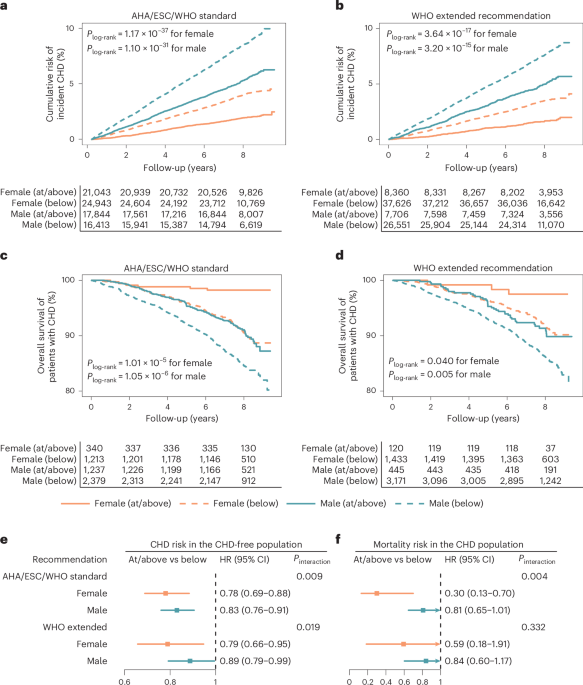
It's title is "Sex differences in the association of wearable accelerometer-derived physical activity with coronary heart disease incidence and mortality," which is a mouthful, and points to something we should take note of about the author's conclusions: as the study focused on people who use "wearable accelerometers" (most likely Apple watches), can we reliably extrapolate the conclusions to the general population? Apple watches (or other wearable accelorometers) are mass market devices, but you have to have a certain degree of wealth to own one.
I could be wrong about this, as nowhere in the study does it indicate whether the participants owned or were given the devices used to monitor exercise levels, but the study itself does acknowledge some demographic shortcomiings:
The authors of this study wrote:
Several limitations should be considered when interpreting our findings. First, the generalizability of our findings might be limited by ancestry and geographics. The participants in UK Biobank were mostly white, had healthier lifestyles and lived in areas with less socioeconomic deprivation.Here are more criticisms:
* The study isn't trying isn't trying to prove that men need to exercise twice as much as women to get the same benefit. It's looking for sex-specific data so that "one size fits all" exercise recommendations can be revised with the goal of motivating women to exercise more. The study makes if clear that, while men apparently need more exercise to meet the same reduction (30%) in CHD risk factor, women in the study exercised less than men in the study. The Guardian's reporting takes one of the conclusions from the study and ignores its purpose.
* The study is only looking at one factor for CHD reduction: exercise. It apparently does control for other factors, but I'm skeptical...
...because Malcolm Gladwell's "The Outliers" begins with the following tale:
In Italy, there is a village where heart disease is virtually unheard of. Epidemiologists look at the data and draw a number of common sense conclusions that are completely wrong. They must exercise more than average! No, exercise is almost as unheard of. Well, their diets must be better than average! They eat pastries that are loaded with trans fats daily. Well, then, they don't smoke! It's Europe. They smoke like chimneys.
Gladwell then suggests something amazing. The people in this village have a very strong sense of socal connection. They socialize frequently, have strong families, and do not spend long periods of time feeling alone or isolated. The point of this anecdote isn't that social connection is the silver bullet. It's that scientists can be wrong about things. Perhaps they are here.
If we ignore Gladwell's point, there is a compelling argument to be made on why men might have a greater risk for heart disease despite higher exercise levels: the common sense notion that men do not socialize. If you need science to back this up, there have been studies to confirm the adverse effect of social isolation. One of them concluded that failure to socialize is about as healthy as having a three pack a day smoking habit.
121 -
what about so called trans "women" LOL
611 -
rojo wrote:
When we finished the first Pathology course in med school, where you sort of get a birds eye view of everything that can go wrong with you from Cancer to connective tissue diseases to stroke and heart attack, we all agreed that as a man we have it slightly better. We get screwed on the CV risk but the ratio for prevalence of a lot of things you don't want is greater in women.
101 -
rojo wrote:
That's because men hate household chores.
50 -
JustMe22 wrote:
Author William Goldman had a very good take on the argument that "life's not fair." In his novel "The Princess Bride," he concludes with the quip:
William Goldman wrote:
Life's not fair. It's just fairer than death.Here's the study linked in the article:
It's title is "Sex differences in the association of wearable accelerometer-derived physical activity with coronary heart disease incidence and mortality," which is a mouthful, and points to something we should take note of about the author's conclusions: as the study focused on people who use "wearable accelerometers" (most likely Apple watches), can we reliably extrapolate the conclusions to the general population? Apple watches (or other wearable accelorometers) are mass market devices, but you have to have a certain degree of wealth to own one.
I could be wrong about this, as nowhere in the study does it indicate whether the participants owned or were given the devices used to monitor exercise levels, but the study itself does acknowledge some demographic shortcomiings:
The authors of this study wrote:
Several limitations should be considered when interpreting our findings. First, the generalizability of our findings might be limited by ancestry and geographics. The participants in UK Biobank were mostly white, had healthier lifestyles and lived in areas with less socioeconomic deprivation.Here are more criticisms:
* The study isn't trying isn't trying to prove that men need to exercise twice as much as women to get the same benefit. It's looking for sex-specific data so that "one size fits all" exercise recommendations can be revised with the goal of motivating women to exercise more. The study makes if clear that, while men apparently need more exercise to meet the same reduction (30%) in CHD risk factor, women in the study exercised less than men in the study. The Guardian's reporting takes one of the conclusions from the study and ignores its purpose.
* The study is only looking at one factor for CHD reduction: exercise. It apparently does control for other factors, but I'm skeptical...
...because Malcolm Gladwell's "The Outliers" begins with the following tale:
In Italy, there is a village where heart disease is virtually unheard of. Epidemiologists look at the data and draw a number of common sense conclusions that are completely wrong. They must exercise more than average! No, exercise is almost as unheard of. Well, their diets must be better than average! They eat pastries that are loaded with trans fats daily. Well, then, they don't smoke! It's Europe. They smoke like chimneys.
Gladwell then suggests something amazing. The people in this village have a very strong sense of socal connection. They socialize frequently, have strong families, and do not spend long periods of time feeling alone or isolated. The point of this anecdote isn't that social connection is the silver bullet. It's that scientists can be wrong about things. Perhaps they are here.
If we ignore Gladwell's point, there is a compelling argument to be made on why men might have a greater risk for heart disease despite higher exercise levels: the common sense notion that men do not socialize. If you need science to back this up, there have been studies to confirm the adverse effect of social isolation. One of them concluded that failure to socialize is about as healthy as having a three pack a day smoking habit.
Malcom Gladwell also couldn't understand why Jeffrey Toobin got fired from his job at the New Yorker after he was caught literally with his pants down and playing with his ding-a-ling during a work meeting. Take any of his conclusions with a grain of salt.
66 -
If it's only measuring people who wear wearables, that would mean pretty active, fitness obsessed people mostly? Which would include roided up gym junkies? And if PED usage is higher amongst men than women, then that would skew the results on cardiovasuclar health? Maybe just not a good study?
30 -
I have a theory.
Hugs are proven to improve heart health.
Women hug each other.
Men don't like to hug men.
And women don't want to hug us, unless we are chads.
Hence, male heart health suffers from lack of female hugd.
It is part of the war on men!
60 -
My wife, at least most days, wants me to live a long a healthy life. I'll be informing her of this requirement for my health next time she bitches about me going for yet another run.
30 -
Probably why those perverts are claiming to be women. It's all about heart disease.
Coach FLINT
23 -
really - that's your take..."life's not fair" says the boy born with two legs, two eyes and a brain.
stop being an SMO.
10 -
Yeah but men can direct their pee stream, while women have to squat and spray their pee like squirrels, so there's that.
31 -
rojo wrote:
Look dude, I'll gladly take that over bleeding from my crotch once a month.
70 -
Dang. Poor men have so few physical and social advantages.
20