I am regurgitating a comment which I left in another thread, because I think it would be an interesting topic for discussion.
Can someone actually enlighten me. Is there any evidence that so-called "silent bans" actually exist in T&F? I am not talking about not disclosing provisional suspensions which are under appeal. Reasonable people can disagree on this but I think, on balance, it is kosher since athletes, like anyone else, should be entitled to the presumption of innocence. Can anyone point to a specific case where an athlete has been banned, unsuccessfully exhausted their right to an appeal, and had the ban kept secret? I keep on seeing people referring to these "silent bans" and it seems like conventional wisdom on these message boards that they exist, but do we have any actual concrete evidence of this?
The AIU has a (nonbinding, see Shelburrito) policy to publish provisional suspensions.
The WADA insists on publishing all suspensions (even before a CAS appeal).
Various NADOs have been violating that rule though, known in case of the Americans, Germans and Kenyans, so yes, so-called "silent bans" actually exist in T&F.
I have yet to see a silent AIU ban - but of course it is hard to hear about silent bans.
I am regurgitating a comment which I left in another thread, because I think it would be an interesting topic for discussion.
Can someone actually enlighten me. Is there any evidence that so-called "silent bans" actually exist in T&F? I am not talking about not disclosing provisional suspensions which are under appeal. Reasonable people can disagree on this but I think, on balance, it is kosher since athletes, like anyone else, should be entitled to the presumption of innocence. Can anyone point to a specific case where an athlete has been banned, unsuccessfully exhausted their right to an appeal, and had the ban kept secret? I keep on seeing people referring to these "silent bans" and it seems like conventional wisdom on these message boards that they exist, but do we have any actual concrete evidence of this?
This forum is both great and not-so-great, as there are so many topics per day that sometimes you can miss a discussion that would interest you, as it gets shoved off the front page into oblivion.
In your case, I shared the following link when it came out in May.
For years, the impression has been that there are hardly any cases of doping in Germany. It is now clearer than ever that this has nothing to do with reality. A commentary by Hajo Seppelt.
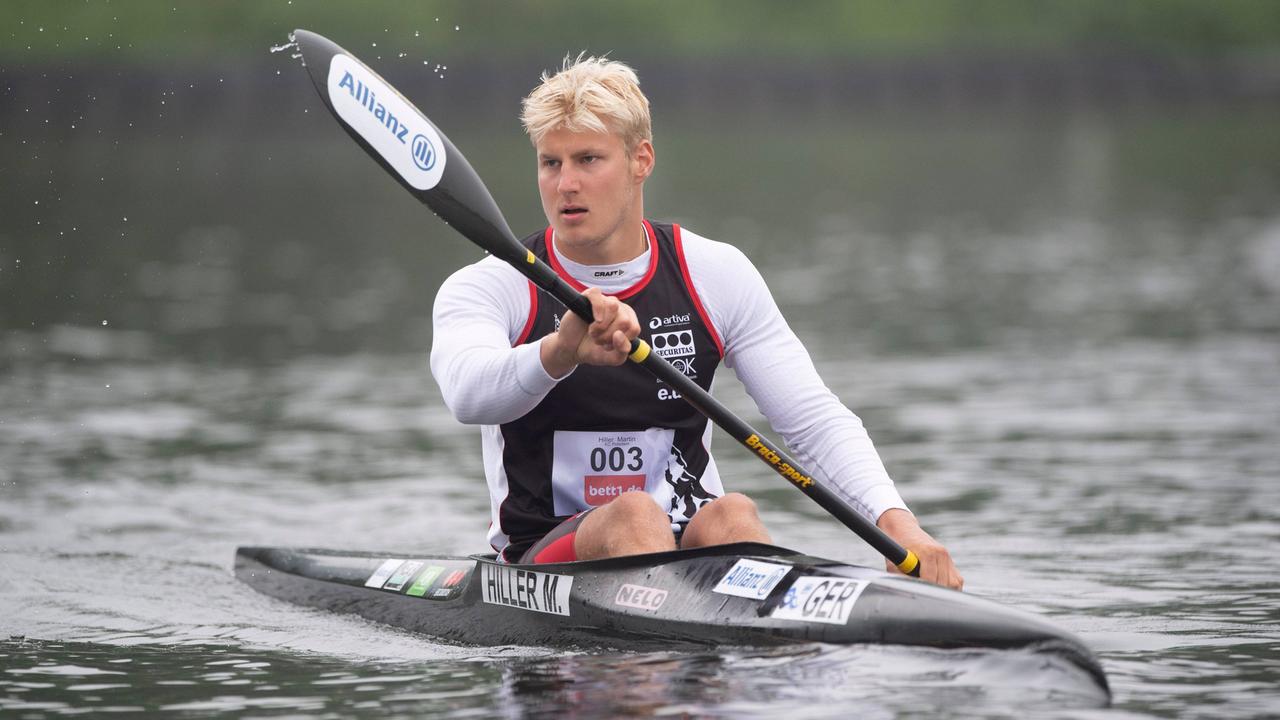
The doping case of canoeist Martin Hiller, whose name was not published by the National Anti-Doping Agency (NADA) for data protection reasons after he was found guilty in a final doping verdict, is an eye-opener. According to ARD research, there may be more than 100 other dopers from at least 18 Olympic sports federations whose names have never been made public in the past five years
Various NADOs have been violating that rule though, known in case of the Americans, Germans and Kenyans, so yes, so-called "silent bans" actually exist in T&F.
Could you send me links to one or two of these cases? Asking in good faith. Thanks.
I am regurgitating a comment which I left in another thread, because I think it would be an interesting topic for discussion.
Can someone actually enlighten me. Is there any evidence that so-called "silent bans" actually exist in T&F? I am not talking about not disclosing provisional suspensions which are under appeal. Reasonable people can disagree on this but I think, on balance, it is kosher since athletes, like anyone else, should be entitled to the presumption of innocence. Can anyone point to a specific case where an athlete has been banned, unsuccessfully exhausted their right to an appeal, and had the ban kept secret? I keep on seeing people referring to these "silent bans" and it seems like conventional wisdom on these message boards that they exist, but do we have any actual concrete evidence of this?
This forum is both great and not-so-great, as there are so many topics per day that sometimes you can miss a discussion that would interest you, as it gets shoved off the front page into oblivion.
In your case, I shared the following link when it came out in May.
The doping case of canoeist Martin Hiller, whose name was not published by the National Anti-Doping Agency (NADA) for data protection reasons after he was found guilty in a final doping verdict, is an eye-opener. According to ARD research, there may be more than 100 other dopers from at least 18 Olympic sports federations whose names have never been made public in the past five years
Thanks for this - I wasn't aware of it. Very concerning.
"Silent ban" = a runner that is hated by someone on this board hasn't raced in more than 3 weeks despite all indications that the runner is injured or simply in a training cycle.
In short, there is no such thing. There are, however, pathetic jealous losers on this message board in great abundance.
"Silent ban" = a runner that is hated by someone on this board hasn't raced in more than 3 weeks despite all indications that the runner is injured or simply in a training cycle.
In short, there is no such thing. There are, however, pathetic jealous losers on this message board in great abundance.
Well that's why I started the thread to be honest - you see it thrown around here all the time for various athletes when, if you took all of 5 minutes to google them or look at their social media, it is clear that they are injured/coming off the back of an injury.
It's a tricky one because it's essentially an unfalsifiable hypothesis.
"x has a silent ban"
"what evidence do you have of this"
"I have none, duh. It's silent".
That being said, FuriousBrit does make a good point linking that article about the German anti-doping agency not publishing final decisions (this is an important distinction imo, if it was provisional decisions under appeal I'd be less concerned) ostensibly due to data protection law.
I've had suspicions of silent bans. Colleen Quigley--went from world medal to non-participant. Athing Mu--was she instructed to fall at the Trials as the defending Olympic gold medalist? Shacarri Richardson--missed the Olympics on a one month ban for "marijuana," subsequent performances either night or day compilation. If the athlete has leverage, big name brand and sponsors with money, they can negotiate and receive some sympathy. There's no doubt about that. Biggest example: Usain Bolt false starting at world champs as a possible plea deal and warning. Sport is a business. Busting your biggest star only hurts everyone trying to get fed.
Hmmm seems to have hit a nerve for you. Who are you hiding??😂
Ha - I would be lying if I didn't say that it has hit a nerve in the sense that complete spoofers come out and say this every time an athlete is not racing because they're injured/sick/pregnant/mourning the loss of a loved one etc. etc. etc.
But I am also curious if we can find one single case where
1.A track athlete failed a drug test
2.The athlete either accepted the result of the test or appealed, and failed in their appeal.
3.The anti doping agency was subsequently caught out declining to publish the failed test.
I cannot find think of such a case. But I'm happy to admit that I could easily be wrong, so if anyone has one fire away.
I've had suspicions of silent bans. Colleen Quigley--went from world medal to non-participant. Athing Mu--was she instructed to fall at the Trials as the defending Olympic gold medalist? Shacarri Richardson--missed the Olympics on a one month ban for "marijuana," subsequent performances either night or day compilation. If the athlete has leverage, big name brand and sponsors with money, they can negotiate and receive some sympathy. There's no doubt about that. Biggest example: Usain Bolt false starting at world champs as a possible plea deal and warning. Sport is a business. Busting your biggest star only hurts everyone trying to get fed.
Can we keep speculation out of this thread please and stick to the specific question I'm asking - which is whether there are any documented, provable cases of an anti-doping agency imposing a "silent ban" on a track athlete for their final decision (i.e. not one under appeal).
I'm all for a good conspiracy/rumour thread, but this isn't the one for it. Thanks.
Hmmm seems to have hit a nerve for you. Who are you hiding??😂
Ha - I would be lying if I didn't say that it has hit a nerve in the sense that complete spoofers come out and say this every time an athlete is not racing because they're injured/sick/pregnant/mourning the loss of a loved one etc. etc. etc.
But I am also curious if we can find one single case where
1.A track athlete failed a drug test
2.The athlete either accepted the result of the test or appealed, and failed in their appeal.
3.The anti doping agency was subsequently caught out declining to publish the failed test.
I cannot find think of such a case. But I'm happy to admit that I could easily be wrong, so if anyone has one fire away.
Perhaps I'm misunderstanding your point 3, but we have this:
ARD investigations reveal that Germany's doping hunters have not published the names of convicted dopers for years due to data protection risks. This has not even been noticed by many sports insiders.
The ARD doping editorial team only noticed this practice when, following a tip-off about a doping case involving German canoeist Martin Hiller, a former world and European champion, it asked NADA about the case. The NADA had conducted the proceedings itself, not an international institution, and had banned Hiller, who had tested positive for three anabolic substances in two doping tests, for four years in mid-February 2025. However, the NADA did not make the case public, even though it involved a highly decorated athlete from one of Germany's most successful Olympic sports.
I am regurgitating a comment which I left in another thread, because I think it would be an interesting topic for discussion.
Can someone actually enlighten me. Is there any evidence that so-called "silent bans" actually exist in T&F? I am not talking about not disclosing provisional suspensions which are under appeal. Reasonable people can disagree on this but I think, on balance, it is kosher since athletes, like anyone else, should be entitled to the presumption of innocence. Can anyone point to a specific case where an athlete has been banned, unsuccessfully exhausted their right to an appeal, and had the ban kept secret? I keep on seeing people referring to these "silent bans" and it seems like conventional wisdom on these message boards that they exist, but do we have any actual concrete evidence of this?
Great topic, but I am surprised that some of our, ahem, more conspiratorial minded folks on here, have not chimed in on another category of "Silent Ban." This ban falls under the heading of what some corporations in the US enjoy, and that is "too big to fail."
What I mean by that is that for some athletes at the very, very top, not all, but the select few that become "the face of the sport" for a season or two, or in the case of an enigma like Bolt, several Olympic cycles, some might think they, and their reputation are protected by the powers that be in our sport.
A fall from grace from these individuals would be seen as so damaging to the sport, that they might be given an "injury pass", or a silent ban.
Some might look to Lance and say, well, cycling endured it. But did they? Lance won 7 titles, and it would be akin to when he was on the very top, say after title #4 or 5, he tests positive and it comes out. Devastation.
Instead, he goes down years later well after his reign is in the books. Can you imagine if King Carl, or Bolt went down in the prime of their hype? The only real athlete we have at that level now is Sydney, but she is so subdued, and a little vanilla and boring, so it might not be as big as if one of the other top names went down.
"Silent ban" = a runner that is hated by someone on this board hasn't raced in more than 3 weeks despite all indications that the runner is injured or simply in a training cycle.
In short, there is no such thing. There are, however, pathetic jealous losers on this message board in great abundance.
Ha - I would be lying if I didn't say that it has hit a nerve in the sense that complete spoofers come out and say this every time an athlete is not racing because they're injured/sick/pregnant/mourning the loss of a loved one etc. etc. etc.
But I am also curious if we can find one single case where
1.A track athlete failed a drug test
2.The athlete either accepted the result of the test or appealed, and failed in their appeal.
3.The anti doping agency was subsequently caught out declining to publish the failed test.
I cannot find think of such a case. But I'm happy to admit that I could easily be wrong, so if anyone has one fire away.
Perhaps I'm misunderstanding your point 3, but we have this:
The ARD doping editorial team only noticed this practice when, following a tip-off about a doping case involving German canoeist Martin Hiller, a former world and European champion, it asked NADA about the case. The NADA had conducted the proceedings itself, not an international institution, and had banned Hiller, who had tested positive for three anabolic substances in two doping tests, for four years in mid-February 2025. However, the NADA did not make the case public, even though it involved a highly decorated athlete from one of Germany's most successful Olympic sports.
Sorry I was being sloppy there.
I should have said "3.The anti doping agency was subsequently caught out declining to publish the failed test and name the athlete in question."
The responsible bodies with a legitimate interest in the sanctions decisions such as WADA and the responsible national and international sports associations will continue to be informed promptly and comprehensively about the results of sanction decisions in accordance with the WADC.
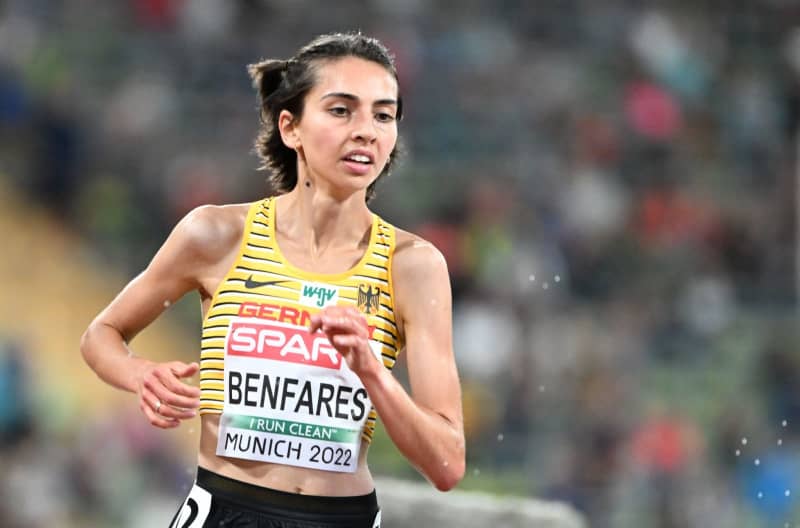
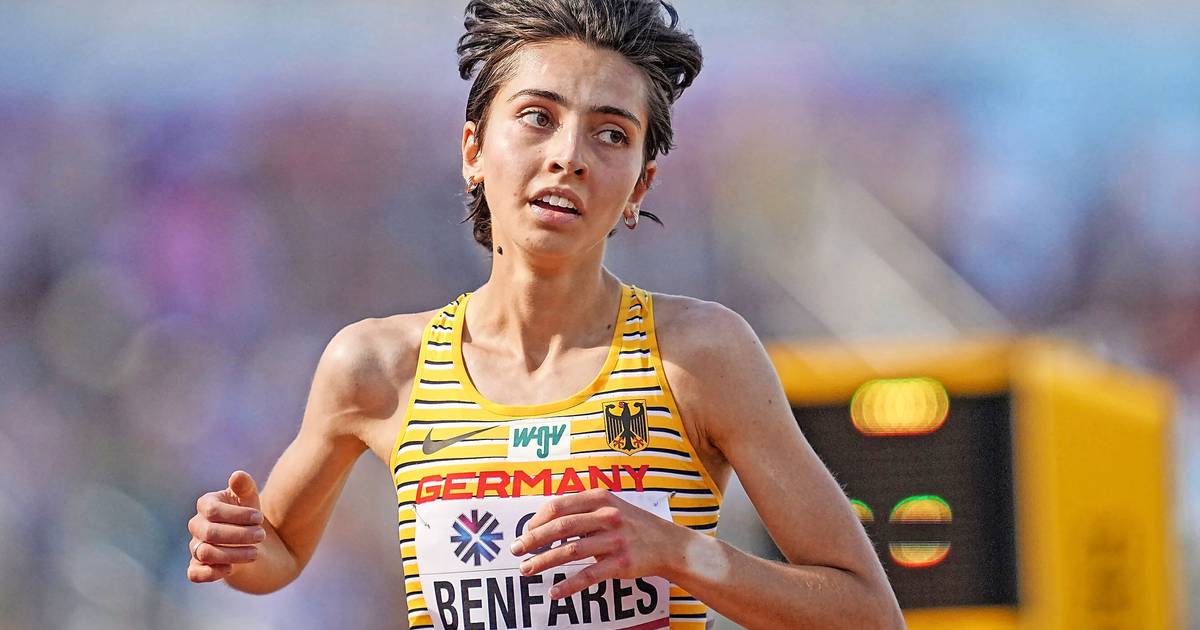
And, low and behold, if you look at the AIU list of banned persons you have your two, named, German sisters serving 4 and 5 year bans. Google the names and it was reported in the press at the time:
Runner Sofia Benfares has been banned for four years for a doping offence by the German Anti-Doping Agency (NADA), one month after her sister, Sara Benfares, was banned for five years. The NADA said on Monday that Sofia Benfa...
German distance runner Sara Benfares has been banned for five years for doping offences, the nation's anti-doping agency NADA said on Thursday. The NADA said it went beyond the usual four-year sanction because of "aggravating...
That all being said. I still think it's total BS that NADA won't publish names directly. But, at least it seems they share information up the chain to WADA/the AIU who don't have such reservations.
There are confirmed "silent bans" for minors. The Montverde sprinters who got popped after running crazy times quietly got taken off U-20 Worlds teams, AIU doesn't publicize results for minors
I am regurgitating a comment which I left in another thread, because I think it would be an interesting topic for discussion.
Can someone actually enlighten me. Is there any evidence that so-called "silent bans" actually exist in T&F? I am not talking about not disclosing provisional suspensions which are under appeal. Reasonable people can disagree on this but I think, on balance, it is kosher since athletes, like anyone else, should be entitled to the presumption of innocence. Can anyone point to a specific case where an athlete has been banned, unsuccessfully exhausted their right to an appeal, and had the ban kept secret? I keep on seeing people referring to these "silent bans" and it seems like conventional wisdom on these message boards that they exist, but do we have any actual concrete evidence of this?
Great topic, but I am surprised that some of our, ahem, more conspiratorial minded folks on here, have not chimed in on another category of "Silent Ban." This ban falls under the heading of what some corporations in the US enjoy, and that is "too big to fail."
What I mean by that is that for some athletes at the very, very top, not all, but the select few that become "the face of the sport" for a season or two, or in the case of an enigma like Bolt, several Olympic cycles, some might think they, and their reputation are protected by the powers that be in our sport.
A fall from grace from these individuals would be seen as so damaging to the sport, that they might be given an "injury pass", or a silent ban.
Some might look to Lance and say, well, cycling endured it. But did they? Lance won 7 titles, and it would be akin to when he was on the very top, say after title #4 or 5, he tests positive and it comes out. Devastation.
Instead, he goes down years later well after his reign is in the books. Can you imagine if King Carl, or Bolt went down in the prime of their hype? The only real athlete we have at that level now is Sydney, but she is so subdued, and a little vanilla and boring, so it might not be as big as if one of the other top names went down.
Thoughts?
I think that's an interesting discussion and it doesn't go beyond the realms of possibility, but I just want to keep this thread to the issue of silent bans specifically.
There are confirmed "silent bans" for minors. The Montverde sprinters who got popped after running crazy times quietly got taken off U-20 Worlds teams, AIU doesn't publicize results for minors
Fair enough and I think that's the right thing to do to be honest. Was only referring to adults initially.
I think I'm going to have to rephrase my question slightly to make it clearer.
Can anyone cite a case where
(1) An adult athlete is found to have doped
(2)They have not appealed the finding, or have failed in their appeal.
(3)The doping agency has not named them and also not shared the finding "up the chain" to WADA (who will name them), meaning that no one will ever know of the ban, short of an insider blowing the whistle.
This shows that your question is unlikely to be answerable by members of this forum, as you're asking for specific insider info that only someone very close to an attempt to prevent a doping positive becoming public would be aware of. e.g. ADA employees.