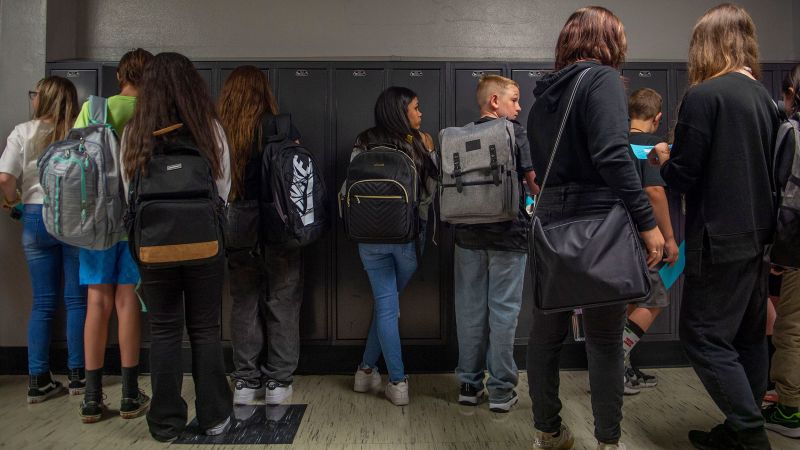
A growing number of schools in rural communities are switching to four-day school weeks to attract and retain high-quality teachers amid funding challenges and a nationwide teacher shortage.
I remember reading about a school system in NM that did this way back in the late 80's. It was hugely popular. If I remember correctly they only had 4 day weeks for HS.
The big positives were the savings from just not operating the school one less day per week. They noted how much they save just on toilet paper, custodial staff etc.. Also they used their Friday "off" day to have club meetings, and all that stuff that gets jammed into a school day.
Everyone loved it, except the few people that groused about them "getting away" with only working 4 days.
I'm a retired teacher. I don't see how that will retain teachers unless it's seen as a way to justify low pay so the teachers have a 3 day weekend to get an additional job.
I didn't read the article and I'm not going to waste my time. Pay teachers and have high standards for them.
I remember reading about a school system in NM that did this way back in the late 80's. It was hugely popular. If I remember correctly they only had 4 day weeks for HS.
The big positives were the savings from just not operating the school one less day per week. They noted how much they save just on toilet paper, custodial staff etc.. Also they used their Friday "off" day to have club meetings, and all that stuff that gets jammed into a school day.
Everyone loved it, except the few people that groused about them "getting away" with only working 4 days.
Genius idea. Why not Go to 3 days then. We would save even more. Or 0 days. Then we dont need the building and teachers at all. Savings through the roof.
I'm a retired teacher. I don't see how that will retain teachers unless it's seen as a way to justify low pay so the teachers have a 3 day weekend to get an additional job.
I didn't read the article and I'm not going to waste my time. Pay teachers and have high standards for them.
Hold teachers accountable. Pay them according to the results their students achieve in standardized tests. End teachers free Ride without accountability.
I also thought teachers were quitting because public schools were becoming lawless war zones populated by packs of nearly feral entitled brats with no accountability? Is this true or a Republican talking point?
So kids only need to spend 80% as much time spent learning in schools even though the stats show they can barely read as it is? Jeez, what genius thought this was a good idea??
Genius idea. Why not Go to 3 days then. We would save even more. Or 0 days. Then we dont need the building and teachers at all. Savings through the roof.
I agree with you. But why stop at five days? Let’s have school seven days a week. No breaks or summer vacation, either. Or holidays, just school 365 days a year. Think how much smarter our kids will be, and we won’t have to complain about lazy teachers anymore.
Not everyone can teach. It definitely takes a certain aptitude.
I suppose from a strictly economic standpoint the districts cutting costs from the general tax base and passing those costs back to parents that must now pay more for child care on Fridays, etc.
It would seem like losing one whole day each week of the school year would have a dramatic impact on what kids are learning, but I don't know what the studies say about this.
I'm a retired teacher. I don't see how that will retain teachers unless it's seen as a way to justify low pay so the teachers have a 3 day weekend to get an additional job.
I didn't read the article and I'm not going to waste my time. Pay teachers and have high standards for them.
Wrong. Teachers get paid plenty. Teacher salaries are in line with those of other careers, except with other careers you have to work all year and usually you don't get off all the holidays. Teachers also have plan periods, which is getting paid for a glorified nap at work.
I work for a school district that went to a four day week a couple of years ago.
Main reason was to recruit and retain teachers, as my school district is one of the rougher ones in the metro area (Daily fights, drug use, attendance issues). Initially switching to four days has proven successful in its mission of attracting new teachers, and retaining. Teacher opinion is split with some loving it, and some would want to go back to five day weeks if it meant easier kids.
On the coaching front, it has made school days extremely long, with being at school from 6:45 - 5:30, with many starting to feel burnt out. On our day off, attendance across all sports has been pretty bad with transportation issues or kids having to work.
As for student achievement, our data is showing that it didn't impact them at all on test scores. I think this is linked to teachers feeling a bit more refreshed so that they actually teach bell to bell every day.
Unless all industries go four days, I don't think any of the better off suburban schools will ever go to four day, because they have no problems attracting teachers, and have decent pay. I think you are going to see it mainly in inner city and rural school districts. Inner City because of the rise in classroom management nightmares, and rural because they can't pay enough to keep up with rising costs in their areas, with many teachers only using their schools as a one year springboard to bigger/better districts.
As for teacher pay, it is a tough issue to hash through. I agree that there needs to be more accountability in schools to make sure that teachers are giving their best. MOST teachers I work with go above and beyond for their students, which includes grading/lesson planning at night. There are a few that just give out online work like a glorified study hall, gets paid the same. Maybe get rid of tenure?
One of my biggest issues is that most school districts are forcing their teachers to get their masters degree by a certain point. You do move up on the pay scale, but only a minuscule amount compared to most other industries requiring a masters.
For those talking about performance based pay, I get you, but many fail to realize that teachers do not control which students are entering their classrooms, so not every teacher in a subject/grade are getting the same "talent". Would you pay based off of reaching a bench mark or off of student growth? Whose the better coach? The coach that gets a 4:30 miler and takes him to 4:10, or the coach who get a 6:00 miler and takes him to 4:50?
the reason rural schools are doing it is because they cant match the pay of bigger school districts. I taught for 3 years at a rural school with 50 kids K-12, I was making less then 30k annually. I finally got a job in my school district I live in (has 500 Kids per grade level), my starting pay was 54K. Just switching districts I got a 24K dollar pay raise.
This is a perk that will retain some teachers or even attract new ones to their district. You gotta have some benefit otherwise you will just lose your employees to bigger school districts. My school district has 4 incredibly small ones surrounding it all within 5-7 miles of our city. one of them went to a 4 day school week this year. I think everyone is kinda waiting to see how people feel about it after one year.
I also thought teachers were quitting because public schools were becoming lawless war zones populated by packs of nearly feral entitled brats with no accountability? Is this true or a Republican talking point?
Where did this come from? Teachers unions are predominantly democrat, and the teachers are the ones leaving, citing the reasons you gave for their departure.
I work for a school district that went to a four day week a couple of years ago.
Main reason was to recruit and retain teachers, as my school district is one of the rougher ones in the metro area (Daily fights, drug use, attendance issues). Initially switching to four days has proven successful in its mission of attracting new teachers, and retaining. Teacher opinion is split with some loving it, and some would want to go back to five day weeks if it meant easier kids.
On the coaching front, it has made school days extremely long, with being at school from 6:45 - 5:30, with many starting to feel burnt out. On our day off, attendance across all sports has been pretty bad with transportation issues or kids having to work.
As for student achievement, our data is showing that it didn't impact them at all on test scores. I think this is linked to teachers feeling a bit more refreshed so that they actually teach bell to bell every day.
Unless all industries go four days, I don't think any of the better off suburban schools will ever go to four day, because they have no problems attracting teachers, and have decent pay. I think you are going to see it mainly in inner city and rural school districts. Inner City because of the rise in classroom management nightmares, and rural because they can't pay enough to keep up with rising costs in their areas, with many teachers only using their schools as a one year springboard to bigger/better districts.
As for teacher pay, it is a tough issue to hash through. I agree that there needs to be more accountability in schools to make sure that teachers are giving their best. MOST teachers I work with go above and beyond for their students, which includes grading/lesson planning at night. There are a few that just give out online work like a glorified study hall, gets paid the same. Maybe get rid of tenure?
One of my biggest issues is that most school districts are forcing their teachers to get their masters degree by a certain point. You do move up on the pay scale, but only a minuscule amount compared to most other industries requiring a masters.
For those talking about performance based pay, I get you, but many fail to realize that teachers do not control which students are entering their classrooms, so not every teacher in a subject/grade are getting the same "talent". Would you pay based off of reaching a bench mark or off of student growth? Whose the better coach? The coach that gets a 4:30 miler and takes him to 4:10, or the coach who get a 6:00 miler and takes him to 4:50?
The detractors are not ready for this type of discussion.
the reason rural schools are doing it is because they cant match the pay of bigger school districts. I taught for 3 years at a rural school with 50 kids K-12, I was making less then 30k annually. I finally got a job in my school district I live in (has 500 Kids per grade level), my starting pay was 54K. Just switching districts I got a 24K dollar pay raise.
This is a perk that will retain some teachers or even attract new ones to their district. You gotta have some benefit otherwise you will just lose your employees to bigger school districts. My school district has 4 incredibly small ones surrounding it all within 5-7 miles of our city. one of them went to a 4 day school week this year. I think everyone is kinda waiting to see how people feel about it after one year.
It’s not even just that the rural districts will lose their employees, it’s that they’ll lose their best employees. In any industry, the people who voluntarily leave for another job are the ones who can get a better job, which tends to be the most talented people.
Rural areas in general are suffering a huge drain of educated workers right now, and need to figure out how to attract and retain quality talent (teachers but also doctors).
Public education is one of those things that we had figured out pretty well, but decided to do away with most things that actually made it so good:
-attending school is privilege, so anyone that decides to disrupt and not follow along is dismissed and has to live with the consequences of their actions.
-most of the time should be dedicated to academic work, but a few hours of vocational, hands on learning is beneficial too. That can be anything from computer programming to cooking, to small engine repair.
- schools should be: elementary 1-6, Jr High 7-9, HS 10-12
- Tracking works.
-Special Ed kids need to be separate from the other kids.
I work for a school district that went to a four day week a couple of years ago.
Main reason was to recruit and retain teachers, as my school district is one of the rougher ones in the metro area (Daily fights, drug use, attendance issues). Initially switching to four days has proven successful in its mission of attracting new teachers, and retaining. Teacher opinion is split with some loving it, and some would want to go back to five day weeks if it meant easier kids.
On the coaching front, it has made school days extremely long, with being at school from 6:45 - 5:30, with many starting to feel burnt out. On our day off, attendance across all sports has been pretty bad with transportation issues or kids having to work.
As for student achievement, our data is showing that it didn't impact them at all on test scores. I think this is linked to teachers feeling a bit more refreshed so that they actually teach bell to bell every day.
Unless all industries go four days, I don't think any of the better off suburban schools will ever go to four day, because they have no problems attracting teachers, and have decent pay. I think you are going to see it mainly in inner city and rural school districts. Inner City because of the rise in classroom management nightmares, and rural because they can't pay enough to keep up with rising costs in their areas, with many teachers only using their schools as a one year springboard to bigger/better districts.
As for teacher pay, it is a tough issue to hash through. I agree that there needs to be more accountability in schools to make sure that teachers are giving their best. MOST teachers I work with go above and beyond for their students, which includes grading/lesson planning at night. There are a few that just give out online work like a glorified study hall, gets paid the same. Maybe get rid of tenure?
One of my biggest issues is that most school districts are forcing their teachers to get their masters degree by a certain point. You do move up on the pay scale, but only a minuscule amount compared to most other industries requiring a masters.
For those talking about performance based pay, I get you, but many fail to realize that teachers do not control which students are entering their classrooms, so not every teacher in a subject/grade are getting the same "talent". Would you pay based off of reaching a bench mark or off of student growth? Whose the better coach? The coach that gets a 4:30 miler and takes him to 4:10, or the coach who get a 6:00 miler and takes him to 4:50?
You nailed it!
Schools aren't doing this because it's ideal for students (a lot of the research shows that it's not), but it is better than some of the alternatives at really struggling districts where they had no applicants for positions and were either closing schools, teaching through remote video programs, or discontinuing more specialized courses and activities. Definitely a lesser of two evils situation.
I will say that one legit positive is that it is helping some very rural districts financially, especially with regards to transportation costs.
I work for a school district that went to a four day week a couple of years ago.
Main reason was to recruit and retain teachers, as my school district is one of the rougher ones in the metro area (Daily fights, drug use, attendance issues). Initially switching to four days has proven successful in its mission of attracting new teachers, and retaining. Teacher opinion is split with some loving it, and some would want to go back to five day weeks if it meant easier kids.
On the coaching front, it has made school days extremely long, with being at school from 6:45 - 5:30, with many starting to feel burnt out. On our day off, attendance across all sports has been pretty bad with transportation issues or kids having to work.
As for student achievement, our data is showing that it didn't impact them at all on test scores. I think this is linked to teachers feeling a bit more refreshed so that they actually teach bell to bell every day.
Unless all industries go four days, I don't think any of the better off suburban schools will ever go to four day, because they have no problems attracting teachers, and have decent pay. I think you are going to see it mainly in inner city and rural school districts. Inner City because of the rise in classroom management nightmares, and rural because they can't pay enough to keep up with rising costs in their areas, with many teachers only using their schools as a one year springboard to bigger/better districts.
As for teacher pay, it is a tough issue to hash through. I agree that there needs to be more accountability in schools to make sure that teachers are giving their best. MOST teachers I work with go above and beyond for their students, which includes grading/lesson planning at night. There are a few that just give out online work like a glorified study hall, gets paid the same. Maybe get rid of tenure?
One of my biggest issues is that most school districts are forcing their teachers to get their masters degree by a certain point. You do move up on the pay scale, but only a minuscule amount compared to most other industries requiring a masters.
For those talking about performance based pay, I get you, but many fail to realize that teachers do not control which students are entering their classrooms, so not every teacher in a subject/grade are getting the same "talent". Would you pay based off of reaching a bench mark or off of student growth? Whose the better coach? The coach that gets a 4:30 miler and takes him to 4:10, or the coach who get a 6:00 miler and takes him to 4:50?
You nailed it!
Schools aren't doing this because it's ideal for students (a lot of the research shows that it's not), but it is .
When it come to research, especially related to student outcomes, I firmly believe that you can find a study to back virtually any policy you want.
We are talking about the financial reasons for doing this are not legitimate. If something as simple as not having school 1 day saves A LOT of money, and the results are about equal, then why not do it?
You cannot always always ask for more money but not be willing to do anything that would save money.
Too me schools/education is ripe for disruption. It's about to be 2025 and a teacher from 1925 could walk into a school today and pretty much know what's going on. It needs a massive overhaul in policy, implementation, and approach.