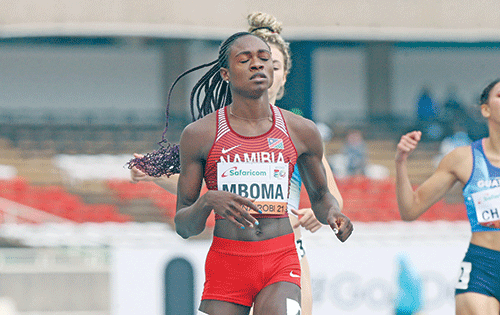
Christine didn't even make the final in her events after undergoing treatments to lower her/his testosterone. The coach mentions issues with fatigue , physique and fitness . All issues that relate to testosterone.
Its a huge relief that we now have these rules in place. I wish they had these rules in place years ago. I feel for the hard-working women who were denied a medal after having to compete with intersex athletes.
As the African Athletics Championships in Douala, Cameroon ended, Namibian coach Henk Botha expressed disappointment after extensive efforts to get Christine Mboma qualify for the Paris Olympic Games failed.
It's quite a shame in my opinion. She was raised by a single mother who died when she was 13. She then had to live with her grandmother and uncle, and she became responsible for her two younger sisters. Her friends abandoned her due to the stigma of being an orphan. But she found something she was very good at. Her story was inspiring; she literally came from nothing and defied all odds to become a star. Then in the blink of an eye she was humiliated before the world and had everything taken away from her. And people think that is something to celebrate. For me it's less a story of protecting women, and more a story of a human being who was very talented - who overcame social disadvantage not faced by her peers - being disregarded and tossed aside due to birth differences beyond her control. She obviously can't compete with men, and now she can't compete at her best against women. Basically her dream is over.
Christine's unorthodox running style and finishing kick were exciting contrasted with other runners, and I personally would have loved to see her battle it out with the likes of Thomas, Richardson and Steiner in Paris. It was great to have a Namibian elite athlete in the mix, good for African athletics too. 14 of the top 15 leading 200m times this year are from Americans. Make of that what you will. Christine would possibly have been competing for the medals, but it was not like she was going to wipe the floor with the others. I think people were worried she would break the WR, or that she would dominate all her races, but she wasn't having an easy time even before the forced break. She had already dealt with a hamstring injury and couldn't get back to sub 22.
Of all the affected DSD athletes, it seems she took the hardest hit. Maybe because she's less androgen sensitive than the other athletes - her physique is very different to Seyni and Cofil, isn't it? She was always a better athlete than those two over 100m and 200m, yet they are now faster. But all these girls were painted with the same brush and given the same restrictions. Christine has already grown larger breasts and her body fat is suddenly high, her energy levels are low. I understand people will say something needed to be done to prevent an army of intersex athletes dominating 200m and 100m (which was never going to happen anyway), but how about (SUBTLY, with respect for dignity) introducing new eligibility rules for upcoming athletes and placing existing professional athletes under a grandfather clause?
And I also wonder if we will look back in 20 years and see how many of her rivals were doping.
This post was edited 1 minute after it was posted.
These gender cheats fade in obscurity pretty fast. Semenya, Wambui, Niyonsaba all the same. Once they are forced to suppress the male hormones, they revert far back. Too bad the AIU has leftist systems in place, therefore they are reactive and not proactive. Many biological women were ironically harmed to get to this point. Time for accountability.
I understand people will say something needed to be done to prevent an army of intersex athletes dominating 200m and 100m (which was never going to happen anyway), but how about (SUBTLY, with respect for dignity) introducing new eligibility rules for upcoming athletes and placing existing professional athletes under a grandfather clause?
But out of respect for XY DSD athletes already competing in women's events when World Athletics' new eligibility rules for male DSD athletes in female competition came into effect in March 2023, a special and very generous exception to the new rules akin to a "grandfather clause" was made.
Mboma and Masilingi took advantage of the grandfather clause - that's why they were able to resume competing in the women's 100m and 200m several months ago in hopes of qualifying in those events for the Paris Olympics.
WA's current policy, in force since late March of 2023, says that athletes subject to the DSD rules seeking to compete in any event in the female category must be able to demonstrate that their natural testosterone has been reduced to below 2.5 nmol/L for 24 months beforehand. But when the new rules came into effect, WA said that XY DSD athletes who were already competing in women's events where restrictions on them didn't previously apply - the sprints and longer distances above the mile - would be allowed to compete in those same events if they could demonstrate that they had lowered their testosterone to below 2.5 nmol/L for only 6 months.
If this special and very generous "grandfather clause" type arrangement hadn't been made for XY DSD athletes already competing in so-called "unrestricted" races in the women's category, then Mboma and Masilingi wouldn't have been able to get back into competing in the women's sprints yet. They wouldn't be able to seek eligibility in women's events for another year.
These gender cheats fade in obscurity pretty fast. Semenya, Wambui, Niyonsaba all the same. Once they are forced to suppress the male hormones, they revert far back. Too bad the AIU has leftist systems in place, therefore they are reactive and not proactive. Many biological women were ironically harmed to get to this point. Time for accountability.
It's quite a shame in my opinion. She was raised by a single mother who died when she was 13. She then had to live with her grandmother and uncle, and she became responsible for her two younger sisters. Her friends abandoned her due to the stigma of being an orphan. But she found something she was very good at. Her story was inspiring; she literally came from nothing and defied all odds to become a star. Then in the blink of an eye she was humiliated before the world and had everything taken away from her. And people think that is something to celebrate. For me it's less a story of protecting women, and more a story of a human being who was very talented - who overcame social disadvantage not faced by her peers - being disregarded and tossed aside due to birth differences beyond her control. She obviously can't compete with men, and now she can't compete at her best against women. Basically her dream is over.
Christine's unorthodox running style and finishing kick were exciting contrasted with other runners, and I personally would have loved to see her battle it out with the likes of Thomas, Richardson and Steiner in Paris. It was great to have a Namibian elite athlete in the mix, good for African athletics too. 14 of the top 15 leading 200m times this year are from Americans. Make of that what you will. Christine would possibly have been competing for the medals, but it was not like she was going to wipe the floor with the others. I think people were worried she would break the WR, or that she would dominate all her races, but she wasn't having an easy time even before the forced break. She had already dealt with a hamstring injury and couldn't get back to sub 22.
Of all the affected DSD athletes, it seems she took the hardest hit. Maybe because she's less androgen sensitive than the other athletes - her physique is very different to Seyni and Cofil, isn't it? She was always a better athlete than those two over 100m and 200m, yet they are now faster. But all these girls were painted with the same brush and given the same restrictions. Christine has already grown larger breasts and her body fat is suddenly high, her energy levels are low. I understand people will say something needed to be done to prevent an army of intersex athletes dominating 200m and 100m (which was never going to happen anyway), but how about (SUBTLY, with respect for dignity) introducing new eligibility rules for upcoming athletes and placing existing professional athletes under a grandfather clause?
And I also wonder if we will look back in 20 years and see how many of her rivals were doping.
Don't care about any of this. Men shouldn't be competing with women.
I understand people will say something needed to be done to prevent an army of intersex athletes dominating 200m and 100m (which was never going to happen anyway), but how about (SUBTLY, with respect for dignity) introducing new eligibility rules for upcoming athletes and placing existing professional athletes under a grandfather clause?
But out of respect for XY DSD athletes already competing in women's events when World Athletics' new eligibility rules for male DSD athletes in female competition came into effect in March 2023, a special and very generous exception to the new rules akin to a "grandfather clause" was made.
Mboma and Masilingi took advantage of the grandfather clause - that's why they were able to resume competing in the women's 100m and 200m several months ago in hopes of qualifying in those events for the Paris Olympics.
WA's current policy, in force since late March of 2023, says that athletes subject to the DSD rules seeking to compete in any event in the female category must be able to demonstrate that their natural testosterone has been reduced to below 2.5 nmol/L for 24 months beforehand. But when the new rules came into effect, WA said that XY DSD athletes who were already competing in women's events where restrictions on them didn't previously apply - the sprints and longer distances above the mile - would be allowed to compete in those same events if they could demonstrate that they had lowered their testosterone to below 2.5 nmol/L for only 6 months.
If this special and very generous "grandfather clause" type arrangement hadn't been made for XY DSD athletes already competing in so-called "unrestricted" races in the women's category, then Mboma and Masilingi wouldn't have been able to get back into competing in the women's sprints yet. They wouldn't be able to seek eligibility in women's events for another year.
When rules change suddenly from one arbitrary number to another, it’s good to remember that they can change again in the future in the opposite direction.
Empiricism-based fairness favored tightening rules after the 2016 800, but the same empiricism will now favor intersex women if no intersex woman is able to medal for long. You can focus all you want on chromosomes, deliberate misgendering, ulterior motives and what not, but none of that is going to work with CAS that will need hard evidence for arguing unfair advantage. There is no way to show unfair advantage for a subgroup if no one from that subgroup ever wins.
But out of respect for XY DSD athletes already competing in women's events when World Athletics' new eligibility rules for male DSD athletes in female competition came into effect in March 2023, a special and very generous exception to the new rules akin to a "grandfather clause" was made.
Mboma and Masilingi took advantage of the grandfather clause - that's why they were able to resume competing in the women's 100m and 200m several months ago in hopes of qualifying in those events for the Paris Olympics.
WA's current policy, in force since late March of 2023, says that athletes subject to the DSD rules seeking to compete in any event in the female category must be able to demonstrate that their natural testosterone has been reduced to below 2.5 nmol/L for 24 months beforehand. But when the new rules came into effect, WA said that XY DSD athletes who were already competing in women's events where restrictions on them didn't previously apply - the sprints and longer distances above the mile - would be allowed to compete in those same events if they could demonstrate that they had lowered their testosterone to below 2.5 nmol/L for only 6 months.
If this special and very generous "grandfather clause" type arrangement hadn't been made for XY DSD athletes already competing in so-called "unrestricted" races in the women's category, then Mboma and Masilingi wouldn't have been able to get back into competing in the women's sprints yet. They wouldn't be able to seek eligibility in women's events for another year.
When rules change suddenly from one arbitrary number to another, it’s good to remember that they can change again in the future in the opposite direction.
Empiricism-based fairness favored tightening rules after the 2016 800, but the same empiricism will now favor intersex women if no intersex woman is able to medal for long. You can focus all you want on chromosomes, deliberate misgendering, ulterior motives and what not, but none of that is going to work with CAS that will need hard evidence for arguing unfair advantage. There is no way to show unfair advantage for a subgroup if no one from that subgroup ever wins.
Where are you getting the idea that none of the XY DSD athletes competing in women's track under the current rules ever wins?
Christine Mboma won both the women's 100m and 200m in the 2024 Namibian National Athletics Championships.
Just because Mboma is no longer easily trouncing the best female runners in the whole world on the track - and Mboma no longer has a shot at setting new world records or winning Olympic medals in women's competititon - doesn't mean that male DSD athletes don't have an unfair advantage over female athletes.
Mboma - and Masilingi - are still dominating in women's sprints within Namibia. The two male DSD athletes who've been the biggest stars in Namibian women's track in the country's history are still treated like national superheroes - and they still get much more attention, financial resources, support from the powers-that-be in the establishment and opportunties than any of their female counterparts get.
This post was edited 10 minutes after it was posted.
When rules change suddenly from one arbitrary number to another, it’s good to remember that they can change again in the future in the opposite direction.
Empiricism-based fairness favored tightening rules after the 2016 800, but the same empiricism will now favor intersex women if no intersex woman is able to medal for long. You can focus all you want on chromosomes, deliberate misgendering, ulterior motives and what not, but none of that is going to work with CAS that will need hard evidence for arguing unfair advantage. There is no way to show unfair advantage for a subgroup if no one from that subgroup ever wins.
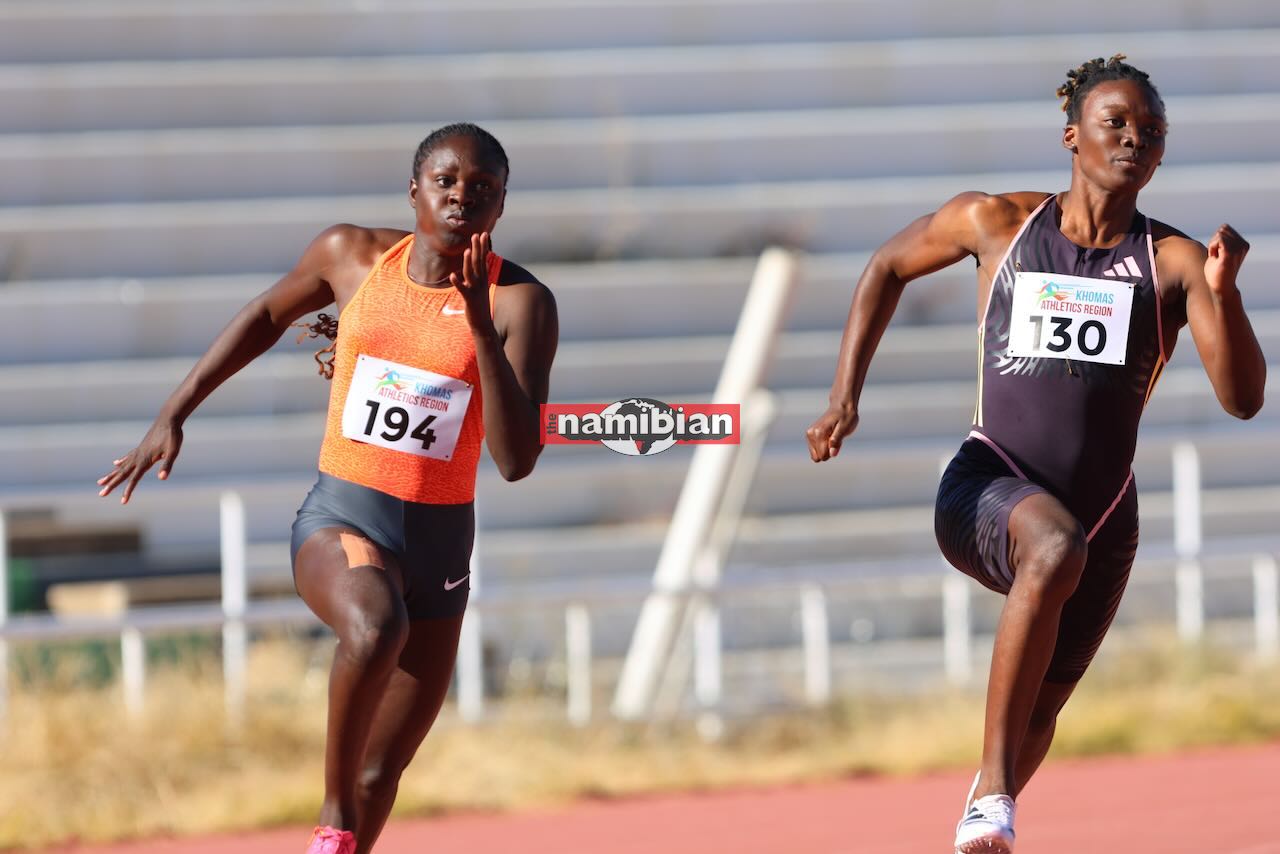
In another 200m women's race in Nambia a few weeks ago, the two front runners by a wide margin were Mboma and Masilingi, who came in first and second. None of the female athletes in the race stood a chance against the two male DSD runners.
In another 200m women's race in Nambia a few weeks ago, the two front runners by a wide margin were Mboma and Masilingi, who came in first and second. None of the female athletes in the race stood a chance against the two male DSD runners.
None of the female athletes from Namibia who ran in the high-level women's 200m shown above rated mention in the Namibian press. The only athletes in that women's race who were treated as though they mattered enough to be noteworthy were the two male DSD runners who left all the female competitors in their wake.
From the June 10 2014 story in The Namibian:
Mboma, Masilingi burn up the track
Christine Mboma and Beatrice Masilingi lit up the track as Mboma edged her old rival by a split second to win the women’s 200m final at the Khomas Athletics Championships on Saturday.
It was an explosive display of power running by both athletes and although their respective times of 23,45 and 23,46 seconds were still quite a way off the Olympic Games qualifying time of 22,57, the adverse weather conditions hampered fast times.
The only competitor in that women's race that Mboma noticed and bothered to acknowledge was the other male runner:
“It was a tough race, but I ran a seasonal best so I’m happy with that. My time is close to the Olympic qualifying time so I’m almost there,” Mboma said, adding that it was great to run against Masilingi again.
“It’s always great running against her, it’s great to have her in the race, we always push each other to do our best, so it’s great,” she said.
Again, just because male DSD athletes competing in women's events under WA's new rules can't easily beat the shorts off the best female runners in the world doesn't mean they don't have an unfair advantage over female competitors generally. All the wins, records, sponsorships, awards, praise and attention that Mboma and Masilingi have gained from competing in women's track have come at the expense of female athletes, including all their female compatriots they've left in the dust and crowded out of the limelight for years now.
This post was edited 13 minutes after it was posted.
Masilingi is currently ranked #528 in the world, and Mboma is #1114. (Mboma is also #1438 in 100m.)
That's quite a dominance. /s
Of course, any one could win a race by a big margin if the competition is weak. That's not any evidence of "unfair advantage." But a certain poster who does not follow track does not seem to understand this concept.
BTW, the #1 ranked Namibian in 100m is Sade Amor De Sousa who has run 11.38. That's 0.61 faster than Mboma's SB. I wonder what kind of "unfair advantage" De Sousa has.
This post was edited 2 minutes after it was posted.
In another 200m women's race in Nambia a few weeks ago, the two front runners by a wide margin were Mboma and Masilingi, who came in first and second. None of the female athletes in the race stood a chance against the two male DSD runners.
Again, just because male DSD athletes competing in women's events under WA's new rules can't easily beat the shorts off the best female runners in the world doesn't mean they don't have an unfair advantage over female competitors generally. All the wins, records, sponsorships, awards, praise and attention that Mboma and Masilingi have gained from competing in women's track have come at the expense of female athletes, including all their female compatriots they've left in the dust and crowded out of the limelight for years now.
You are too vague to even be wrong. It makes no sense to say that two specific individuals “have an unfair advantage over female competitors generally” (the “generally” part being vague) unless they are at the very least beating the shorts off the best female runners. Your directly contradicting that statement is an indication of a lack of basic logical reasoning ability.
It makes more sense to compare subgroups against each other, and it is impossible to assert that the intersex subgroup has an unfair advantage if no member of that subgroup ever wins a global medal.
These gender cheats fade in obscurity pretty fast. Semenya, Wambui, Niyonsaba all the same. Once they are forced to suppress the male hormones, they revert far back.
Its almost like a man doesn't have to train at the elite level to run times elite women could run.
But out of respect for XY DSD athletes already competing in women's events when World Athletics' new eligibility rules for male DSD athletes in female competition came into effect in March 2023, a special and very generous exception to the new rules akin to a "grandfather clause" was made.
Mboma and Masilingi took advantage of the grandfather clause - that's why they were able to resume competing in the women's 100m and 200m several months ago in hopes of qualifying in those events for the Paris Olympics.
WA's current policy, in force since late March of 2023, says that athletes subject to the DSD rules seeking to compete in any event in the female category must be able to demonstrate that their natural testosterone has been reduced to below 2.5 nmol/L for 24 months beforehand. But when the new rules came into effect, WA said that XY DSD athletes who were already competing in women's events where restrictions on them didn't previously apply - the sprints and longer distances above the mile - would be allowed to compete in those same events if they could demonstrate that they had lowered their testosterone to below 2.5 nmol/L for only 6 months.
If this special and very generous "grandfather clause" type arrangement hadn't been made for XY DSD athletes already competing in so-called "unrestricted" races in the women's category, then Mboma and Masilingi wouldn't have been able to get back into competing in the women's sprints yet. They wouldn't be able to seek eligibility in women's events for another year.
When rules change suddenly from one arbitrary number to another, it’s good to remember that they can change again in the future in the opposite direction.
Empiricism-based fairness favored tightening rules after the 2016 800, but the same empiricism will now favor intersex women if no intersex woman is able to medal for long. You can focus all you want on chromosomes, deliberate misgendering, ulterior motives and what not, but none of that is going to work with CAS that will need hard evidence for arguing unfair advantage. There is no way to show unfair advantage for a subgroup if no one from that subgroup ever wins.
You could point to past dominance of this subgroup. For years Semenya and other intersex athletes dominated the sport despite not putting in the level of training of their xx competitors.
When rules change suddenly from one arbitrary number to another, it’s good to remember that they can change again in the future in the opposite direction.
Empiricism-based fairness favored tightening rules after the 2016 800, but the same empiricism will now favor intersex women if no intersex woman is able to medal for long. You can focus all you want on chromosomes, deliberate misgendering, ulterior motives and what not, but none of that is going to work with CAS that will need hard evidence for arguing unfair advantage. There is no way to show unfair advantage for a subgroup if no one from that subgroup ever wins.
You could point to past dominance of this subgroup. For years Semenya and other intersex athletes dominated the sport despite not putting in the level of training of their xx competitors.
Masilingi is currently ranked #528 in the world, and Mboma is #1114. (Mboma is also #1438 in 100m.)
That's quite a dominance. /s
Of course, any one could win a race by a big margin if the competition is weak. That's not any evidence of "unfair advantage." But a certain poster who does not follow track does not seem to understand this concept.
BTW, the #1 ranked Namibian in 100m is Sade Amor De Sousa who has run 11.38. That's 0.61 faster than Mboma's SB. I wonder what kind of "unfair advantage" De Sousa has.
This particular poster you are responding to has already mentioned this before. I don't know why they would expect two Olympic athletes with years of training under a good coach to face stiff opposition at a local Namibian event. Bizarre.
This post was edited 21 seconds after it was posted.
Help us build the best running shoe review site for a chance to win a LetsRun t-shirt.Help us build the best running shoe review site for a chance to win one of 10 LetsRun t-shirts.