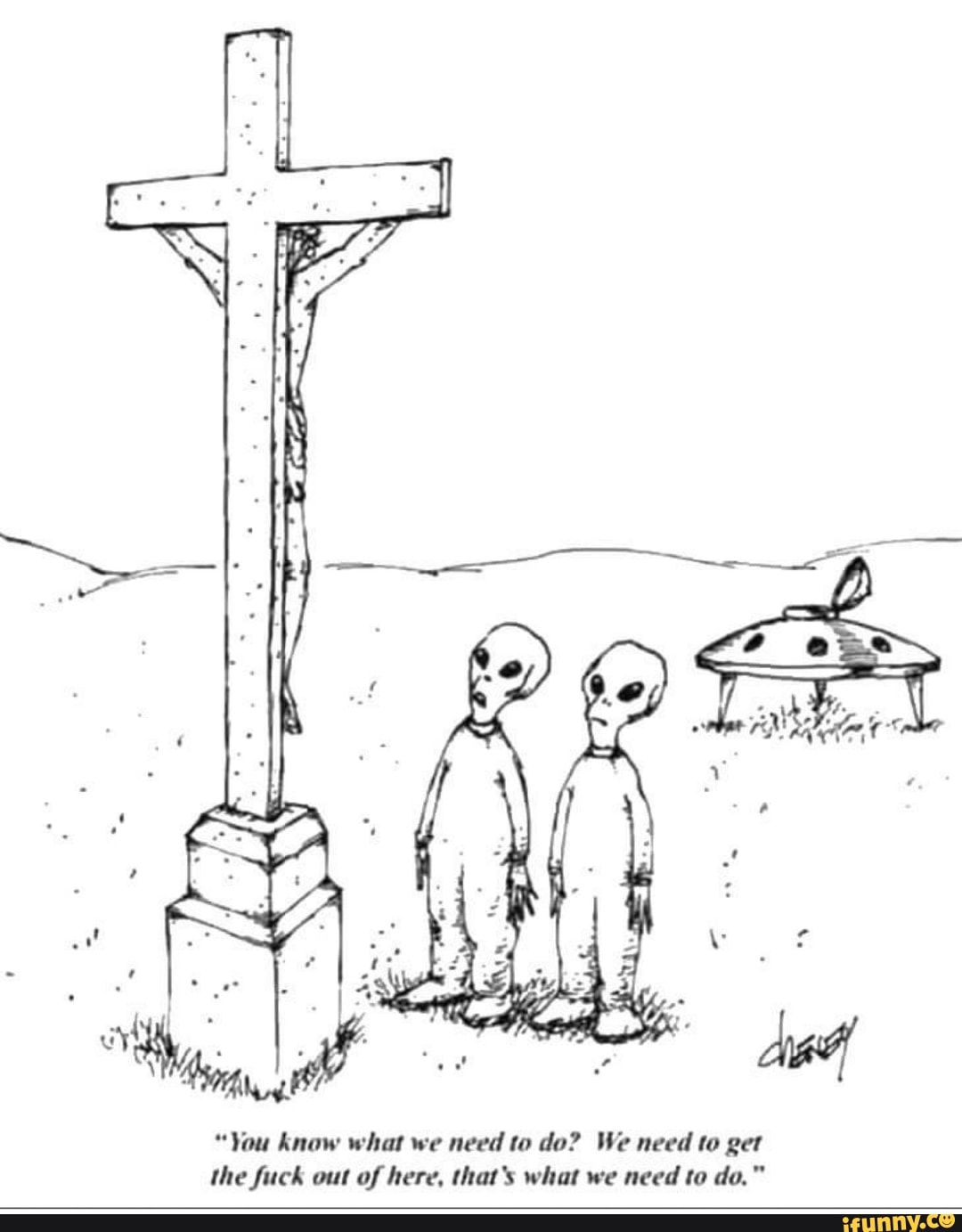
It's simple math. But, nobody knows what that probability is. It could be one in a million. It could be one in a trillion billion million. Nobody knows.
No, it’s not simple math. It’s not a simple ratio or proportionality than can be expressed! Why?
There’s a sh!t ton of things that are not known about earth.. Where did our water come from?
Also, what came first? The membrane or the nucleic acids?
Life as we understand it requires liquid water temperatures, stability, some type of atmosphere (if not to breathe, for temperature stability) and other things as well.
For those that are interested, the first experiments to really shed light are the Miller-Urey series. You take a gas that resembles the composition of early earth’s atmosphere, put some in a flask with liquid water, and run an electrical discharge though it for a while.
Presto chango! That gives amino acids. Now you need them to self-assemble into the complicated bio-macromolecules that give life. Estimates of the chances of this happening rapidly are anywhere from 10^(-300) to 1. Yes, from impossible to possible, well, because it did happen. The religious nuts favor the most improbable estimations and the atheists tend to handwave here.
No one knows how cell membranes formed to divide the inside from the outside to allow the self-organizing processes to occur that we recognize as life. I could write you a thousand words on that and we couldn’t get close. Suffice it to say that we don’t know.
Just because we find a planet that ‘could’ host life doesn’t mean that it will. There are places in our solar system that could easily have life in them. We have not found any credible signs yet.
Finally, the most frustrating theories are grouped under the heading of ‘panspermia.’ Here, life is brought by starry messengers and comes from somewhere else.
In any event, none of this is simple. The Drake equation is good as a spitballing jump-off but it is woefully inadequate at providing numerical estimates for the likelihood of finding {intelligent} life elsewhere. So unless we find a planet just like earth in the Goldilocks zone, at 300K or so with liquid water, and an atmosphere that resembles our current day one, we cannot say very much about real probabilities.
It's simple math. But, nobody knows what that probability is. It could be one in a million. It could be one in a trillion billion million. Nobody knows.
No, it’s not simple math. It’s not a simple ratio or proportionality than can be expressed! Why?
There’s a sh!t ton of things that are not known about earth.. Where did our water come from?
Also, what came first? The membrane or the nucleic acids?
Life as we understand it requires liquid water temperatures, stability, some type of atmosphere (if not to breathe, for temperature stability) and other things as well.
For those that are interested, the first experiments to really shed light are the Miller-Urey series. You take a gas that resembles the composition of early earth’s atmosphere, put some in a flask with liquid water, and run an electrical discharge though it for a while.
Presto chango! That gives amino acids. Now you need them to self-assemble into the complicated bio-macromolecules that give life. Estimates of the chances of this happening rapidly are anywhere from 10^(-300) to 1. Yes, from impossible to possible, well, because it did happen. The religious nuts favor the most improbable estimations and the atheists tend to handwave here.
No one knows how cell membranes formed to divide the inside from the outside to allow the self-organizing processes to occur that we recognize as life. I could write you a thousand words on that and we couldn’t get close. Suffice it to say that we don’t know.
Just because we find a planet that ‘could’ host life doesn’t mean that it will. There are places in our solar system that could easily have life in them. We have not found any credible signs yet.
Finally, the most frustrating theories are grouped under the heading of ‘panspermia.’ Here, life is brought by starry messengers and comes from somewhere else.
In any event, none of this is simple. The Drake equation is good as a spitballing jump-off but it is woefully inadequate at providing numerical estimates for the likelihood of finding {intelligent} life elsewhere. So unless we find a planet just like earth in the Goldilocks zone, at 300K or so with liquid water, and an atmosphere that resembles our current day one, we cannot say very much about real probabilities.
In other words, "It's simple math. But, nobody knows what that probability is. It could be one in a million. It could be one in a trillion billion million. Nobody knows."
In other words, "It's simple math. But, nobody knows what that probability is. It could be one in a million. It could be one in a trillion billion million. Nobody knows."
Is not simple math. Do you understand how those ‘probability’ estimates are formed?
Your grammar is an ideal example of why we might be behind them in intelligence. Thankfully, you do not rank intellectually as one of our top candidates that we can present as ambassador of the human race.
Intelligence is all relative. We are of super intelligence compared to ants but in the eyes of aliens we may be the ants.
This post was edited 25 seconds after it was posted.
Intelligence is all relative. We are of super intelligence compared to ants but in the eyes of aliens we may be the ants.
I thought that this was an interesting part of Interstellar - the idea that 4, or 5 dimensional beings existed. When I was in school, we read “flatlanders”
The best comparison of us to ants was the construction of the Great Pyramids in Egypt. It took humans 20 years to build a structure of equivalent size to something an equal number of ants could build in 20 hours. And the ants would have a much more elaborate and useful network of tunnels under it.
To even get that far, the Egyptians had to build lots of earlier pyramids to get the design right. Ants don't have to be taught how to build their anthills.
I'm not religious. We can't get anything close to life in a lab. You need to learn more about the science of biology and chemistry. Dna alone is so complex it's probability happening again on another planet is not possible
Complexity has nothing to do with the likelihood of abiogenesis. Complexity can be achieved by the repetition of the simplest processes imaginable. The formation of DNA and other biomolecules are the result of many simple chemical reactions - they form because they represent energetically favorable molecular configurations. If you shake around a bucket of biological precursors for long enough, it will self-assemble into DNA because it is more energetically favorable for the precursors to be linked up into a long macromolecule than it is for them to stay separate. The formation of DNA is an exothermic process!
This is the same reason that a bucket of rocks will separate out by size when you shake it. All physical systems seek the lowest energy state possible. When you shake a bucket of rocks, they get rid of as much gravitational potential energy as possible, and the way they do that is by sinking to the lowest possible point in the bucket. When you shake a box of biological precursors, they get rid of as much chemical energy as possible, and the way they do that is by forming chemical bonds so they can share each other's electrons and dump the remaining energy into their environment as heat.
Biomolecules are the inevitable result of thermodynamics. If you confine carbon, nitrogen, oxygen, sulfur, phosphorous, and hydrogen in a stable medium where they can freely interact and expose them to energy inputs that can alter their valence chemistry (e.g. UV radiation, redox reactions with metal ions) they will eventually link up and form complex chemical behemoths. Some of those behemoths will catalyze their own formation. These autocatalytic molecules will compete with one another until eventually one of them gains the ability to isolate itself by associating with amphiphilic phospholipids and forms a proto-cell. We can do all of these steps in vitro
Yes, for automated probes, it doesn’t matter, but for them to visit us, they need to travel fast enough and to dilate time enough so as to make it within a fraction of their lifetime.
They could extend their lifetime indefinitely. Or they could hibernate for the journey. Or they could upload their mind into computer memory and then 3D print a body once they arrive. Or ten other different ideas.
There are plenty of good reasons to doubt the ET testimony today. But "technologically impossible" is not one of them. We're talking about advanced aliens here.
I'm not religious. We can't get anything close to life in a lab. You need to learn more about the science of biology and chemistry. Dna alone is so complex it's probability happening again on another planet is not possible
Complexity has nothing to do with the likelihood of abiogenesis. Complexity can be achieved by the repetition of the simplest processes imaginable. The formation of DNA and other biomolecules are the result of many simple chemical reactions - they form because they represent energetically favorable molecular configurations. If you shake around a bucket of biological precursors for long enough, it will self-assemble into DNA because it is more energetically favorable for the precursors to be linked up into a long macromolecule than it is for them to stay separate. The formation of DNA is an exothermic process!
This is the same reason that a bucket of rocks will separate out by size when you shake it. All physical systems seek the lowest energy state possible. When you shake a bucket of rocks, they get rid of as much gravitational potential energy as possible, and the way they do that is by sinking to the lowest possible point in the bucket. When you shake a box of biological precursors, they get rid of as much chemical energy as possible, and the way they do that is by forming chemical bonds so they can share each other's electrons and dump the remaining energy into their environment as heat.
Biomolecules are the inevitable result of thermodynamics. If you confine carbon, nitrogen, oxygen, sulfur, phosphorous, and hydrogen in a stable medium where they can freely interact and expose them to energy inputs that can alter their valence chemistry (e.g. UV radiation, redox reactions with metal ions) they will eventually link up and form complex chemical behemoths. Some of those behemoths will catalyze their own formation. These autocatalytic molecules will compete with one another until eventually one of them gains the ability to isolate itself by associating with amphiphilic phospholipids and forms a proto-cell. We can do all of these steps in vitro
I like this. And we are talking billions of star systems with highly varying conditions... literally like running complex biological simulations over billions of years. Complexity is nothing.
Intelligence is all relative. We are of super intelligence compared to ants but in the eyes of aliens we may be the ants.
I thought that this was an interesting part of Interstellar - the idea that 4, or 5 dimensional beings existed. When I was in school, we read “flatlanders”
There is an interesting segment on ants in the Three Body Problem
This post was edited 47 seconds after it was posted.
Your grammar is an ideal example of why we might be behind them in intelligence. Thankfully, you do not rank intellectually as one of our top candidates that we can present as ambassador of the human race.
Intelligence is all relative. We are of super intelligence compared to ants but in the eyes of aliens we may be the ants.
This is highly debatable... given our mental capacity, we may be the least intelligent species in the history of this planet. There is plenty of hard evidence to back this up.
It's simple math. But, nobody knows what that probability is. It could be one in a million. It could be one in a trillion billion million. Nobody knows.
No, it’s not simple math. It’s not a simple ratio or proportionality than can be expressed! Why?
There’s a sh!t ton of things that are not known about earth.. Where did our water come from?
Also, what came first? The membrane or the nucleic acids?
Life as we understand it requires liquid water temperatures, stability, some type of atmosphere (if not to breathe, for temperature stability) and other things as well.
For those that are interested, the first experiments to really shed light are the Miller-Urey series. You take a gas that resembles the composition of early earth’s atmosphere, put some in a flask with liquid water, and run an electrical discharge though it for a while.
Presto chango! That gives amino acids. Now you need them to self-assemble into the complicated bio-macromolecules that give life. Estimates of the chances of this happening rapidly are anywhere from 10^(-300) to 1. Yes, from impossible to possible, well, because it did happen. The religious nuts favor the most improbable estimations and the atheists tend to handwave here.
No one knows how cell membranes formed to divide the inside from the outside to allow the self-organizing processes to occur that we recognize as life. I could write you a thousand words on that and we couldn’t get close. Suffice it to say that we don’t know.
Just because we find a planet that ‘could’ host life doesn’t mean that it will. There are places in our solar system that could easily have life in them. We have not found any credible signs yet.
Finally, the most frustrating theories are grouped under the heading of ‘panspermia.’ Here, life is brought by starry messengers and comes from somewhere else.
In any event, none of this is simple. The Drake equation is good as a spitballing jump-off but it is woefully inadequate at providing numerical estimates for the likelihood of finding {intelligent} life elsewhere. So unless we find a planet just like earth in the Goldilocks zone, at 300K or so with liquid water, and an atmosphere that resembles our current day one, we cannot say very much about real probabilities.
Good post. I remember reading about the Miller-Urey experiments in the book version of Carl Sagan's Cosmos. So you mentioning it sent me down a rabbit hole looking for internet info about it. Interesting stuff.
I'm not religious. We can't get anything close to life in a lab. You need to learn more about the science of biology and chemistry. Dna alone is so complex it's probability happening again on another planet is not possible
Complexity has nothing to do with the likelihood of abiogenesis. Complexity can be achieved by the repetition of the simplest processes imaginable. The formation of DNA and other biomolecules are the result of many simple chemical reactions - they form because they represent energetically favorable molecular configurations. If you shake around a bucket of biological precursors for long enough, it will self-assemble into DNA because it is more energetically favorable for the precursors to be linked up into a long macromolecule than it is for them to stay separate. The formation of DNA is an exothermic process!
This is the same reason that a bucket of rocks will separate out by size when you shake it. All physical systems seek the lowest energy state possible. When you shake a bucket of rocks, they get rid of as much gravitational potential energy as possible, and the way they do that is by sinking to the lowest possible point in the bucket. When you shake a box of biological precursors, they get rid of as much chemical energy as possible, and the way they do that is by forming chemical bonds so they can share each other's electrons and dump the remaining energy into their environment as heat.
Biomolecules are the inevitable result of thermodynamics. If you confine carbon, nitrogen, oxygen, sulfur, phosphorous, and hydrogen in a stable medium where they can freely interact and expose them to energy inputs that can alter their valence chemistry (e.g. UV radiation, redox reactions with metal ions) they will eventually link up and form complex chemical behemoths. Some of those behemoths will catalyze their own formation. These autocatalytic molecules will compete with one another until eventually one of them gains the ability to isolate itself by associating with amphiphilic phospholipids and forms a proto-cell. We can do all of these steps in vitro
You say these things so confidently, and there certainly are appealing arguments to made about self-organizing processes.
Is not simple math. Do you understand how those ‘probability’ estimates are formed?
Of course it's simple math. Multiply the total number of planets by the probability that any planet will create intelligent life: N * P. The result is the expected number of Intelligent civilizations. Math does not get much simpler than that.
And nobody knows what that probability is. It could be one in a million. It could one in a trillion billion million trillion billion.
Is not simple math. Do you understand how those ‘probability’ estimates are formed?
Of course it's simple math. Multiply the total number of planets by the probability that any planet will create intelligent life: N * P. The result is the expected number of Intelligent civilizations. Math does not get much simpler than that.
And nobody knows what that probability is. It could be one in a million. It could one in a trillion billion million trillion billion.
Even simpler math is just L = number of planets with intelligent life = 42.
I was talking about the probability of macromolecules spontaneously forming from constituent amino acids, but ok.
I see that you are talking about the multiplicative terms in the Drake Equation. My point is that each of those terms has a complicated structure as well.
You say these things so confidently, and there certainly are appealing arguments to made about self-organizing processes.
Can you show me though how proteins were made?
I'm not sure what you're asking exactly. Like how proteins were made abiotically? The condensation of two amino acids can occur abiotically. The carboxyl of one amino acid becomes coordinated with some electron withdrawing group and then it gets attacked by the nucleophilic amine on another amino acid, which forms an amide bond. Amino acids are easy to form abiotically, and metal ions, phosphates, etc can behave as electron withdrawing groups.
How a cell makes proteins? It does the same thing, but it uses other proteins to hold the amino acids in place so that they're more likely to react.
How we make them in a lab? That's a little more complicated, but usually we'd use a carbodiimide (or we'd just make a cell do it for us).
Note that there's a lot of contention among biologists about what the first macromolecule was. IMO it's unlikely that proteins were the first macromolecule. I think nucleic acids are a better candidate, but there are arguments against that position
We know it's true. Some survived and walk among us. Adam Schiff Al Sharpton Mitt Romney Lori Lightfoot Ilhan Omar Max Rose Nancy Pelosi All of the pencil neck bobble heads are space aliens.
Let's say there will be 10^20 planets throughout the lifetime of the Universe. And let's say the probability of a planet evolving intelligent life is significantly higher than 1/10^20. Then your zero odds are pretty close. However, if that probability is significantly less than 1/10^20, then there's pretty close to zero chance that intelligent life forms anywhere else in the universe.
It's simple math. But, nobody knows what that probability is. It could be one in a million. It could be one in a trillion billion million. Nobody knows.
We only know much about 1 solar system in the entire universe and it has intelligent life in it.
Help us build the best running shoe review site for a chance to win a LetsRun t-shirt.Help us build the best running shoe review site for a chance to win one of 10 LetsRun t-shirts.