If drugs, that include EPO, do not aid performance then there would have been no significant improvement in the times altitude-trained athletes achieved before blood doping became widely used and EPO was developed. But since that time - which was the late '70's - distance performances have gone through the roof. That degree of improvement is not attributable to changes in training methods - which are largely the same - or even new "shoes". Thus, EPO and other peds undoubtedly aid altitude-trained runners.
But since that time - which was the late '70's - distance performances have gone through the roof. That degree of improvement is not attributable to changes in training methods - which are largely the same - or even new "shoes". Thus, EPO and other peds undoubtedly aid altitude-trained runners.
I would suggest you look more critically into your own suppositions: 1) What percentage of the best 5K+ runners trained at high altitude in the 1970s, when that is now the norm? 2) How many elite runners ran 90mpw+ for 5K, 110-140mpw+ for the marathon? 3) It's not the shoes you say — well the shoes probably help 4-6% from the cruddy shoes of the 1970s, and that is quite a significant amount.
1. Kenyan runners in the '70's trained at altitude - as they do today. So did most other top distance runners in that era. It was known since Mexico '68 that altitude-training gave an advantage.
2. Elite distance runners had been training 100mpw-plus since the early '60's.
3. Shoes were not "cruddy" in the 1970's. In fact they were very similar to today, as track shoes in particular had to be extremely light. Zola Budd proved even into the 80's that barefooted she was amongst the best in the world. Shoes today will not give anything like the advantage touted on these boards. But EPO and other drugs will. And have.
Zane Robertson He lives in Iten, Kenya. At the age of 17 he and his twin brother Jake moved from New Zealand to Iten, Kenya, to further their running careers.
Nick Willis could dreams to be a new Peter Snell if he was born in the 60s but times have changed.
We should accept that some regions are more predisposed for running some distances. This is not genetics but pragmatic facts.
If drugs, that include EPO, do not aid performance then there would have been no significant improvement in the times altitude-trained athletes achieved before blood doping became widely used and EPO was developed. But since that time - which was the late '70's - distance performances have gone through the roof. That degree of improvement is not attributable to changes in training methods - which are largely the same - or even new "shoes". Thus, EPO and other peds undoubtedly aid altitude-trained runners.
If you want to assume/conclude that only drugs can aid performance and you want to assume/conclude that training has remained the same since the '70s, and you willfully ignore all other non-doping factors, then it becomes easy to assume/conclude that these improvements are not due to the organized training of inherently talented athletes, but to drugs.
You should know by know that I simply do not share your faith with which you found all these beliefs, if you cannot link them to the real world.
Of course, I can understand it. Pointing out something repeatedly doesn't make it more true or more relevant by virtue of repetition. What I said is missing is the performance data, and you seem to be saying that EPO can't work for Russians, because reasons. Are you also arguing that Russians and Nigerians are just inherently less talented than today's top athletes?
Substitute Russia for athletes from any country in 5 continents, and for kicks throw in North Africa, West Africa, and South Africa. Give me your best examples of 7 minute differences, say for example, relative to Derek Clayton from the late '60s, for perspective.
Did you see my paragraph arguing that altitude, which stimulates EPO, also works? Russian scientists have known this since the 1930s:
I think it's clear what he's saying, and you must be missing it on purpose. It's evident that top level running talent is rare, and doping is only proposed to provide a few percent improvement. E.g. a 2:20 marathoner on dope doesn't run 2:05, even if doping works. These are facts that I think everyone agrees on.
Then you still need a large population of marathoners to yield world elites with doping, because otherwise the selection pool doesn't contain enough talent, and Russia doesn't have that on the men's side. This does not suggest that doping doesn't work on Russians! Russians have never won a baseball title, but we don't take this as evidence that steroids don't work.
I also think it is clear what he is saying. I am totally not missing it, but just consider it pure nonsense. When Coevett's point is pure nonsense the first time, repeating it many times does not change that.
My point isn't just about Russia. In the marathon it includes all non-East Africans worldwide over all of history. How much larger population of marathoners can you get than 90+% of the world male population over the course of four to six decades spanning the entirety of the EPO-era?
If drugs, that include EPO, do not aid performance then there would have been no significant improvement in the times altitude-trained athletes achieved before blood doping became widely used and EPO was developed. But since that time - which was the late '70's - distance performances have gone through the roof. That degree of improvement is not attributable to changes in training methods - which are largely the same - or even new "shoes". Thus, EPO and other peds undoubtedly aid altitude-trained runners.
If you want to assume/conclude that only drugs can aid performance and you want to assume/conclude that training has remained the same since the '70s, and you willfully ignore all other non-doping factors, then it becomes easy to assume/conclude that these improvements are not due to the organized training of inherently talented athletes, but to drugs.
You should know by know that I simply do not share your faith with which you found all these beliefs, if you cannot link them to the real world.
Of course you have to construct straw-men to make a case. I did not say the "only" improvements are due to drugs, I said the "degree" of improvements are due to drugs, given that talent and training are much the same as they were in the 70's. If there are athletes today who can train harder - well, that's what doping does, too. The "real world" is merely your refuge of fantasies.
Human dragsters people. Top fuel funny cars. Everyone in every event in this sport who makes a true living wage off their efforts is breaking the rules. ‘Twas always thus, and always thus will be. If you want purity, go watch a high school competition.
If you want to assume/conclude that only drugs can aid performance and you want to assume/conclude that training has remained the same since the '70s, and you willfully ignore all other non-doping factors, then it becomes easy to assume/conclude that these improvements are not due to the organized training of inherently talented athletes, but to drugs.
You should know by know that I simply do not share your faith with which you found all these beliefs, if you cannot link them to the real world.
Of course you have to construct straw-men to make a case. I did not say the "only" improvements are due to drugs, I said the "degree" of improvements are due to drugs, given that talent and training are much the same as they were in the 70's. If there are athletes today who can train harder - well, that's what doping does, too. The "real world" is merely your refuge of fantasies.
You assume cause and effect in order to conclude cause and effect. Adding the word "degree" in quotes doesn't change that your assumptions have no real basis.
Your givens about training are not given, but assumed and self-served.
Given doping is worldwide, and has been since the '70s, we should also see your "degree" of significant improvements worldwide, especially from countries known to dope, like Russia and Spain and France and the USA, and most especially from sea-level athletes. Coevett says EPO is worth 7-minutes for the marathon. In that same vein, we should not see the same "degree" of improvements from countries not known to dope, like Japan.
Here's what the real-world refuge looks like:
In the 52 years from Derek Clayton in 1967 (2:09:37) through 14 Oct 2018, here are the number of athletes that ran 2:10:30 or faster:
- 34 North African athletes (fastest is 2:05:27)
- 324 non-East/non-North Africans (fastest is 2:05:48, or 2:04:58 with the wind)
Only 7 of them ran 2:06:05 or faster, if we count Ryan Hall's wind-aided Boston performance.
In these 52 years -- who of these 358 athletes are the best examples showing the "degree" of improvement that experienced coaches and athletes know that drugs can deliver?
Eddy Hellebuyck? His EPO performances don't appear on the all-time list.
Of course you have to construct straw-men to make a case. I did not say the "only" improvements are due to drugs, I said the "degree" of improvements are due to drugs, given that talent and training are much the same as they were in the 70's. If there are athletes today who can train harder - well, that's what doping does, too. The "real world" is merely your refuge of fantasies.
You assume cause and effect in order to conclude cause and effect. Adding the word "degree" in quotes doesn't change that your assumptions have no real basis.
Your givens about training are not given, but assumed and self-served.
Given doping is worldwide, and has been since the '70s, we should also see your "degree" of significant improvements worldwide, especially from countries known to dope, like Russia and Spain and France and the USA, and most especially from sea-level athletes. Coevett says EPO is worth 7-minutes for the marathon. In that same vein, we should not see the same "degree" of improvements from countries not known to dope, like Japan.
Here's what the real-world refuge looks like:
In the 52 years from Derek Clayton in 1967 (2:09:37) through 14 Oct 2018, here are the number of athletes that ran 2:10:30 or faster:
- 34 North African athletes (fastest is 2:05:27)
- 324 non-East/non-North Africans (fastest is 2:05:48, or 2:04:58 with the wind)
Only 7 of them ran 2:06:05 or faster, if we count Ryan Hall's wind-aided Boston performance.
In these 52 years -- who of these 358 athletes are the best examples showing the "degree" of improvement that experienced coaches and athletes know that drugs can deliver?
Eddy Hellebuyck? His EPO performances don't appear on the all-time list.
All that waffle aside, drugs have been an increasing feature in the sport since the seventies. Performance levels have greatly increased across the board in that time while training methods have changed little. Most top athletes today perform at a higher level than the best altitude-trained athletes before drugs become pervasive. Therefore drugs also aid altitude-trained athletes - except to one who will not see it because he cannot bear the thought of his idols doping and his sport being rotten.
From the 300 fastest male Marathon runners in history, almost 90% are of East African origin (big majority from Kenya and Ethiopia).
Doping can't explain this astonishing fact.
Sorry - it can. Doping is likely to be more widespread in those countries. In the '70's and '80's running events were similarly dominated by the E Bloc. Some of the women's records still stand. We know why. As the appalling spate of doping infringements in Kenya are now showing, doping is the norm in their sport - as it was in the former E Bloc. In Ethiopia, doping control is largely non-existent.
From the 300 fastest male Marathon runners in history, almost 90% are of East African origin (big majority from Kenya and Ethiopia).
Doping can't explain this astonishing fact.
Sorry - it can. Doping is likely to be more widespread in those countries. In the '70's and '80's running events were similarly dominated by the E Bloc. Some of the women's records still stand. We know why. As the appalling spate of doping infringements in Kenya are now showing, doping is the norm in their sport - as it was in the former E Bloc. In Ethiopia, doping control is largely non-existent.
No, it clearly can't. You should know that doping is widespread in any country all over the world - you have said so dozens of times in this forum. But it is so more sophisticated in some underdeveloped East African nations?
Germany in the 1970s and 1980s was one of the most developed countries in the world and with the state sponsored doping regimen in the GDR, the results were not a big surprise.
Anti-doping: AK warns complicit coaches, officials
What you need to know: Over 30 Kenyan athletes have been flagged down for various doping offences this year alone.
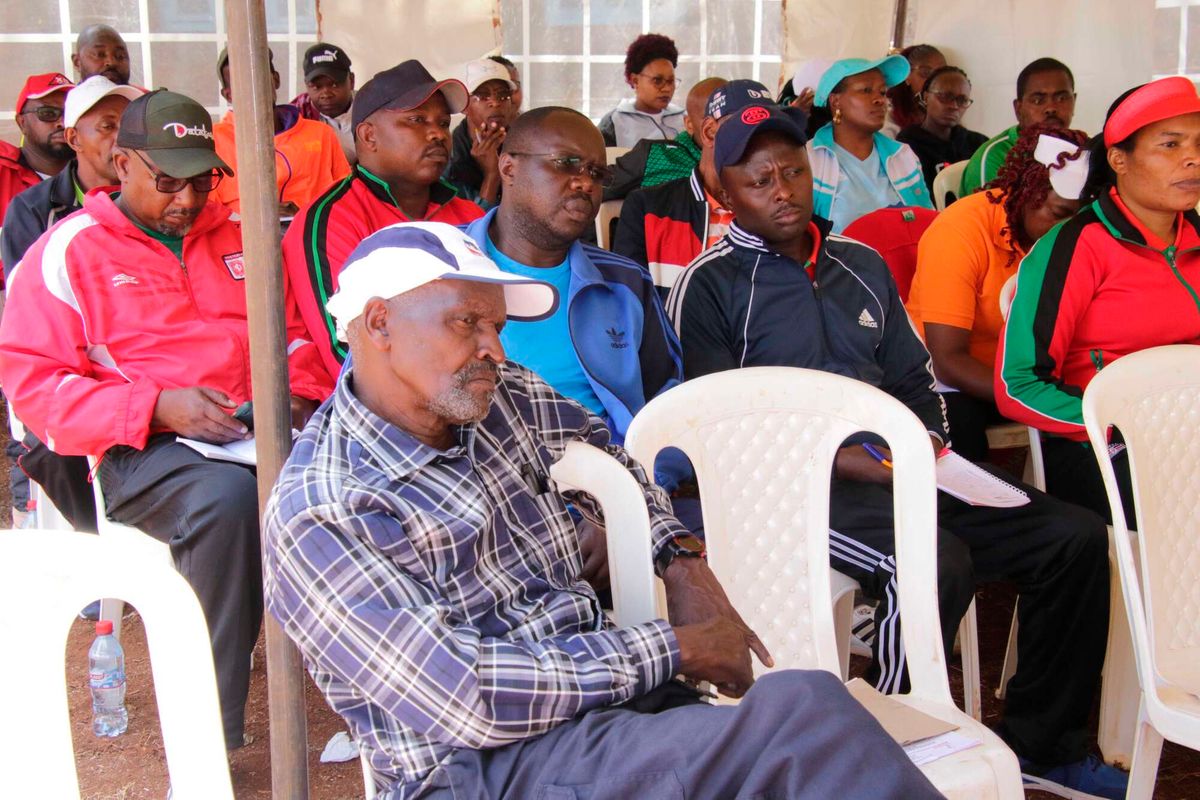
Athletics Kenya has warned coaches and games teachers who condone doping, sexual and gender-based violence among young athletes of dire consequences. Speaking on Friday on the first day of a two-day AK seminar that brought together trainers and games teachers from primary and secondary schools from the Central region in Nyeri town, Athletics Kenya’s Vice President in charge of competitions Paul Mutwii told coaches to promote clean sport and warned those found culpable of dire consequences. He said coaches will be held liable should their athletes fail drug tests. “We are the handlers of these runners. Can we find out who is out to spoil the reputation of our sportsmen and women?” he said.
Over 30 Kenyan athletes have been flagged down for various doping offences this year alone. Speaking at the same forum, AK Chief Administrative Officer Susan Kamau urged trainers to encourage athletes to go through the Kenya Doctors Network to ensure they take the right medication when sick.
1. Kenyan runners in the '70's trained at altitude - as they do today. So did most other top distance runners in that era. It was known since Mexico '68 that altitude-training gave an advantage.
2. Elite distance runners had been training 100mpw-plus since the early '60's.
3. Shoes were not "cruddy" in the 1970's. In fact they were very similar to today, as track shoes in particular had to be extremely light. Zola Budd proved even into the 80's that barefooted she was amongst the best in the world. Shoes today will not give anything like the advantage touted on these boards. But EPO and other drugs will. And have.
Road shoes were. On #3, you are clearly out of your gourd if you think athletes in the Adios Pro/Alphafly are on equal footing with 1970s marathon shoes.
The participation of Kenyans as well as Ethiopians grew a ton in the 80s and 90s. Note how I said the percentage. There're more East Africans participating in the 5K+ and of the Western athletes, they are almost all (95%) using altitude heavily in their training. So that addresses your weak rebuttal in my eyes. Yes, some Western athletes (who composed more of the top athletes then) did altitude but not 95+% like now. Same point for #2, the percentages of these athletes doing higher mileage and greater training has steadily risen. All these things plus the shoes contribute to an improving record. It's why Jakob and Grant Fisher are way faster than runners of the '70s and you could say the same for Nicholas Kimeli and Selemon Barega.
Help us build the best running shoe review site for a chance to win a LetsRun t-shirt.Help us build the best running shoe review site for a chance to win one of 10 LetsRun t-shirts.