My understanding is that she can only appeal on procedural grounds or by proving that the CAS decision violated Swiss law.
Anyone who seems to know what they’re talking about — including Shelby’s lawyers before the CAS decision came down — seems to acknowledge that this is extremely unlikely to be successful.
They’ll probably argue again that the AIU should have done an additional test on her urine sample. CAS rejected that argument, agreeing with the AIU that the additional test was not required or necessary.
CAS rejected the extra test (procedural issues) by a vote of 2 - 1, so it wasn’t unanimous. There is an interesting way to appeal this to the Swiss Court that I believe has never been mentioned on this board.
Okay but how is it a violation of Swiss law that CAS issued a non-unanimous ruling?
It should be noted that Houlihan’s legal team is already 0-1 at the Swiss Federal Tribunal.
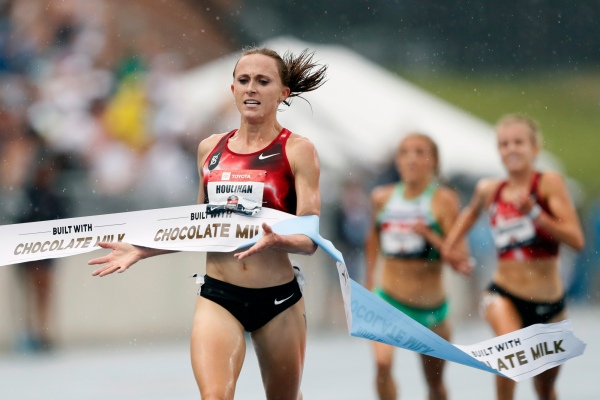
The decision likely ends the record-setting American runner’s bid to compete in the Tokyo Olympics despite a doping ban. She was removed from her 1,500- and 5,000-meter prelim heats.
CAS rejected the extra test (procedural issues) by a vote of 2 - 1, so it wasn’t unanimous. There is an interesting way to appeal this to the Swiss Court that I believe has never been mentioned on this board.
Okay but how is it a violation of Swiss law that CAS issued a non-unanimous ruling?
It should be noted that Houlihan’s legal team is already 0-1 at the Swiss Federal Tribunal.
They don’t have to show a violation of Swiss law to win the appeal. You may have read that on a board somewhere.
Houlihan’s attorney was unable to get an injunction because the Swiss court hadn’t heard any facts of the case. They may lose this case, but i don’t believe an earlier application for an injunction has any relation to the case itself.
Getting the wrong order is the smallest issue here. CAS judged that to be possible. There were several worse, a lot less likely issues:
1) According to CAS, we can rule out on the balance of probability that an intact boar made it into the burrito ("improbable", CAS wrote). {At this point, the case is lost, in contrast to the Lawson and Wilson cases, where the beef - not pork - contamination was judged to be "more likely than not"} 2) According to CAS, we can rule out on the balance of probability that a stomach offal burrito even from an intact boar would have caused such high nandro levels ("improbable", CAS wrote). {extra icing} 3) According to CAS, we can rule out on the balance of probability that a stomach offal burrito even from an intact boar would have caused such high androgen levels ("highly improbable", CAS wrote). {nail in the coffin} 4) According to CAS, we can rule out that the nandro came from "commercial pork" (not "consistent with", CAS wrote). And according to CAS, the food truck obtained their food from a commercial plant that used commercial pork from commercial farmers. With that, the coffin was burned, and all ashes spread out over the ocean. Case closed.
Maybe according to the CAS, but the CAS doesn't really know what Shelby ate, with any degree of certainty.
They have no clue at all what she ate other than that from the food truck as the prosecution provided no evidence
Maybe not, but they know it wasn't an Nandrolone infused burrito.
Really?
How can they possibly know something no one else does based on the incomplete and inconclusive evidence before them? The arguments before them were of a general nature, and not specific to Houlihan.
That's not how we gain real knowledge in the real world.
No one should have doubted that the occurance of such nandrolone containing burritos would be generally rare, but with 121 million opportunites per year, in the USA, it is not a question of if, but who and when.
Getting the wrong order is the smallest issue here. CAS judged that to be possible. There were several worse, a lot less likely issues:
1) According to CAS, we can rule out on the balance of probability that an intact boar made it into the burrito ("improbable", CAS wrote). {At this point, the case is lost, in contrast to the Lawson and Wilson cases, where the beef - not pork - contamination was judged to be "more likely than not"} 2) According to CAS, we can rule out on the balance of probability that a stomach offal burrito even from an intact boar would have caused such high nandro levels ("improbable", CAS wrote). {extra icing} 3) According to CAS, we can rule out on the balance of probability that a stomach offal burrito even from an intact boar would have caused such high androgen levels ("highly improbable", CAS wrote). {nail in the coffin} 4) According to CAS, we can rule out that the nandro came from "commercial pork" (not "consistent with", CAS wrote). And according to CAS, the food truck obtained their food from a commercial plant that used commercial pork from commercial farmers. With that, the coffin was burned, and all ashes spread out over the ocean. Case closed.
How can you say that according to CAS we can rule out x y or z.
For point 4 I would want a full food audit by the appropriate authorities as I hardly think that the people in the food chain would volunteer any breaches at the time the food authorities were not checking.
And according to CAS, SH was a credible witness and we can thus rule out that she lied of was a cheat.
And according to CAS their chief witness lied in a previous case.
And it may well be that, according to Swiss Law the latter point will clear her.
You are mistaken about where the burden of proof lies. Shelby could have attempted an exhaustive audit of the food chain. But once an athlete tests positive for a banned substance, she alone has the unhappy burden of trying to prove that the result was flawed, or that it stemmed from an innocent mistake.
You are mistaken about where the burden of proof lies. Shelby could have attempted an exhaustive audit of the food chain. But once an athlete tests positive for a banned substance, she alone has the unhappy burden of trying to prove that the result was flawed, or that it stemmed from an innocent mistake.
They did attempt such but the food suppliers refused without a court order.
WHY IS SHELBY HOULIHAN SERVING A DOPING BAN IF SHE IS NOT A DOPER?
A simple answer.
The ban is the default presumed outcome of a set of rules, which USADA chief Travis Tygart says (paraphrased) "railroads innocent athletes into 4-year bans, treating them as dopers".
According to these simple rules and their associated guidelines and standards, a one-time B-sample confirmed presence of nandrolone above a low threshold in a urine sample, established to be an AAF (as opposed to an ATF), is an instant rule violation, regardless of knowledge or intent or negligence or fault.
These rules do not make it possible for the CAS to "knowingly" distinguish Shelby from the proven accidental "doper" Simon Getzmann or the convicted serial-"doper" Lance Armstrong.
If Shelby had conviced the CAS Panel of no-fault, or non-negligence, or non-intent, on the balance of probability, this still violates the rules of both "presence" and "use", that do not depend on these factors, and she would still be a WADA-defined "doper", just serving a reduced ban or no ban.
I have a question regarding SH's appeal to the Swiss Tribunal or whatever it is. What exactly is she allowed to appeal? Does she have to convince them that it is likely that the Nandrolone could've come from a burrito, or can she try another strategy like a tainted supplement or sabotage?
From what has been said, it’s whether the process/protocols were followed correctly I think. So I’d think her lawyers would try to imply that more testing should’ve been done on her sample, and they should’ve more conclusively ruled out that it was from a meat source. I don’t think new theories are going to fly.
(IANAL, but) I think the only possibility would be a decision reversal that the AAF should have been considered an ATF, requiring more tests before becoming a rule violation.
WHY IS SHELBY HOULIHAN SERVING A DOPING BAN IF SHE IS NOT A DOPER?
A simple answer.
The ban is the default presumed outcome of a set of rules, which USADA chief Travis Tygart says (paraphrased) "railroads innocent athletes into 4-year bans, treating them as dopers".
According to these simple rules and their associated guidelines and standards, a one-time B-sample confirmed presence of nandrolone above a low threshold in a urine sample, established to be an AAF (as opposed to an ATF), is an instant rule violation, regardless of knowledge or intent or negligence or fault.
These rules do not make it possible for the CAS to "knowingly" distinguish Shelby from the proven accidental "doper" Simon Getzmann or the convicted serial-"doper" Lance Armstrong.
If Shelby had conviced the CAS Panel of no-fault, or non-negligence, or non-intent, on the balance of probability, this still violates the rules of both "presence" and "use", that do not depend on these factors, and she would still be a WADA-defined "doper", just serving a reduced ban or no ban.
The problem is that there are many understanding of the word doper; but in the real world no one would be called a doper for having a single very small metabolite that had not been proven to be intent.
You are mistaken about where the burden of proof lies. Shelby could have attempted an exhaustive audit of the food chain. But once an athlete tests positive for a banned substance, she alone has the unhappy burden of trying to prove that the result was flawed, or that it stemmed from an innocent mistake.
No one had the burden of proving the four points "casual" wants to rule out (and notably the CAS did not "rule out").
The only burden that matters was for Shelby to prove "not intentional". Athlete intent cannot be determined by the AIU or the CAS counting pigs.
Looking at the food chain, generally, as far back as 1992, does not help anyone know any better what was actually in one specific burrito in December 2020.
In a nation that consumes 121 million pigs a year, it is not a question of "if" but a question of "who" and "when". Even a 1 in 121 million chance is expected to happen once a year, with 100% probability.
All we have learned is that is not possible to "prove" a source of a substance with general population statistics. Such a "proof" requires something more specific, like testing the uneaten burrito, or another burrito from the same batch.
How can you say that according to CAS we can rule out x y or z.
And according to CAS their chief witness lied in a previous case.
How? Simply, by citing CAS, whose verdict was "possible but improbable" or "possible but highly improbable" etc., four whopping times. One time would be enough to sink her case.
For example, even if her roid amount would have been only half as much, and even if the roid's carbon isotope ratio would have been natural not synthetic, and even if no other androgen levels would have been elevated, she would have been banned. That's how clear this case is.
As for your unproven claim "according to CAS their chief witness lied in a previous case" - I highly doubt that. You may be falling for rojo's false claims. Source? Quote?
Why should we stress about the meat supply in U.S. and S. Houlihan's burrito? S. Houlihan did not accidently ingest P.E.D.s. S. Houlihan did not miraculously become P.E.D. positive from a burrito. Your issue is that the case was not proven Beyond a Reasonable Doubt. As I stated, Preponderance of the Evidence is the standard.
Why should we stress about the meat supply in U.S. and S. Houlihan's burrito? S. Houlihan did not accidently ingest P.E.D.s. S. Houlihan did not miraculously become P.E.D. positive from a burrito. Your issue is that the case was not proven Beyond a Reasonable Doubt. As I stated, Preponderance of the Evidence is the standard.
Actually it is “ comfortable satisfaction” comes very very close to being “ beyond reasonable doubt “ in serious cases.
And how on earth do you know SH did not injest a PED.The CAS panel did not so how do you?
How can you say that according to CAS we can rule out x y or z.
And according to CAS their chief witness lied in a previous case.
How? Simply, by citing CAS, whose verdict was "possible but improbable" or "possible but highly improbable" etc., four whopping times. One time would be enough to sink her case.
For example, even if her roid amount would have been only half as much, and even if the roid's carbon isotope ratio would have been natural not synthetic, and even if no other androgen levels would have been elevated, she would have been banned. That's how clear this case is.
As for your unproven claim "according to CAS their chief witness lied in a previous case" - I highly doubt that. You may be falling for rojo's false claims. Source? Quote?
Just cos CAS ruled it out we can’t actually know.
You don’t grasp science compared with a sports hearing.
How can you say that according to CAS we can rule out x y or z.
And according to CAS their chief witness lied in a previous case.
How? Simply, by citing CAS, whose verdict was "possible but improbable" or "possible but highly improbable" etc., four whopping times. One time would be enough to sink her case.
For example, even if her roid amount would have been only half as much, and even if the roid's carbon isotope ratio would have been natural not synthetic, and even if no other androgen levels would have been elevated, she would have been banned. That's how clear this case is.
As for your unproven claim "according to CAS their chief witness lied in a previous case" - I highly doubt that. You may be falling for rojo's false claims. Source? Quote?
Definition of "rule out": transitive verb. 1 : exclude, eliminate. 2 : to make impossible
Can you cite the paragraphs where the CAS says "rule out"?
Why should we stress about the meat supply in U.S. and S. Houlihan's burrito? S. Houlihan did not accidently ingest P.E.D.s. S. Houlihan did not miraculously become P.E.D. positive from a burrito. Your issue is that the case was not proven Beyond a Reasonable Doubt. As I stated, Preponderance of the Evidence is the standard.
I don't know why anyone stresses about the meat supply in the US. It is the wrong measure of intent.
Ignoring that you mixed up the applicable standards, my issue is separating what can be logically concluded from the CAS report, in the context of the WADA Code, and what claims simply do not follow, lacking tangible evidence.
Are there any legal scholars reading this thread who can clarify what grounds her appeal to the Swiss Federal Tribunal can be based on?
I may be wrong, but I thought procedural issues meant legal procedural issues, not scientific, e.g. Prof. Ayotte not doing a further pharmacokinetics test on SH's urine sample.
I actually read the CAS 44 page ruling. Shelby's expert witness Dr. Emmanuele Strahm did not provide enough evidence to back up his opinion. Also, CAS expounded on the words should and if when commenting on whether Ayotte should have sought a second opinion (bottom of page 24). Legalese parsing at its finest.
I have another question. How tight is the chain of custody of samples for AIU drug testing? How can anyone be certain the sample tested was actually theirs and that it wasn't tampered with?
It is bad enough that some supplements and prescription medications can contain contaminants and that cattle for beef can be given anabolic steroids in the US, each leading to occasional positive drug tests for athletes.
I have no idea if SH knowingly or unknowingly ingested nandrolone or a prohormone, but I feel sorry for any innocent athlete who winds up with a positive sample.
Why should we stress about the meat supply in U.S. and S. Houlihan's burrito? S. Houlihan did not accidently ingest P.E.D.s. S. Houlihan did not miraculously become P.E.D. positive from a burrito. Your issue is that the case was not proven Beyond a Reasonable Doubt. As I stated, Preponderance of the Evidence is the standard.
I don't know why anyone stresses about the meat supply in the US. It is the wrong measure of intent.
Ignoring that you mixed up the applicable standards, my issue is separating what can be logically concluded from the CAS report, in the context of the WADA Code, and what claims simply do not follow, lacking tangible evidence.
The core problem is that strict liability was primarily for administrative offences and low level offences and not offences that have a huge life changing effect.