Who cares who you support? You have absolutely no effect on Allie or any decision she makes. You are a nonentity in her life.
-
72
-
splitcalculator wrote:
honestly sick of men who know nothing about women's bodies commenting on how women's bodies work. I am female and I had the most consistent period of my life while running the highest volume I've ever done(around 70mpw) and being around 5'3", 105lbs, 12% body fat. I raced a marathon PR and got pregnant 3 months later without trying, now I'm halfway through a healthy pregnancy and still running. I got a lot of comments about how I needed to gain body fat to get pregnant from ignorant men, but it isn't about what a woman's body looks like or how much body fat they have, it's about getting the right nutrients in. LETS STOP TELLING WOMEN HOW HEALTHY THEY ARE BASED ON HOW THEY LOOK.
Thank you for your post. I ran between 80 and 100mpw for years and never missed a period. I was about 5'4" and 103-105lbs. I don't know my body fat%, but I do know that my body weight and composition are healthy for me. I never tried to reach a goal weight or restricted food. This is just what my body is like when I train at a high level.
The trick is this: body weight does matter, but a person can't force her/himself to reach an arbitrary goal weight if it's inconsistent with what their body needs.
If I had to bet money, I'd bet that the vast majority of consistent, high-level female distance runners get regular periods. We hear disproportionately from the ones who don't because they end up suffering terrible consequences and want to draw attention to ED warning signs.
230 -
big timer wrote:
I am a male. That doesn't make me an expert on the male body. Smart people rely on doctors and studies, not anecdotal evidence. But I guess you are one of those people who thinks your experience means more than that of millions of others. You sound like my grandfather who smoked his entire life but lived to 92. He claimed that smoking was not bad for you and that he was the evidence.
Purpose: To determine body composition, energy availability, training load, and menstrual status in young elite endurance running athletes (ATH) over 1 year, and in a secondary analysis, to investigate how these factors differ between nonrunning controls (CON), and amenorrheic (AME) and eumenorrheic (EUM) ATH. Correlations to injury, illness, and performance were also examined. Methods: Altogether 13 ATH and 8 CON completed the Low Energy Availability in Females Questionnaire. Anthropometric, energy intake, and peak oxygen uptake assessments were made at 4 time points throughout the year: at baseline post competition season, post general preparation, post specific preparation, and post competition season the following year. Logs of physical activity, menstrual cycle, illness, and injury were kept by all participants. Performance was defined using the highest International Association of Athletics Federations points prior to and after the study. Results: ATH had significantly lower body mass (P < .008), fat percentage (P < .001), and body mass index (P < .027) compared with CON, while energy availability did not differ between ATH and CON. The Low Energy Availability in Females Questionnaire score was higher in ATH than in CON (P < .028), and 8 ATH (vs zero CON) were AME. The AME had significantly more injury days (P < .041) and ran less (P < .046) than EUM, while total annual running distance was positively related to changes in performance in ATH (r < .62, P < .043, n < 11). Conclusions: More than half of this group of runners was AME, and they were injured more and ran less than their EUM counterparts. Furthermore, only the EUM runners increased their performance over the course of the year.
90 -
All I can say is Where were her parents? Where was her mother? It is normal for Moms to know when her daughters start. It is a shame that they ignored this obvious problem for so many years and it took her sponsor to address it. Was winning and scholarships more important to her parents than their child's health? Because I agree she will probably have ramifications from this her entire life. Including the stress fractures and injuries that seem to plague her. I hope she can reach her goals and am rooting for her.
1610 -
SPNKY wrote:
All I can say is Where were her parents? Where was her mother? It is normal for Moms to know when her daughters start. It is a shame that they ignored this obvious problem for so many years and it took her sponsor to address it. Was winning and scholarships more important to her parents than their child's health? Because I agree she will probably have ramifications from this her entire life. Including the stress fractures and injuries that seem to plague her. I hope she can reach her goals and am rooting for her.
Her mother was her coach in high school.
80 -
SPNKY wrote:
All I can say is Where were her parents? Where was her mother? It is normal for Moms to know when her daughters start. It is a shame that they ignored this obvious problem for so many years and it took her sponsor to address it. Was winning and scholarships more important to her parents than their child's health? Because I agree she will probably have ramifications from this her entire life. Including the stress fractures and injuries that seem to plague her. I hope she can reach her goals and am rooting for her.
These are good questions.
I don't know if a female's bones can recover from undernourishment during important growing years. I have particularly heard age 18-22 are critical bone growth years for females. Allie may be plagued with bone injuries for the rest of her life. It's too bad her parents didn't intervene when she was in high school.
Allie's videos are refreshingly honest and hopefully helping other young females who are at risk for the same behavior.
110 -
carrot wrote:
I don't know if a female's bones can recover from undernourishment during important growing years. I have particularly heard age 18-22 are critical bone growth years for females. Allie may be plagued with bone injuries for the rest of her life.
Her bones probably won't become as strong as someone who never had an eating disorder, but bones can recover. Just as an outside observer, I'm pretty sure she has already decreased her frequency of injuries since her recovery. Her boyfriend also said as much in her most recent video, saying she was injured all the time in '21 when they met.
This describes what needs to be done to improve bone health besides eating enough and being ready psychologically:
bmj blog wrote:
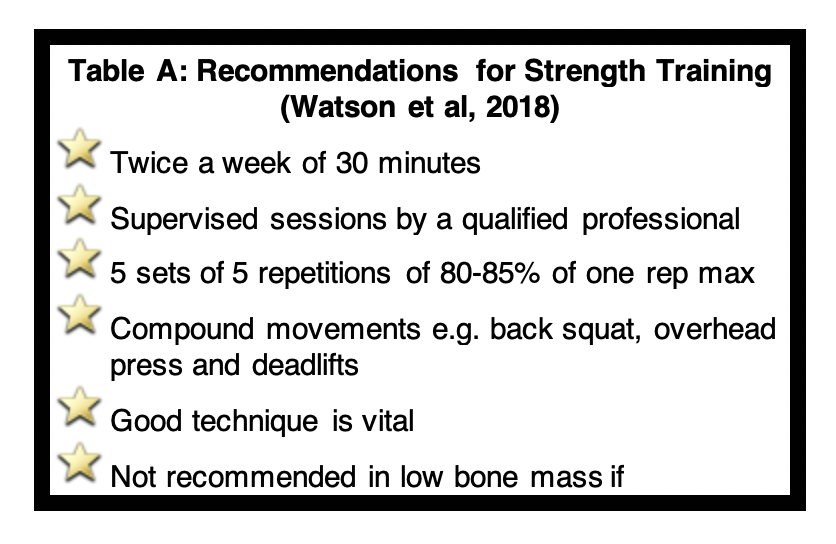
During the initial stages, the focus should be on strength and conditioning, and gradually introduce aerobic training. It is well established that bone responds to mechanical load it is subjected to. A combination of weight bearing aerobic training, resistance training and impact activities is ideal for bone health (Harding et al, 2017). Non-weight bearing sports such as cycling, provides no osteogenic stimulus and can have a negative impact on bone health, particularly in combination with LEA (Keay et al, 2018, 2019). Clear training parameters should be established with athletes to aid compliance to appropriate levels of training, for example training zones, duration and volume. Cardiovascular training intensity and an increase in volume should only take place in the final stages of the recovery process (Keay, 2019).
Progressive high intensity resistance training has recently been shown to have positive outcomes on bone strength (Watson et al, 2018). Recommendations in Table A suggest a supervised twice weekly strength sessions focusing on compound movements. A good technique is vital and this type of training is considered safe even in cases of post menopausal woman with low to very low bone mass (Watson et al, 2018).40 -
senob wrote:
carrot wrote:
I don't know if a female's bones can recover from undernourishment during important growing years. I have particularly heard age 18-22 are critical bone growth years for females. Allie may be plagued with bone injuries for the rest of her life.
Female in my 20s. Struggled with amenorrhea for 3ish years in my teens before recovering my period around 20 (while running 70+ mile weeks in college). From my understanding, its all about energy balance. During this period, I ate much much more, but also lifted much more in the gym in the form of heavy squats and deadlifts. I had a DEXA bone density scan during amenorrhea and post amenorrhea. Thanks to the weight training and eating enough food, I managed to actually both DECREASE my body fat and INCREASE my bone density from below the mean to well above average. While I was younger than Allie is now, I definitely saw the impact of recovering bone density which I attribute to eating + lifting. Plus having recovered hormones took over 3 minutes off my 5k times (from a 19 min high schooler to low 16 collegiate runner).
In short, LIFT and eat a ton more than you think you need to!
240 -
big timer wrote:
She is the opposite of perseverance. All of her issues have been self caused. Athletes who come back after injuries or accidents are what you are describing.
Wtf!!! This is the sickest comment I have ever seen.
262 -
come on Brojos, make this the post of the week!
14 -
What government studies are you referring to?
10 -
Oh, please. this is one study with a total of 21 people in it (so, how many AME were there in total, how many EUM?), hardly proof of anything. And they used self-reported questionnaires. And they found elite runners were thinner than controls- a shocking finding! Do better.
01 -
There are multiple ones linked earlier in this thread. To summarize, the US Government says that the majority of female distance runners have irregular periods.
18 -
cvcvcvc wrote:
Oh, please. this is one study with a total of 21 people in it (so, how many AME were there in total, how many EUM?), hardly proof of anything. And they used self-reported questionnaires. And they found elite runners were thinner than controls- a shocking finding! Do better.
You "do better" by posting your own studies. You shoot down the women on this thread who have told you that they get regular menstrual cycles despite high mileage, dismiss evidence that amennorhea is widely-documented to be terrible for athletic performance, then shrug off a perfectly legitimate study demonstrating exactly these points. PS: good luck finding a lot of studies on elite athletes. There are relatively few in the literature.
In any case, maybe you should write a rebuttal to the journal telling them that their publication standards are weak. The other thing that you would know if you were well-versed in research is that detecting a difference in a small sample is more difficult than detecting a difference in a large sample. In other words, this is a low-power study that nevertheless found a difference in performance between girls who did and did not have regular menstrual cycles.
Out of curiosity, what is your alternative to self-report when it comes to menstrual cycles? Have you ever submitted a proposal to an IRB?
50 -
Dr. Know wrote:
There are multiple ones linked earlier in this thread. To summarize, the US Government says that the majority of female distance runners have irregular periods.
On what planet does the government track the menstrual cycles of female distance runners?
40 -
Our Government has been studying it for many years. There are dozens of studies readily available. Are you choosing to ignore all of them and just go with your feelings instead?
07 -
big timer wrote:
Our Government has been studying it for many years. There are dozens of studies readily available. Are you choosing to ignore all of them and just go with your feelings instead?
You seem to misunderstand the way scientific research works. Just because it's on the NIH website or NIH funded, it's not accurate to call it a "government study." What matters is if it's peer-reviewed and published in a reputable journal. One study you cite is in a Croatian journal and seems rather limited in scope. The other looks more robust, but it's not government funded -- it's funded by Northern Michigan University. Where the "dozens" of "government studies" are, I don't know, but you haven't shared any.
that said, you still haven't communicated what this has to do with Allie. Please go start your own thread (that we can all ignore).
80 -
big timer wrote:
Our Government has been studying it for many years. There are dozens of studies readily available. Are you choosing to ignore all of them and just go with your feelings instead?
Read sanchobaile's post about what a "government study" is. In addition, show me the study documenting that amenorrhea has either a neutral or positive impact on female sport performance. There's a world of difference between saying it's relatively common for high-mileage runners to have irregular menstrual cycles and saying that this occurence is healthy and conducive to competitive sport.
The jury seems to be out on whether amenorrhea is always associated with EDs or nutritional deficits, or whether some girls and women's bodies cannot tolerate high mileage. I have been arguing consistently in this thread that one can run high mileage and be healthy with a regular period. That doesn't mean that every girl or woman on the planet can. Maybe girls who are still going through puberty are especially prone to menstrual irregularities due to sport. I don't know, but I do know that it's dangerous to skip periods frequently. It's very likely that the vast majority of consistent and healthy female distance runners also get regular periods. This is not just an anecdotal argument or a guess. It's a logical deduction based on the available research showing that amenorrhea is associated with poor performance and injuries. Having a low healthy body weight (with regular periods) is very likely one of the many physical advantages a female distance runner can have. A lot of competitive female runners are healthy. I don't understand why some people cannot accept or handle this fact.
30

2 posts were removed from this page.
What People Are Talking About On LetsRun
No top threads at the moment. Check back soon.