I’m still waiting for the study that showed strength training may increase injuries. Here’s a study that suggest resistance training improve performance for Thirty competitive collegiate and national-level distance runners (1,500–10,000 m) participated in the study. Also, if you have the genetic potential to be a Kipchoge or Bekele, ignore anything you read here. Go run! If you’re like the rest of us, your long term health is going to be greatly improved if you introduce resistance training now. Your running performance will not be impacted if you squat, push, pull, and hinge twice a week for 10 minutes.
Spoiler: It's because none found that they do!
Agreed! That’s why I was surprised when XCCoachCSCS said he had some.
I’m still waiting for the study that showed strength training may increase injuries. Here’s a study that suggest resistance training improve performance for Thirty competitive collegiate and national-level distance runners (1,500–10,000 m) participated in the study. Also, if you have the genetic potential to be a Kipchoge or Bekele, ignore anything you read here. Go run! If you’re like the rest of us, your long term health is going to be greatly improved if you introduce resistance training now. Your running performance will not be impacted if you squat, push, pull, and hinge twice a week for 10 minutes.
Could you, please post the study so we can read it?
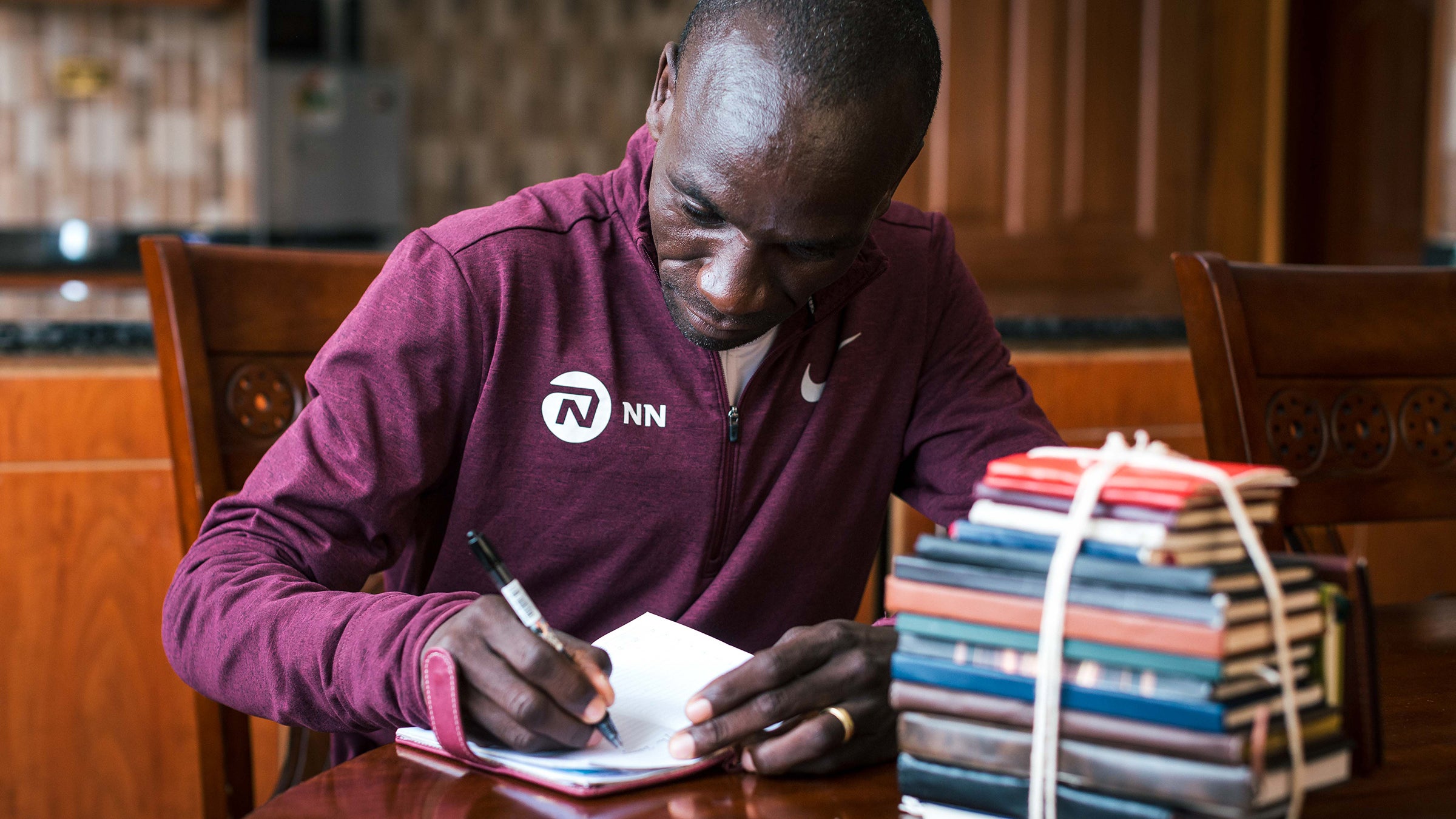
Twice a week Kipchoge (and I believe all the NN Running team based there) does a 60 minute strength and mobility workout. There is video footage of it in the NN videos on YT if you don’t find an Outside article where the author went to the NN camp in Kaptagat to be true/reputable.
These videos prove nothing. If you want to spend your time deadlifting instead of running more, go right ahead. You'll get a little better at deadlifting. Cool.
How many hours a day are you running? It takes about an hour a week to add some deadlits and squats to your routine.
I will grant you that adding 1 hour per week of deadlifts and squats is not a big time investment. Most of us could find that hour, if we wanted to and increase our thigh and glute power. But the better question is, "If I'm going to add one hour per week to get faster, is it better to run an extra hour, or spend that hour deadlifting?"
If you're a non-elite, non-D1 scholarship athlete, which is 99% of us (myself included), you've not maximized your running volume. You're nowhere near that 100-160 mpw plateau. In that case, you're going to benefit more from adding an hour of running. Do strength work, but not because you think it'll make you faster. Do it because you want some muscle mass, to feel better and look stronger.
If you're an elite or D1 athlete, for starters you should not care one lick about what I'm saying. You should listen to your coach, not me or anyone else on this thread. But if you are reading this for some godforsaken reason and you're at your absolute mileage plateau, then adding non-running activities makes a lot more sense. You're at the point where adding more running volume, won't help anyways. So, add something else.
How many hours a day are you running? It takes about an hour a week to add some deadlits and squats to your routine.
I will grant you that adding 1 hour per week of deadlifts and squats is not a big time investment. Most of us could find that hour, if we wanted to and increase our thigh and glute power. But the better question is, "If I'm going to add one hour per week to get faster, is it better to run an extra hour, or spend that hour deadlifting?"
If you're a non-elite, non-D1 scholarship athlete, which is 99% of us (myself included), you've not maximized your running volume. You're nowhere near that 100-160 mpw plateau. In that case, you're going to benefit more from adding an hour of running. Do strength work, but not because you think it'll make you faster. Do it because you want some muscle mass, to feel better and look stronger.
If you're an elite or D1 athlete, for starters you should not care one lick about what I'm saying. You should listen to your coach, not me or anyone else on this thread. But if you are reading this for some godforsaken reason and you're at your absolute mileage plateau, then adding non-running activities makes a lot more sense. You're at the point where adding more running volume, won't help anyways. So, add something else.
i don't think everybody can handle an extra two hours of running, which is something like 15-18 miles, depending your speed. you make the mistake of thinking people are running lower miles because of time constraints. Some people can't handle more than 40, 50, 60 miles per week without getting various overuse injuries. Two hours of lifting is not going to mash on those same areas that are "overused" while running.
You think Kipchoge, Belkale and Haile G were out there deadlifting and keeping that a secret all these years? No. The just ran a sh*t-ton (and barely ate).
The Kenyans and Ethiopians are out there running 100 mile weeks in their teens and 140-160 in their 20's. They're not deadlifting. They're not doing yoga, tons of situps and pull-ups or any of that nonsense. They're running, sleeping and not eating very much. That's it. That's the secret.
You know why 2:02-2:05 marathoners are commonplace in many countries but almost unheard of in America? Because they're out running while others are wasting their time with non-running shortcuts and gimmicks. They're not trying to be "well rounded" properly "cross trained" and "centered" individuals or blogging about their feelings and mental health. They're running their arses off!
No amount of deadlifting, yoga, core work, or any of those other gimmicks are going to make anyone run better than spending that time running.
If your body needed those movements to get better at running, your body would be asking you to do those movements while running.
Interesting, because here's some footage of Haile G doing some "other gimmicks...."
How many hours a day are you running? It takes about an hour a week to add some deadlits and squats to your routine.
I will grant you that adding 1 hour per week of deadlifts and squats is not a big time investment. Most of us could find that hour, if we wanted to and increase our thigh and glute power. But the better question is, "If I'm going to add one hour per week to get faster, is it better to run an extra hour, or spend that hour deadlifting?"
If you're a non-elite, non-D1 scholarship athlete, which is 99% of us (myself included), you've not maximized your running volume. You're nowhere near that 100-160 mpw plateau. In that case, you're going to benefit more from adding an hour of running. Do strength work, but not because you think it'll make you faster. Do it because you want some muscle mass, to feel better and look stronger.
If you're an elite or D1 athlete, for starters you should not care one lick about what I'm saying. You should listen to your coach, not me or anyone else on this thread. But if you are reading this for some godforsaken reason and you're at your absolute mileage plateau, then adding non-running activities makes a lot more sense. You're at the point where adding more running volume, won't help anyways. So, add something else.
It totally depends on the type of athlete you are and what you’re training for. Some of the athletes that left BTC, like Kate Grace, Sinclaire Johnson and Emily Infeld benefited from an hour less of running and more time in the gym. Especially more middle distance runners like Grace and Johnson. Johnson has said in several interview this season that less mileage and more gym work has helped her improve.
1.). But the better question is, "If I'm going to add one hour per week to get faster, is it better to run an extra hour, or spend that hour deadlifting?"
2.) If you're a non-elite, non-D1 scholarship athlete, which is 99% of us (myself included), you've not maximized your running volume. You're nowhere near that 100-160 mpw plateau.
3.)In that case, you're going to benefit more from adding an hour of running. Do strength work, but not because you think it'll make you faster. Do it because you want some muscle mass, to feel better and look stronger.
4.) If you're an elite or D1 athlete, for starters you should not care one lick about what I'm saying.
1.) If you have reached the point where the quantity of your base miles has reached the point of diminishing returns and and/or you need to improve your running economy and pure speed (so you can, you know, be competitive), then adding some squats/deadlifts/trap bar would be enormously beneficial. And beside just "being fatigued," the stimulus is different.
2.) I was a "non-elite, non-D1 scholarship athlete" on a Top 10 D1 XC team and at least half the team (including non-elite, non-scholarship athletes) all had several week stretches over 100 during the summer. At least for our program, this sentiment is completely untrue. And I have friends who didn't run D1 who still pumped out "maximal running volume" during they heydays. Maybe this sentiment is a "you" thing.
3.) This is a woefully ignorant statement. You will not add mass if you are running any amount of mid-level mileage unless you are intentionally trying to through an intentional caloric surplus. See point 1 for reference.
4.) Every athlete (and everyone, for that matter) should be doing some sort of resistance training.
4.) Every athlete (and everyone, for that matter) should be doing some sort of resistance training.
Agree. Just don't do deadlifts, squats or planks. Resistance band training- push/pull/horizontal movements-are better for running and injury prevention.
We've been over this. I am not in the business of convincing people that the Earth is round, the sky is blue, or that strength and plyometrics helps ALL athletes....including runners.
1. Focus on the muscles that provide force for your activity (Runners: Legs).
2. Focus on a rep range that recruits the most muscle mass (>85% 1RM).
3. To limit fatigue, warmup and ramp up to a max set of 4-6 reps.
4. Incorporate plyometric jumps and bounds, 3 sets x 5-10.
5. Use exercises that limit the chance for injury or excess back fatigue: Trap Bar Deadlift instead of Straight Bar. Cross-Arm Front Squat instead of Back Squat.
I will grant you that adding 1 hour per week of deadlifts and squats is not a big time investment. Most of us could find that hour, if we wanted to and increase our thigh and glute power. But the better question is, "If I'm going to add one hour per week to get faster, is it better to run an extra hour, or spend that hour deadlifting?"
If you're a non-elite, non-D1 scholarship athlete, which is 99% of us (myself included), you've not maximized your running volume. You're nowhere near that 100-160 mpw plateau. In that case, you're going to benefit more from adding an hour of running. Do strength work, but not because you think it'll make you faster. Do it because you want some muscle mass, to feel better and look stronger.
If you're an elite or D1 athlete, for starters you should not care one lick about what I'm saying. You should listen to your coach, not me or anyone else on this thread. But if you are reading this for some godforsaken reason and you're at your absolute mileage plateau, then adding non-running activities makes a lot more sense. You're at the point where adding more running volume, won't help anyways. So, add something else.
i don't think everybody can handle an extra two hours of running, which is something like 15-18 miles, depending your speed. you make the mistake of thinking people are running lower miles because of time constraints. Some people can't handle more than 40, 50, 60 miles per week without getting various overuse injuries. Two hours of lifting is not going to mash on those same areas that are "overused" while running.
Exactly! Plus, an hour or two in the gym every week is alot easier than an hour or two of straight running.
The study I was referring to does not find statistically significant results for injury prevention from resistance training. It also does not find statistically significant results that resistance training causes injury. The overall injury rate was about the same in the control group and the resistance training group. However when they classified injuries as major or minor, major injuries were higher in the resistance training group. All I was saying is that resistance training as injury prevention, when used concurrently with running training, is not founded in evidence.
This is clearly anecdotal, but my senior year I upped my mileage a ton during the summer (80-100) and held that through most of cross. I had a good cross season but no major breakthroughs. After cross, I spent about 10 weeks lifting hard upper body and reduced my mileage a lot because I was convinced I had reached my potential and wasn’t going to get any better. Well come indoor my 3k dropped from 8:50 to 8:26 and then during outdoor, I dropped from 15:30 to 14:46. I think the volume had a lot to do with it, but I’m also convinced that the hormonal changes brought about by the hard upper body work made a huge difference too. I just felt so much stronger in workouts and races than I did during the previous cross season. I probably put on about 5 pounds of muscle overall. Nothing crazy, but I was a totally different man.
4.) Every athlete (and everyone, for that matter) should be doing some sort of resistance training.
Agree. Just don't do deadlifts, squats or planks. Resistance band training- push/pull/horizontal movements-are better for running and injury prevention.
The study I was referring to does not find statistically significant results for injury prevention from resistance training. It also does not find statistically significant results that resistance training causes injury. The overall injury rate was about the same in the control group and the resistance training group. However when they classified injuries as major or minor, major injuries were higher in the resistance training group. All I was saying is that resistance training as injury prevention, when used concurrently with running training, is not founded in evidence.
So I'm just inferring what I can with the information you've given us about the study. I would like you to shed some light on some of the finer details if you can, if the results addressed these nuances that is.
You say both groups(control group and resistance group) had similar injury rates. Resistance group had more major injuries. I'm assuming that means the control group(which didn't lift or do resistance training outside running) they had more minor injuries. Would you agree? I think that's a reasonable inference.
With that said, my hypothesis is this...and please let me know if the study stated this in it's findings, or if you agree or not. I believe the resistance group had more major injuries due to poor technique or improper load, but in instances where the strength training didn't result in major injury while strength training, it reduced minor, chronic injuries that plague most runners that run high volumes/intensities. Is this a fair assessment?
The study I was referring to does not find statistically significant results for injury prevention from resistance training. It also does not find statistically significant results that resistance training causes injury. The overall injury rate was about the same in the control group and the resistance training group. However when they classified injuries as major or minor, major injuries were higher in the resistance training group. All I was saying is that resistance training as injury prevention, when used concurrently with running training, is not founded in evidence.
We've been over this. I am not in the business of convincing people that the Earth is round, the sky is blue, or that strength and plyometrics helps ALL athletes....including runners.
1. Focus on the muscles that provide force for your activity (Runners: Legs).
2. Focus on a rep range that recruits the most muscle mass (>85% 1RM).
3. To limit fatigue, warmup and ramp up to a max set of 4-6 reps.
4. Incorporate plyometric jumps and bounds, 3 sets x 5-10.
5. Use exercises that limit the chance for injury or excess back fatigue: Trap Bar Deadlift instead of Straight Bar. Cross-Arm Front Squat instead of Back Squat.
1.). But the better question is, "If I'm going to add one hour per week to get faster, is it better to run an extra hour, or spend that hour deadlifting?"
2.) If you're a non-elite, non-D1 scholarship athlete, which is 99% of us (myself included), you've not maximized your running volume. You're nowhere near that 100-160 mpw plateau.
3.)In that case, you're going to benefit more from adding an hour of running. Do strength work, but not because you think it'll make you faster. Do it because you want some muscle mass, to feel better and look stronger.
4.) If you're an elite or D1 athlete, for starters you should not care one lick about what I'm saying.
1.) If you have reached the point where the quantity of your base miles has reached the point of diminishing returns and and/or you need to improve your running economy and pure speed (so you can, you know, be competitive), then adding some squats/deadlifts/trap bar would be enormously beneficial. And beside just "being fatigued," the stimulus is different.
2.) I was a "non-elite, non-D1 scholarship athlete" on a Top 10 D1 XC team and at least half the team (including non-elite, non-scholarship athletes) all had several week stretches over 100 during the summer. At least for our program, this sentiment is completely untrue. And I have friends who didn't run D1 who still pumped out "maximal running volume" during they heydays. Maybe this sentiment is a "you" thing.
3.) This is a woefully ignorant statement. You will not add mass if you are running any amount of mid-level mileage unless you are intentionally trying to through an intentional caloric surplus. See point 1 for reference.
4.) Every athlete (and everyone, for that matter) should be doing some sort of resistance training.
D2 runners log just as much mileage if not more. Some of those guys are the biggest running junkies/nerds.
Help us build the best running shoe review site for a chance to win a LetsRun t-shirt.Help us build the best running shoe review site for a chance to win one of 10 LetsRun t-shirts.