I ran the Lehigh 5k and 8k courses many times and (as a runner who struggled in heat) struggled and vomited/dry heaved more there than anywhere else. The "Cornfield effect" sounds right to me because it was always that last hill and loop that would get me. I ran much better at end of season meets in the cold than I ever did at Paul Short and I suspect that's the reason why. Still think it's a great course but the last 1/2 to 3/4 are tough on the stomach.
I was there too, it was deceptively warm and humid. It definitely affected some folks, but I too noticed more collapses and vomiting than usual.
It wasn't "deceptively warm and humid", it was exactly what was expected. It seems we go through this every year with Paul Short. Paul Short cuts right through a cornfield. Take a look at the photo on the front page of the website.
The Cornfield Effect
Farmers and scientists have known for a long time the phenomenon of intense humidity in cornfields. One of the properties of corn is that it emits a lot of moisture through respiration. The surface area of an acre of corn is a lot greater than the ground on which it's planted. Corn puts a huge amount of moisture into the local atmosphere, making ground level dew points shoot through the roof (where the ambient recorded temperatures are at it's highest). The higher the temperature the more moisture the air can accept if it's available. The deadly cocktail of direct overhead sun and supercharged ground level dew points driven by the cornfield effect made conditions for cross country competition horrible.
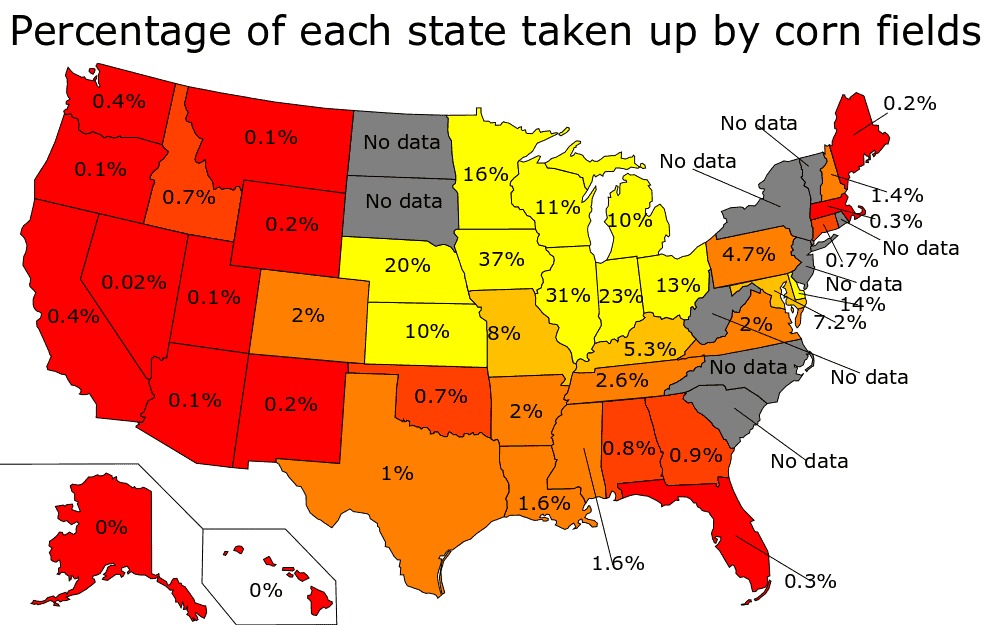
From a broader perspective, parts of the country that are known for corn production are also known for extremely high dew points during the Summer months. On a previous thread, Brian Erb correctly stated that his experience was that Omaha was much more humid than Atlanta because of it -- and the data backed it up -- Omaha's historic record showed that it had three times as many 75°+ dew point days than Atlanta had.
This post just released a memory from decades ago. I ran an invitational at Lehigh in 1990. I don’t remember if it was called Paul Short back then, but I digress. It was a very warm day, low 80s I believe, and runners were collapsing as soon as they crossed the finish line. One guy was being carried away and he must have thought he was dying. Told the guys carrying him, “Please tell my mom I love her”.
I believe that Paul Short had the same name in the early '80s. Last time I remember it being a bad year was 2013.
I ran for Lehigh in the mid-70’s. It’s been The Paul Short Invitational going back to its “first” year of 1975. I put “first” in quotes since apparently there was a XC race one year in the late 60’s dedicated to Paul Short (former team manager I think). I don’t know if that race was called Paul Short Invitational. There was a break between the that late 60’s race and the ‘75 race. Kudo’s to Lehigh Coach John Covert for re-starting Paul Short Invite in ‘75. Covert used the PSI as the spring board for bringing NCAA Regionals and NCAA Nationals to Lehigh/Saucon Valley.
The cornfield effect refers to the impact that a large, dense area of corn plants has on its local microclimate, primarily by increasing humidity and lowering temperature through a process called evapotranspiration. This phenomenon results from the massive collective leaf area of the cornfield. A single acre of corn can hold multiple acres of leaves.
The massive leaf area of a cornfield The surface area of leaves in a single acre of corn can be many times greater than the ground area it occupies. While this value varies based on corn hybrid, plant density, and environmental conditions, it can be estimated using typical agricultural figures.
A common method for measuring this is called the Leaf Area Index (LAI), which is the total one-sided green leaf area per unit of ground surface area.
A typical calculation for the leaf area on one acre of corn: Plant population: A high-yield cornfield can have a density of 32,000 to 35,000 plants per acre.
Leaves per plant: A single corn plant typically develops around 19 to 22 leaves, though the number of green leaves present at any one time is usually lower due to the shedding of older leaves. For this calculation, we can assume a mature plant has about 18 leaves.
Total leaves per acre: A standard acre contains approximately 630,000 corn leaves (35,000 plants x 18 leaves).
Individual leaf size: While exact size varies, a representative, large corn leaf can be about 3 feet long and 4 inches wide. This gives it a surface area of about 1 square foot (3×0.33ft).
Total leaf area per acre: 630,000 leaves x 1 sq. ft. per leaf = 630,000 sq. ft. of leaves.
Conversion to acres: Since 1 acre contains 43,560 square feet: 630,000 / 43,560 = 14.5 acres of leaves per acre of land.
This means a single acre of corn has roughly 14.5 acres of leaf surface area, or a leaf area index of 14.5. Other studies have observed LAI values for modern corn hybrids to be between 3.4 and 5.9 m²/m² during the period of maximum growth, which supports this calculation.
How the cornfield effect works The immense total leaf area is responsible for the effect on the local atmosphere.
Increased humidity: Through evapotranspiration, moisture from the plants is released into the air. An acre of corn can release up to 4,000 gallons of water per day, raising humidity levels in the immediate vicinity.
Lowered temperature: The process of evapotranspiration is a cooling process, similar to human sweating, and can cause a noticeable drop in air temperature compared to surrounding areas.
Reduced wind speeds: The dense canopy of corn plants can act as a barrier, slowing down wind and exacerbating the microclimate effect by keeping the humid air within the field
The cornfield effect refers to the impact that a large, dense area of corn plants has on its local microclimate, primarily by increasing humidity and lowering temperature through a process called evapotranspiration. This phenomenon results from the massive collective leaf area of the cornfield. A single acre of corn can hold multiple acres of leaves.
The massive leaf area of a cornfield The surface area of leaves in a single acre of corn can be many times greater than the ground area it occupies. While this value varies based on corn hybrid, plant density, and environmental conditions, it can be estimated using typical agricultural figures.
A common method for measuring this is called the Leaf Area Index (LAI), which is the total one-sided green leaf area per unit of ground surface area.
A typical calculation for the leaf area on one acre of corn: Plant population: A high-yield cornfield can have a density of 32,000 to 35,000 plants per acre.
Leaves per plant: A single corn plant typically develops around 19 to 22 leaves, though the number of green leaves present at any one time is usually lower due to the shedding of older leaves. For this calculation, we can assume a mature plant has about 18 leaves.
Total leaves per acre: A standard acre contains approximately 630,000 corn leaves (35,000 plants x 18 leaves).
Individual leaf size: While exact size varies, a representative, large corn leaf can be about 3 feet long and 4 inches wide. This gives it a surface area of about 1 square foot (3×0.33ft).
Total leaf area per acre: 630,000 leaves x 1 sq. ft. per leaf = 630,000 sq. ft. of leaves.
Conversion to acres: Since 1 acre contains 43,560 square feet: 630,000 / 43,560 = 14.5 acres of leaves per acre of land.
This means a single acre of corn has roughly 14.5 acres of leaf surface area, or a leaf area index of 14.5. Other studies have observed LAI values for modern corn hybrids to be between 3.4 and 5.9 m²/m² during the period of maximum growth, which supports this calculation.
How the cornfield effect works The immense total leaf area is responsible for the effect on the local atmosphere.
Increased humidity: Through evapotranspiration, moisture from the plants is released into the air. An acre of corn can release up to 4,000 gallons of water per day, raising humidity levels in the immediate vicinity.
Lowered temperature: The process of evapotranspiration is a cooling process, similar to human sweating, and can cause a noticeable drop in air temperature compared to surrounding areas.
Reduced wind speeds: The dense canopy of corn plants can act as a barrier, slowing down wind and exacerbating the microclimate effect by keeping the humid air within the field
No need to get so technical, you see, prior to Paul Short I witnessed the Haverford men’s team boofing Gu in the woods near the starting line. As an admitted Gu boofer myself for 10k ultramarathon events, I think that this method of administering energy gu prior to a race is effective but has the negative consequence of causing you to spew out from your other end.