If the aphasia was caused by a stroke, it will most certainly improve over months. Just because your wife has a certain job does not make you an expert on a subject. You're better off staying in your lane little bro.
Yes, it's really not true that "once you have aphasia, you don't get better."
Recovery from stroke seems to vary greatly depending on the part of the brain affected, the age of the affected person, their pre-existing mental capacities, and the amount and type of rehab they get.
In 1965 when she was 39, the Oscar-winning film actress Patricia Neal had three major strokes involving massive brain hemorrhaging that nearly killed her. These caused major damage to the left side of her brain, leaving her unable to talk, walk or write. The doctors who saved her initially by stopping the brain bleed feared that they weren't doing Neal and her family any favors - they thought she would be a vegetable and perhaps it would have been kinder to let her die then and there.
Her husband, author Roald Dahl, consulted every leading expert, journal and medical textbook in the world to learn all he could about the kind of brain injury Neal suffered - then he put together an intensive, innovative rehab program for her. Neal had to learn how to do most basic life tasks all over again. But after two years, Neal was able to return to work.
As I said in my earlier comment, I had nominal aphasia - inability to recall nouns - due to undiagnosed pernicious anemia. It resolved after the PA was treated, in part probably because I was still in midlife at the time and I also started out with a large vocabulary and better-than-average facility with words. However, whilst recovering I really had to concentrate to get my words back - and even today, consulting dictionaries and synonym-finders is something I do far more as part of my everyday routine than anyone I know.
My point is that you do not reverse brain damage caused by a stroke, TBI etc. The brain does undergo changes after stroke and makes adaptations that allow people to recover motor skills, speech, etc. And in a transient ischemic attack, the loss of blood flow to the brain is only temporary and a full recovery is expected. But a lot of people reach a point in recovering from a stroke or other brain trauma where they are left with aphasia. At that point, the aphasia is there for life and does not improve. Therapy provided by SLPs can make a huge difference in people's management of aphasia by giving them the ability to basically work around their aphasia. But this is not a clinical improvement in the underlying aphasia. It is still there. People just learn how to work around it.
1000’s get aphasia everyday and no one gives a f&$/. I could care less if a millionaire actor gets it. I’m on vacation and relaxing, so fun to read and post
Correction your parents are on vacation and they don't trust you at home alone so they were forced to bring your pathetic rear end along for the ride.
1000’s get aphasia everyday and no one gives a f&$/. I could care less if a millionaire actor gets it. I’m on vacation and relaxing, so fun to read and post
This guy on vacation..... Dad can you buy me a beer? I know I'm not supposed to be drinking with my Olympic Training schedule and all but we are on vacation.
Yes, it's really not true that "once you have aphasia, you don't get better."
Recovery from stroke seems to vary greatly depending on the part of the brain affected, the age of the affected person, their pre-existing mental capacities, and the amount and type of rehab they get.
In 1965 when she was 39, the Oscar-winning film actress Patricia Neal had three major strokes involving massive brain hemorrhaging that nearly killed her. These caused major damage to the left side of her brain, leaving her unable to talk, walk or write. The doctors who saved her initially by stopping the brain bleed feared that they weren't doing Neal and her family any favors - they thought she would be a vegetable and perhaps it would have been kinder to let her die then and there.
Her husband, author Roald Dahl, consulted every leading expert, journal and medical textbook in the world to learn all he could about the kind of brain injury Neal suffered - then he put together an intensive, innovative rehab program for her. Neal had to learn how to do most basic life tasks all over again. But after two years, Neal was able to return to work.
As I said in my earlier comment, I had nominal aphasia - inability to recall nouns - due to undiagnosed pernicious anemia. It resolved after the PA was treated, in part probably because I was still in midlife at the time and I also started out with a large vocabulary and better-than-average facility with words. However, whilst recovering I really had to concentrate to get my words back - and even today, consulting dictionaries and synonym-finders is something I do far more as part of my everyday routine than anyone I know.
My point is that you do not reverse brain damage caused by a stroke, TBI etc. The brain does undergo changes after stroke and makes adaptations that allow people to recover motor skills, speech, etc. And in a transient ischemic attack, the loss of blood flow to the brain is only temporary and a full recovery is expected. But a lot of people reach a point in recovering from a stroke or other brain trauma where they are left with aphasia. At that point, the aphasia is there for life and does not improve. Therapy provided by SLPs can make a huge difference in people's management of aphasia by giving them the ability to basically work around their aphasia. But this is not a clinical improvement in the underlying aphasia. It is still there. People just learn how to work around it.
Huh? The other poster and I were disagreeing with the blanket statement you made earlier, namely, "Once you have aphasia, you don't get better."
What you are now saying is significantly different to what you said before.
Aphasia can have many different causes, and there are different types of aphasia. Contrary to your claim that "once you have aphasia, you don't get better," some people who develop aphasia can and do get better. You seem weirdly invested in creating the impression that this is not the case.
Recovery from aphasia depends on the cause of it. For stroke, there is a chance of improvement. If it's caused by dementia, it is the start of several years of cognitive decline.
Recovery from aphasia depends on the cause of it. For stroke, there is a chance of improvement. If it's caused by dementia, it is the start of several years of cognitive decline.
That's what I said: aphasia can have many different causes, and the chances of recovery depend on the cause.
Also, aphasia and dementia are not exactly synonymous. People can have aphasia without dementia, though often people who develop aphasia will progress to dementia.
People with aphasia are often very aware they are experiencing it, but people with dementia often are not.
Dementia and aphasia are both indicative of brain damage due to disease or injury, but they are not themselves diseases.
The majority of dementia is caused by progressive diseases of aging like Alzheimer's or by brain deterioration resulting from other causes like TBIs. In such cases, the decline in brain function and mental capacity does get worse over time.
Differences between aphasia and dementia Aphasia vs Dementia Neurological disorders can manifest from simple memory loss in Alzheimer’s to more aggressive forms like mania and epilepsy. The manifestations depend chiefly on th...
"Dementia, meaning madness in Latin, implies a serious memory loss in a previously normal person, beyond what is expected due to normal aging. The memory loss can be classified as static and complete, due to an injury to the brain and progressive, if it worsens slowly over time due to any reason.
"Aphasia means speechlessness in Greek and is a manifestation of either disturbed comprehension and/or speech articulation. Depending on the region of the brain that is affected, it can range from having problems in recollecting and using the correct word at the right time, to not being able to speak at all and even not being able to write what you wish to express.
"Aphasia can be classified as expressive aphasia, receptive aphasia, anomic aphasia, global aphasia, conduction aphasia and 3 transcortical type aphasias based on symptoms like repetition, fluency of speech, ability to name, etc. Symptoms of aphasia vary vastly; persistent phrase repetition, inability to read aloud, inability to repeat/write, disability in naming objects or recollecting their names, substitution of words/letters, speaking complete gibberish are all symptoms of aphasia.
"Dementia manifests as difficulty in recalling past experiences, retaining new information, loss of feeling and thoughts. People might forget to do daily activities like brushing and bathing and start neglecting themselves. There might be sudden outbursts of emotions like crying or anger without any apparent cause.
"Symptoms of dementia can be permanent or transient. There might be transient memory loss after a seizure or acute head injury, which returns spontaneously over few hours/days. Permanent dementia is seen in conditions like Alzheimer’s, Parkinson’s and stroke."
My point is that you do not reverse brain damage caused by a stroke, TBI etc. The brain does undergo changes after stroke and makes adaptations that allow people to recover motor skills, speech, etc. And in a transient ischemic attack, the loss of blood flow to the brain is only temporary and a full recovery is expected. But a lot of people reach a point in recovering from a stroke or other brain trauma where they are left with aphasia. At that point, the aphasia is there for life and does not improve. Therapy provided by SLPs can make a huge difference in people's management of aphasia by giving them the ability to basically work around their aphasia. But this is not a clinical improvement in the underlying aphasia. It is still there. People just learn how to work around it.
Huh? The other poster and I were disagreeing with the blanket statement you made earlier, namely, "Once you have aphasia, you don't get better."
What you are now saying is significantly different to what you said before.
Aphasia can have many different causes, and there are different types of aphasia. Contrary to your claim that "once you have aphasia, you don't get better," some people who develop aphasia can and do get better. You seem weirdly invested in creating the impression that this is not the case.
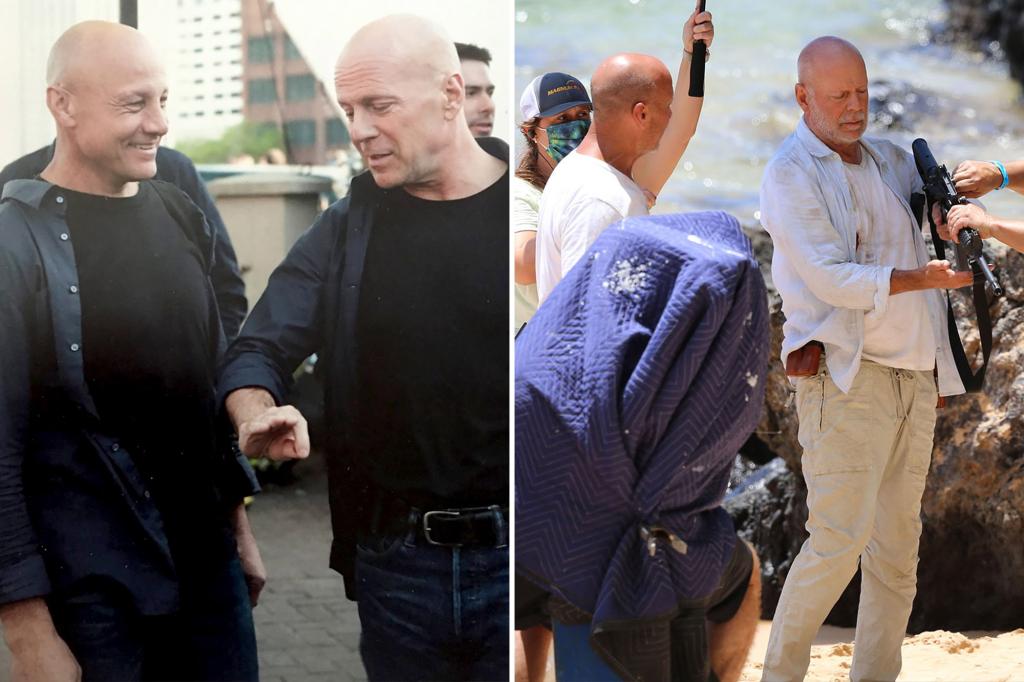
It seems to have had a significant negative affect on his acting ability for at least the last 2 years, so if it could be made better, it probably would have happened by now:
Bruce Willis alarmed movie staffers two years when he misfired a gun loaded with a blank – and last year asked what he was doing on a film set, according to a report.
Recovery from aphasia depends on the cause of it. For stroke, there is a chance of improvement. If it's caused by dementia, it is the start of several years of cognitive decline.
That's what I said: aphasia can have many different causes, and the chances of recovery depend on the cause.
Also, aphasia and dementia are not exactly synonymous. People can have aphasia without dementia, though often people who develop aphasia will progress to dementia.
People with aphasia are often very aware they are experiencing it, but people with dementia often are not.
Dementia and aphasia are both indicative of brain damage due to disease or injury, but they are not themselves diseases.
The majority of dementia is caused by progressive diseases of aging like Alzheimer's or by brain deterioration resulting from other causes like TBIs. In such cases, the decline in brain function and mental capacity does get worse over time.
"Dementia, meaning madness in Latin, implies a serious memory loss in a previously normal person, beyond what is expected due to normal aging. The memory loss can be classified as static and complete, due to an injury to the brain and progressive, if it worsens slowly over time due to any reason.
"Aphasia means speechlessness in Greek and is a manifestation of either disturbed comprehension and/or speech articulation. Depending on the region of the brain that is affected, it can range from having problems in recollecting and using the correct word at the right time, to not being able to speak at all and even not being able to write what you wish to express.
"Aphasia can be classified as expressive aphasia, receptive aphasia, anomic aphasia, global aphasia, conduction aphasia and 3 transcortical type aphasias based on symptoms like repetition, fluency of speech, ability to name, etc. Symptoms of aphasia vary vastly; persistent phrase repetition, inability to read aloud, inability to repeat/write, disability in naming objects or recollecting their names, substitution of words/letters, speaking complete gibberish are all symptoms of aphasia.
"Dementia manifests as difficulty in recalling past experiences, retaining new information, loss of feeling and thoughts. People might forget to do daily activities like brushing and bathing and start neglecting themselves. There might be sudden outbursts of emotions like crying or anger without any apparent cause.
"Symptoms of dementia can be permanent or transient. There might be transient memory loss after a seizure or acute head injury, which returns spontaneously over few hours/days. Permanent dementia is seen in conditions like Alzheimer’s, Parkinson’s and stroke."
Ok. I’m sorry for lack of empathy. Bruce does a lot of good charitable work. This post is useful with the information provided and I wonder if there are any high allosteric stress loads that are related to his previous diagnosis of stammering/stuttering. Get well soon Bruce.
The guys not even a runner. what has he done for society. Really?
What's the point neither are you. A real runner earned AA in college and has accolades as a runner. I can guarantee you have nothing of the sort that makes you a real runner. As stated above by a previous poster you live with your parents and need them to support you.
The guys not even a runner. what has he done for society. Really?
What's the point neither are you. A real runner earned AA in college and has accolades as a runner. I can guarantee you have nothing of the sort that makes you a real runner. As stated above by a previous poster you live with your parents and need them to support you.
Clearly you’re a turd. you didn’t clarify D1, D2, D3 or NAIA. trolling is fun. Now I understand why it’s done.
It is very sad news for the guy and his family and friends. It looks as though he will increasingly enter a world where he will struggle to understand others and be unable to express himself - and this in only his late 60's. Absent dementia, it will be an unimaginably lonely place.
What's the point neither are you. A real runner earned AA in college and has accolades as a runner. I can guarantee you have nothing of the sort that makes you a real runner. As stated above by a previous poster you live with your parents and need them to support you.
Clearly you’re a turd. you didn’t clarify D1, D2, D3 or NAIA. trolling is fun. Now I understand why it’s done.
You should go to bed so your parents can salvage some of the vacation you are sabotaging for them.
It is very sad news for the guy and his family and friends. It looks as though he will increasingly enter a world where he will struggle to understand others and be unable to express himself - and this in only his late 60's. Absent dementia, it will be an unimaginably lonely place.
If he was a Dem POTUS, his supporters would say that he is perfectly fine- just like Joe Biden.
It is very sad news for the guy and his family and friends. It looks as though he will increasingly enter a world where he will struggle to understand others and be unable to express himself - and this in only his late 60's. Absent dementia, it will be an unimaginably lonely place.
If he was a Dem POTUS, his supporters would say that he is perfectly fine- just like Joe Biden.
If he was a Republican he would describe himself as a "stable genius". It goes along with being a loser. You should know about that.
Help us build the best running shoe review site for a chance to win a LetsRun t-shirt.Help us build the best running shoe review site for a chance to win one of 10 LetsRun t-shirts.