Summary:
Out of the 260,000 stars, the team found less than one out of 1,000 stars is compatible with a 300 Kelvin Dyson sphere with about 10 percent coverage of the star. For 50 percent coverage, the number was less than one per 10,000 stars, and for 90 percent coverage, the limit is less than 1 per 100,000 stars.
“Any or all of these objects may have natural causes for their infrared excess, so this is just an upper limit, not a definitive rate of true Dyson spheres,” Huston clarifies.
----------
the researchers behind the new study analyzed 260,000 stars in the Milky Way.
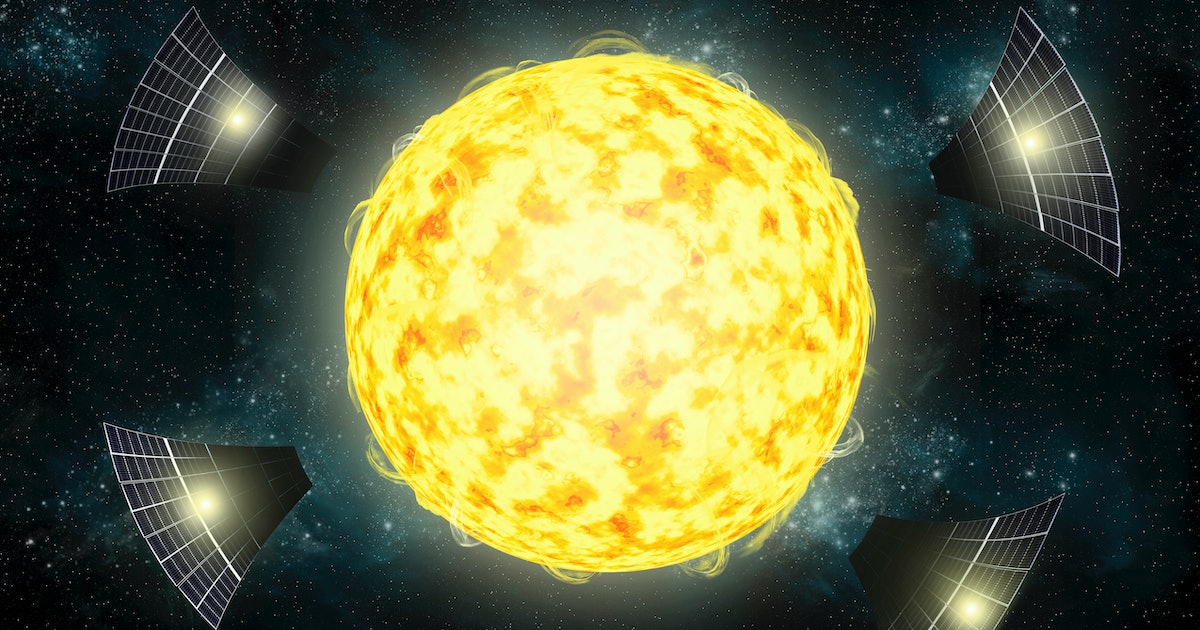
After putting together the brightness of these stars, the team then created models of Dyson Spheres that showed their potential temperature (which was estimated to be around 300 Kelvin) and how much of the star they would cover (which was about 10-90 percent of the star). They then compared that to the measurements of the stars’ temperature and luminosity.
“From this, we could determine the number of stars in the sample which would be compatible with the Dyson sphere models,” Huston says. “Then, that is the limit on how common such objects could be.”
Out of the 260,000 stars, the team found less than one out of 1,000 stars is compatible with a 300 Kelvin Dyson sphere with about 10 percent coverage of the star. For 50 percent coverage, the number was less than one per 10,000 stars, and for 90 percent coverage, the limit is less than 1 per 100,000 stars.
“Any or all of these objects may have natural causes for their infrared excess, so this is just an upper limit, not a definitive rate of true Dyson spheres,” Huston clarifies.
WHAT’S NEXT — After narrowing down a potential number of stars that could be hosting Dyson Spheres, the team behind the study want to narrow in on these stars to conduct a search of the alien megastructures in the Milky Way.
https://www.inverse.com/science/how-many-dyson-spheres-are-in-the-milky-way