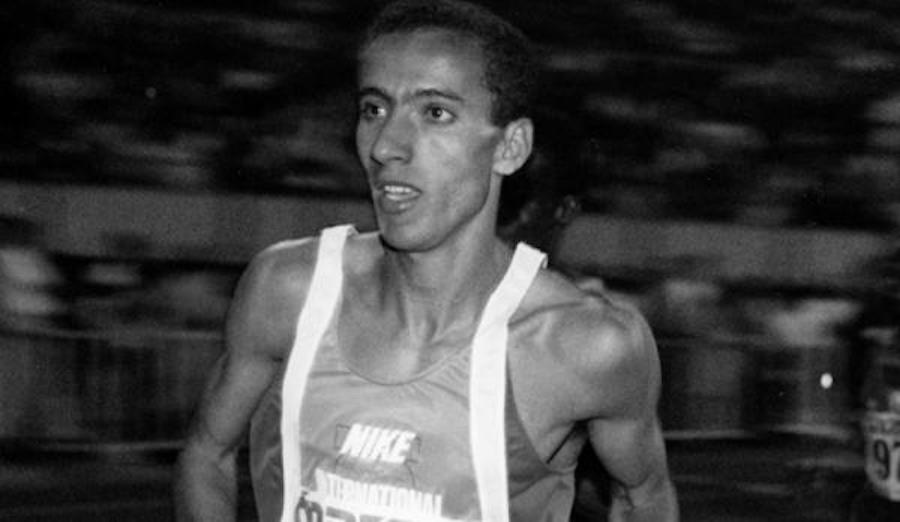
The only case you can make for "superspikes" helping over distances like the 800 and 1500m are on a training level - that potentially higher volume track workout athletes don't beat themselves up as much in better cushioned spikes hence maybe they can go slightly deeper in workouts and/or recovery time is shortened. Then again for athletes at this level, they are doing pretty well in workouts anyway and have elite powers of recovery to begin with. In terms of an actual race? Total net zero. The "smoother" ride and softer feeling is offset by slightly less force going into the track surface which is all that ultimately matters.
And to your point, if you bought the sub 3.30 guys of just the 80's into todays era (Cram, Aouita, Maree, Coe) they are all in the ballpark of 1.5 seconds quicker (basically half a second per lap to 1200m) at an absolute minimum.
You'd also see Ovett, Scott, Bile, Spivey, Abascal, Walker, Wessinhage, Bayi etc all under 3.30 and some of these names would also be under 3.29.0.
Back to Maree - if I remember correctly he was an absolute monster when it came to his mileage, never running anything much slower than 6's. This is a really cool T&F News article from 1981 written by Tom Jordan - (now former) meet director of Prefontaine for 37 years!
Blanks does the same thing. If you go to slow on easy days you develop form inefficiencies. Running at "faster" paces helps avoid that.
Really? Like Noureddine Morceli who used to run as slow as 10min/mile pace for up to an hour to ensure optimal recovery from his key workouts? Not sure how many "form inefficiencies" he had as a 3 time world champ, Olympic champ and WR holder over the 1500m, mile, 2000 and 3000m at the peak of his career. But what would he know. The top Kenyans of the mid 90's were the same - Moses Kiptanui famously ran insanely slow on long recovery runs.
The reason why? For runners as fit as they were, there is really no physiological system they are working at 6min/mile pace. It's a grey zone of aerobic capacity/threshold so at this point it becomes a simple energy use scenario. When your body is recovering from a hard workout it needs energy to do so. Running at 6min/mile pace uses more energy than running at 7min/mile pace - or in the case of Morceli, 10min miles.
"Going slow" develops form inefficiencies? That is up there with some of the wildest and most unfounded claims I've ever heard on this message board. Do you have even any kind of anecdotal evidence to support that?
This post was edited 37 seconds after it was posted.
The splits for this race were crazier than Cram or Aouita. 400m: 53.2; 800m: 1:50.4; 1000m: 2:19.2; 1200m: 2:47.5; L400m: 56.5
A shame he never won any medals.
This race proves that supershoes are so utterly useless in the 1500. If guys are going through 400 in 53 in 1985 and finishing in 3:29, then no doubt with better pacing guys are running 3:26-3:27 today.
The splits for this race were crazier than Cram or Aouita. 400m: 53.2; 800m: 1:50.4; 1000m: 2:19.2; 1200m: 2:47.5; L400m: 56.5
A shame he never won any medals.
This race proves that supershoes are so utterly useless in the 1500. If guys are going through 400 in 53 in 1985 and finishing in 3:29, then no doubt with better pacing guys are running 3:26-3:27 today.
How do you know? Have you compared the "Super Shoes" to the older shoes yourself? Do you compete now? Have you ever competed? Why should we or anyone else take your word for it? Anyone can throw out splits from a race 40 years ago, what is your personal experience?
it seems Maree appealed his conviction of fraud, and his sentence was greatly reduced, where the final result, aquittal or not is not published.
from this, I suspect he was set up as fall guy, and the powers that be, let him out of jail, maybe with compensation, and the whole thing was swept under the rug, this would be a conspiracy theory, knowing something though, in how these things may work.
surely, you don't get 10 years sentence reduced to months, without help from powers that be.
unless there is more substance, long live Sidney, the probable non doper.
I believe it was Steve Cram who said "Sydney runs 1 good race out of 8." If you look at this times one would think he was one of the top runners of his day instead of a talented athlete who usually lost to his peers.
Blanks does the same thing. If you go to slow on easy days you develop form inefficiencies. Running at "faster" paces helps avoid that.
Really? Like Noureddine Morceli who used to run as slow as 10min/mile pace for up to an hour to ensure optimal recovery from his key workouts? Not sure how many "form inefficiencies" he had as a 3 time world champ, Olympic champ and WR holder over the 1500m, mile, 2000 and 3000m at the peak of his career. But what would he know. The top Kenyans of the mid 90's were the same - Moses Kiptanui famously ran insanely slow on long recovery runs.
The reason why? For runners as fit as they were, there is really no physiological system they are working at 6min/mile pace. It's a grey zone of aerobic capacity/threshold so at this point it becomes a simple energy use scenario. When your body is recovering from a hard workout it needs energy to do so. Running at 6min/mile pace uses more energy than running at 7min/mile pace - or in the case of Morceli, 10min miles.
"Going slow" develops form inefficiencies? That is up there with some of the wildest and most unfounded claims I've ever heard on this message board. Do you have even any kind of anecdotal evidence to support that?
>Morcelli and Kiptanui
Ok, what about modern day champions like Rupp and Mo? Salazar had many OP guys run their easy days at 5:30-6:00 pace.. because again, it's not hard for a 12:50 guy. What about El G (funny you didn't mention him) who ran even faster than that? (https://run-down.com/guests/mv_el_guerrouj.php)
>Running inefficiencies
How have you been on this forum for 5 years and not only heard nothing about this idea, but dedicated half a paragraph to calling it "unfounded" and "wild"? I like your posts but you have the social skills of an austistic pidgeon and need to learn to say less sometimes.
That doesn't come from me. That comes from the big man himself.
"But Gibby countered that it isn't just going hard for the sake of toughness. The idea behind it was to build an aerobically resilient athlete who also runs at paces that still encourage mechanically efficiency. He also stated that one way to mitigate the constant effort level is to make sure his athletes are eating and sleeping and also keep an eye on metrics like heartrate or visually assessing his runners. If anomalies start to pop up, they need to be addressed."
This race proves that supershoes are so utterly useless in the 1500. If guys are going through 400 in 53 in 1985 and finishing in 3:29, then no doubt with better pacing guys are running 3:26-3:27 today.
How do you know? Have you compared the "Super Shoes" to the older shoes yourself? Do you compete now? Have you ever competed? Why should we or anyone else take your word for it? Anyone can throw out splits from a race 40 years ago, what is your personal experience?
I don’t know because I am not a sub 3:30 runner. I just don’t think it has an effect at the top level, no way. Not yet. Unless you think Maree was doped to the gills, that race was easily 3:28 with more even pacing. So then is it really that inconceivable to have someone like Jakob, who has been training under probably the best setup since a child, running 3:26.73 nearly 40 years later with close to perfect pacing (obviously not perfect but close as ever with wavelights)?
Maybe I’m wrong. Supershoes are recent and maybe they have an effect with training and we’ll Laros smash 3:26 and run something crazy (3:24)? But until then, I remain unconvinced.
Do you think the effects of super shoes can be seen in the depth of events like the 1500 and 800? Top level pros are running these times more consistently and there are more people than ever in the low 3:30s. I think pre-super shows some of these people were more like 3:33-35 talents.
I think it can help runners who are sub elite, but at the absolute top it is so negligible. The problem is that we are comparing two different things. We are trying to equate runners who are already maxed out in running economy (the absolute top of the sport, 3:26-3:29), and runners who are sub elite (3:35 to 3:32) who can actually use the boost in running economy that spikes provide. They are two different sets of runners.
It also doesn’t help that the standard in the event was set by a moroccan freak of nature who was doped. Look at his PB runs. He goes out in 53 and 1:50 and somehow has the strength to gut out a 3:26? His hypothetical best was probably anywhere from 3:24.00 - 3:25.99. That’s inconceivable and a complete outlier and still is by a huge margin. That’s just my opinion though and if you don’t think he doped then all power to you.
Adding on, I think El Guerrouj’s time can give us a hypothetical genetic limit in this event. Jakob ran 3:26.73 with nearly perfect pacing (55.8-55.4-55.2-40.3) and we know he has the best preparations fitness-wise when he is injury free. Tweaking a few things with maybe the weather, complete peaking for a time trial (because he was likely in even better shape come Paris), and I think we are seeing 3:26.2-3:26.3 from him. It really isn’t that crazy to think that time is any different from the times guys were running in the 80’s. Coe, past his best, still ran sub 3:30 with a 54 opening lap. In his best season ever he ran 3:31.9 with a 52 opening lap and 1:49 through 800m. That’s 3:27-3:28 right there. Cheruiyot ran 3:28.78 with absurd splits pre Super spikes or whatever they’re called:
Wavelights have helped immensely and prove what we knew these guys from the 80’s were close to approaching or pretty much at. The shoes are insignificant. Now, I could be wrong. If Laros smashes the 1500m WR and runs something crazy like 3:25 low, then I will admit i was completely wrong and apologize, but so far I am so unconvinced of this super spikes argument when comparing top runners.
Really? Like Noureddine Morceli who used to run as slow as 10min/mile pace for up to an hour to ensure optimal recovery from his key workouts? Not sure how many "form inefficiencies" he had as a 3 time world champ, Olympic champ and WR holder over the 1500m, mile, 2000 and 3000m at the peak of his career. But what would he know. The top Kenyans of the mid 90's were the same - Moses Kiptanui famously ran insanely slow on long recovery runs.
The reason why? For runners as fit as they were, there is really no physiological system they are working at 6min/mile pace. It's a grey zone of aerobic capacity/threshold so at this point it becomes a simple energy use scenario. When your body is recovering from a hard workout it needs energy to do so. Running at 6min/mile pace uses more energy than running at 7min/mile pace - or in the case of Morceli, 10min miles.
"Going slow" develops form inefficiencies? That is up there with some of the wildest and most unfounded claims I've ever heard on this message board. Do you have even any kind of anecdotal evidence to support that?
I agree that running "slow" doesn't create form inefficiencies, but there's absolutely zero chance Morceli ran 10 min per mile pace in any normal runs and certainly not for an hour. Could he have run some slow for him recovery runs all the time? Of course he did. But, no world class 1500/5000m runner is running 10 minute miles unless they are injured or exhausted miles from home or participating in a charity run.
This race proves that supershoes are so utterly useless in the 1500. If guys are going through 400 in 53 in 1985 and finishing in 3:29, then no doubt with better pacing guys are running 3:26-3:27 today.
How do you know? Have you compared the "Super Shoes" to the older shoes yourself? Do you compete now? Have you ever competed? Why should we or anyone else take your word for it? Anyone can throw out splits from a race 40 years ago, what is your personal experience?
American wanting to reconciliate themselves with the harsh truth about about the boost of the new shoes and tracks.
They will be sleeping with their Hocker, ...
Nader and R. Cheruiyot are pointing in the horizon.
This post was edited 31 seconds after it was posted.
Regarding comments about Maree’s fraud case on this thread, I popped over to Wikipedia to see what’s noted: There’s only mention of Maree’s position at his foundation, nothing about any controversy, conviction, etc., etc. If there’s any enterprising soul on this comments board who wants to set the record straight on Wikipedia, and can cite all appropriate sources as per Wiki’s guidelines, go for it. It’s not hard to do.
Really? Like Noureddine Morceli who used to run as slow as 10min/mile pace for up to an hour to ensure optimal recovery from his key workouts? Not sure how many "form inefficiencies" he had as a 3 time world champ, Olympic champ and WR holder over the 1500m, mile, 2000 and 3000m at the peak of his career. But what would he know. The top Kenyans of the mid 90's were the same - Moses Kiptanui famously ran insanely slow on long recovery runs.
The reason why? For runners as fit as they were, there is really no physiological system they are working at 6min/mile pace. It's a grey zone of aerobic capacity/threshold so at this point it becomes a simple energy use scenario. When your body is recovering from a hard workout it needs energy to do so. Running at 6min/mile pace uses more energy than running at 7min/mile pace - or in the case of Morceli, 10min miles.
"Going slow" develops form inefficiencies? That is up there with some of the wildest and most unfounded claims I've ever heard on this message board. Do you have even any kind of anecdotal evidence to support that?
>Morcelli and Kiptanui
Ok, what about modern day champions like Rupp and Mo? Salazar had many OP guys run their easy days at 5:30-6:00 pace.. because again, it's not hard for a 12:50 guy. What about El G (funny you didn't mention him) who ran even faster than that? ()
How have you been on this forum for 5 years and not only heard nothing about this idea, but dedicated half a paragraph to calling it "unfounded" and "wild"? I like your posts but you have the social skills of an austistic pidgeon and need to learn to say less sometimes.
That doesn't come from me. That comes from the big man himself.
"But Gibby countered that it isn't just going hard for the sake of toughness. The idea behind it was to build an aerobically resilient athlete who also runs at paces that still encourage mechanically efficiency. He also stated that one way to mitigate the constant effort level is to make sure his athletes are eating and sleeping and also keep an eye on metrics like heartrate or visually assessing his runners. If anomalies start to pop up, they need to be addressed."
Because I didn't make the definitive claim you absolute crop-duster - you did.
I never claimed that running faster on easy days eroded form. I gave examples of great runners that ran very easy on slow days and a justification for why they did. You were the one that made the claim running slow on easy days develops form inefficiencies.
The "big man himself"? Alex Gibby?
So Alex Gibby, the coach of Graham Blanks is the determining piece of evidence you have for your claim? What Alex Gibby does trumps everyone else in history? That's the conversation stopper.
As for "autistic pidgeons" and social skills? - maybe you need to look in the mirror pal. How about not just flying in making definitive and sweeping statements like some know-it-all and getting butt hurt when someone has the acumen to call you out on it. I'm done here.
He was also a pathological liar. He rarely kept his word, and you could not believe anything he said.
It is not surprising that he is incarcerated.
in 85, what would he have been taking exactly? in 81 Maree already had the goods, off the charts.
sure you could take testosterone back in the day, who could have been his brain trust for blood boosting? South Africa had no pedigree that I know of.
his progression did jump from 338 to 332 in one year, but that is after college, where he was in slow races.... it is very common to jump like that leaving college.
Maree gets no slander here without something called evidence of some kind.
That 329, is easily 327 and probably lower in the perfect race.
Blood Doping. it was the reason for USA cycling success in the 84 Olympics. It also helped the soviets boycotted. Eddy B came to USA cycling from Poland and knew how to do it. I am not going to pretend to know about South Africa or Sydney though.
Really? Like Noureddine Morceli who used to run as slow as 10min/mile pace for up to an hour to ensure optimal recovery from his key workouts? Not sure how many "form inefficiencies" he had as a 3 time world champ, Olympic champ and WR holder over the 1500m, mile, 2000 and 3000m at the peak of his career. But what would he know. The top Kenyans of the mid 90's were the same - Moses Kiptanui famously ran insanely slow on long recovery runs.
The reason why? For runners as fit as they were, there is really no physiological system they are working at 6min/mile pace. It's a grey zone of aerobic capacity/threshold so at this point it becomes a simple energy use scenario. When your body is recovering from a hard workout it needs energy to do so. Running at 6min/mile pace uses more energy than running at 7min/mile pace - or in the case of Morceli, 10min miles.
"Going slow" develops form inefficiencies? That is up there with some of the wildest and most unfounded claims I've ever heard on this message board. Do you have even any kind of anecdotal evidence to support that?
I agree that running "slow" doesn't create form inefficiencies, but there's absolutely zero chance Morceli ran 10 min per mile pace in any normal runs and certainly not for an hour. Could he have run some slow for him recovery runs all the time? Of course he did. But, no world class 1500/5000m runner is running 10 minute miles unless they are injured or exhausted miles from home or participating in a charity run.
I know this is "just" an article written a few years ago, but I remember back 25+ years ago finding a scanned article on Morceli and his training where this was also mentioned. I remember the article clearly because obviously reading that a runner of his level would run so easy on occasions is something that sticks in the mind.
I'm not sure we are understanding the situation here - Morceli wasn't running 10/mile pace as part of his aerobic base training. He was running 10/mile pace as almost complimentary work to his ferocious workouts. Either way they we are crucial part of his training, it didn't hurt him and didn't erode his form as was an absurd claim also made on this thread by someone else.