$7,300 in cash, $30M in debt: Why Grand Slam Track isn’t dead yet
Inside Grand Slam Track's first bankruptcy hearing
By Weldon JohnsonAfter filing for Chapter 11 bankruptcy last month, Michael Johnson’s Grand Slam Track faced its creditors for the first time Wednesday at a federally required creditors’ meeting.
During the creditors’ Zoom meeting, known as a Section 341 hearing, the league revealed it had just $7,300 in cash on hand. With more than $30 million in outstanding debts, we imagine many of you assume that means the ambitious startup league is finished.
But statements made during the hearing, both by Grand Slam Track and by its unpaid creditors, suggested something more complicated. Despite deep frustration and anger over how the first season ended, there remains a shared interest in finding a way for the league to continue in 2026.
“Everybody wants Grand Slam Track to succeed”
A statement read into the record by Mark Fulton of Momentum (and obtained by LetsRun.com), speaking on behalf of the unsecured creditors committee, encapsulated that tension. Momentum, a vendor partner with Carr-Hughes Productions, is the league’s largest unsecured creditor with a claim of just over $3 million related to TV broadcast production services.
“Speaking on behalf of all vendors, let me be absolutely clear: everybody wants Grand Slam Track to succeed,” Fulton said. “However, that success cannot and should not be built on the financial harm of the 2025 vendors. The impact on businesses, athletes and individuals has been severe, and the strain placed on people’s mental wellbeing has been significant and ongoing.”
Fulton’s statement offered a rare glimpse into what creditors say occurred behind the scenes as the league’s finances deteriorated late last year.
Vendors were “shocked by the treatment they received”
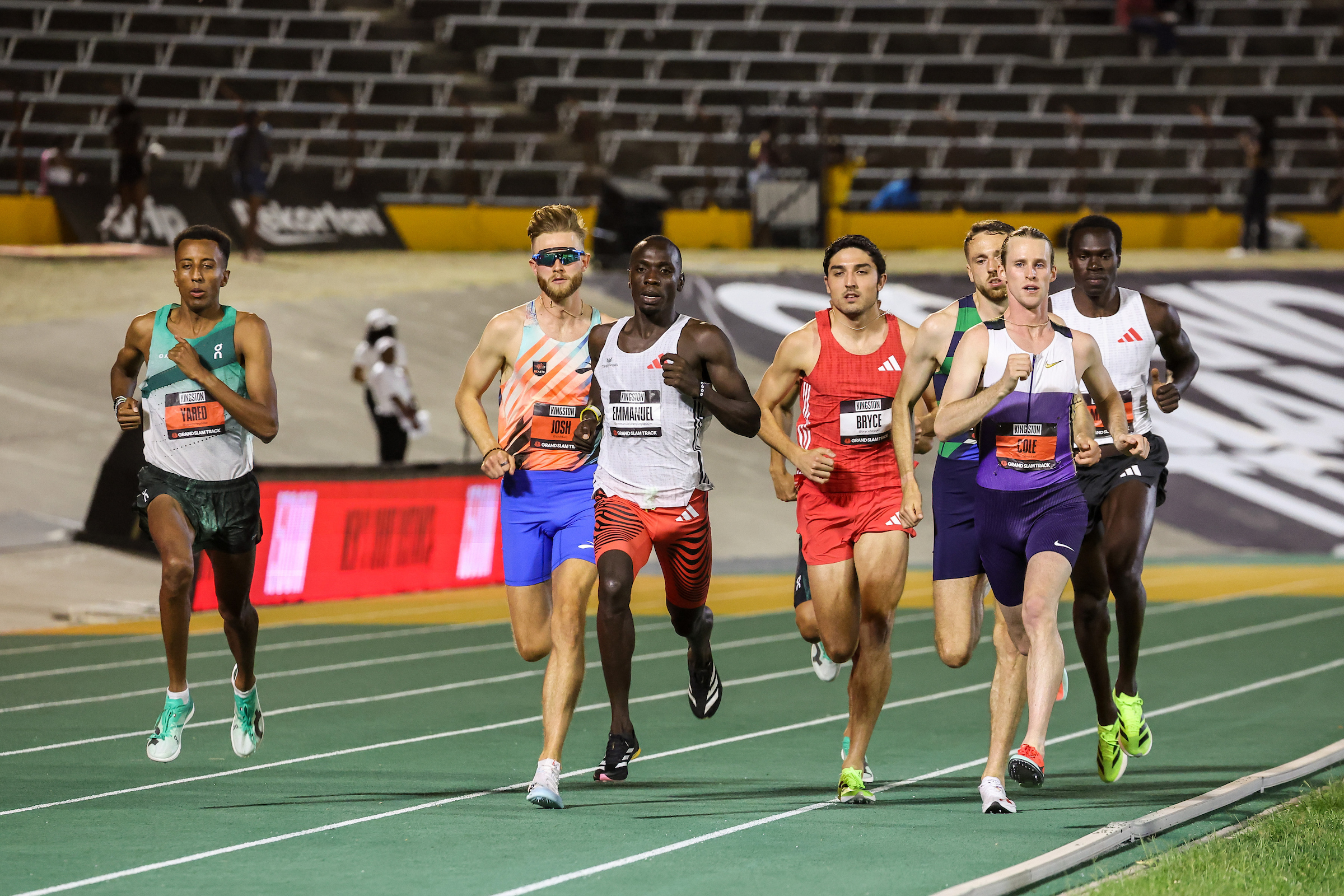 If only there had been more people in the stands to watch this amazing race in Kingston…
“Prior to Christmas, vendors were shocked by the treatment they received and by what can only be described as a disregard for the very people who delivered the product,” the statement continued. Fulton said vendors offered “meaningful concessions and reductions” to the amounts owed, but that those proposals “were not meaningfully engaged with.”
“Since mid-October, nearly all communication has focused on preserving Grand Slam Track, while the vendors, who carried the operational and reputational risk, were largely ignored,” the statement said.
Fulton closed his statement by emphasizing that the committee was not seeking confrontation for its own sake.
“We are not here to argue. We are here to resolve this properly,” he said. “That resolution must fairly address what is owed to vendors while allowing Grand Slam Track to move forward on a sustainable and credible footing. A resolution that meets those standards would allow all parties to move forward constructively and with confidence.”
Michael Johnson did not appear
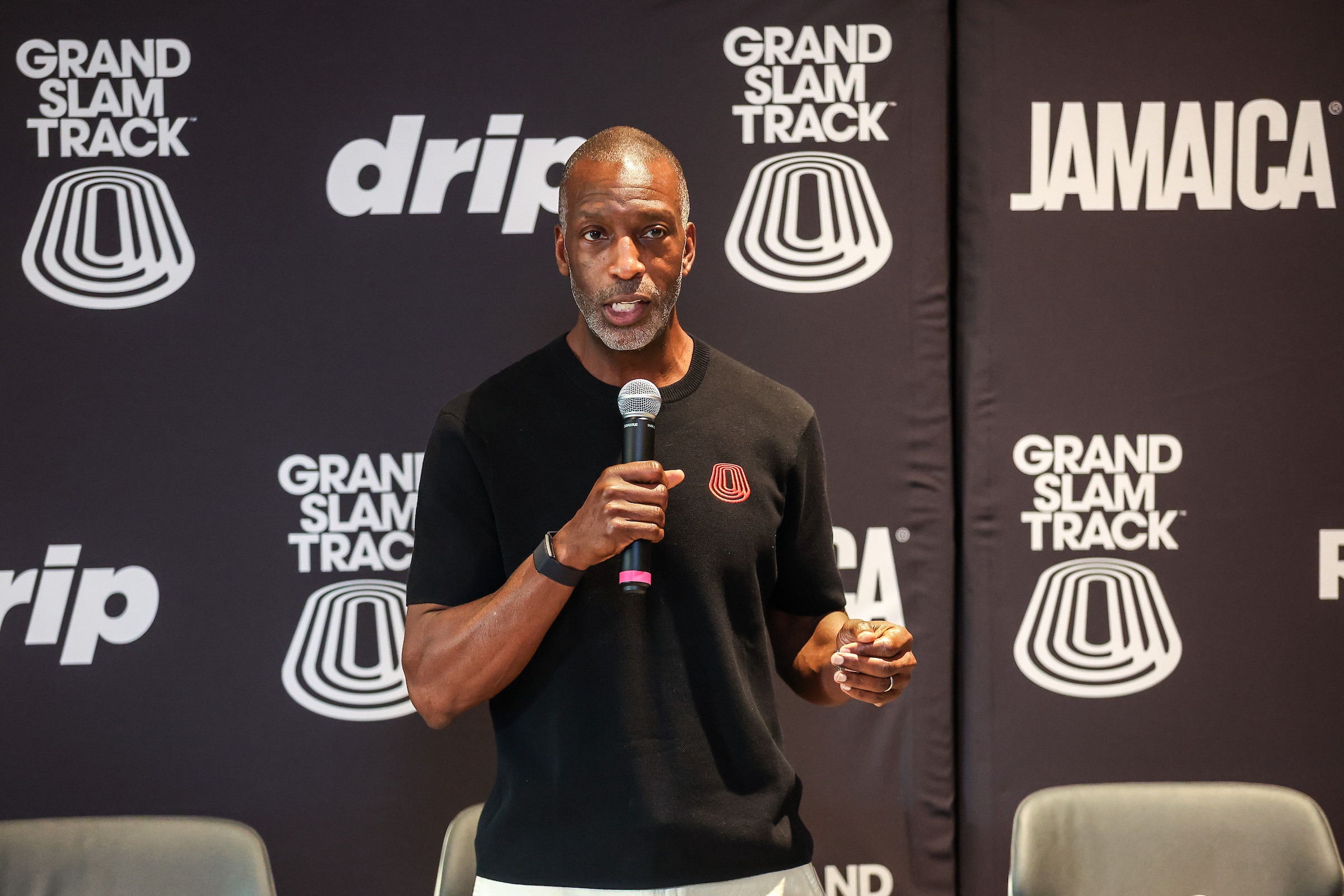 Michael Johnson at the Grand Slam Track Kingston press conference
Court filings and testimony revealed that Grand Slam Track currently employs six people and has almost no cash, but is expected to receive nearly $1 million in debtor in possession financing in the next few days from Winners Alliance to fund the bankruptcy and minimal operations.
GST has until January 31 to come up with a restructuring plan.
Michael Johnson, who iss one of Grand Slam Track’s remaining six employees, did not appear on the Zoom call. The bulk of the questions directed to GST were answered by Nicholas Rubin, Grand Slam Track’s chief restructuring officer, who testified under oath and fielded inquiries from the U.S. Trustee and creditors, with the league’s attorneys occasionally stepping in to address procedural issues.
Q&A reveals frustration and leverage on both sides
The question and answer portion of the hearing underscored the central tension facing Grand Slam Track’s creditors. For them to recover anything beyond what has already been paid, the league likely needs to survive in some form. With just $7,300 in cash on hand, liquidation would almost certainly leave unsecured creditors with little or nothing.
At the same time, creditors questioned how Grand Slam Track is proposing to spend money as it moves through bankruptcy.
Fulton asked Rubin how much Johnson and President and COO Steve Gera are currently being paid, a question that was deferred and is expected to be addressed once more detailed financial filings are made.
He also asked about a proposed $50,000 in consulting fees slated for this month, before turning to a budget line item that drew particular attention: $400,000 allocated to athlete contracts.
$400,000 for athletes in 2026, but $0 for athletes in 2025?
With no money earmarked to pay vendors or athletes owed from the 2025 season, Fulton asked whether the $400,000 was intended to cover past-due athlete payments. Rubin responded that the funds were intended “to secure the racers on a go-forward basis.”
At that moment, there was an audible chuckle on the Zoom call. While the source could not be independently confirmed, the Zoom interface indicated the sound came from a prominent agent in the sport who had briefly left their microphone unmuted.
The idea that Grand Slam Track would seek to sign athletes for 2026 while athletes from 2025 are still waiting on half of what they are owed runs counter to traditional notions of fairness. But it reflects how Chapter 11 bankruptcy functions, freezing past debts for now while prioritizing the company’s ability to reorganize and continue operating.
Fulton’s final question was whether Rubin had been in contact with World Athletics, another hurdle Grand Slam Track will need to clear if it hopes to continue with performances that count for World Athletics ranking purposes.
Many questions remain unanswered: how did GST rack up $40 million in liabilities at just three meets?
 Sasha Zhoya thought he won $100k for this (Kevin Morris photo)
While the hearing offered a few insights into Grand Slam Track’s operations and revealed the raw frustration and hope of its creditors, many of the biggest questions remain unanswered. Those include how the league ran up more than $40 million in costs and obligations to stage just three meets, what vendors were told as payments stalled, and how much executives and insiders were paid.
Those details are expected to come into sharper focus in the coming weeks, as the league prepares to file its schedules of assets and liabilities and a proposed restructuring plan by January 31.
While much of the public and many posters on the LetsRun.com forums have assumed Grand Slam Track is finished, the Section 341 hearing made clear that for the athletes and vendors still owed money, any chance of meaningful recovery depends on whether the league can survive in some form.
Talk about GST’s bankruptcy on our world-famous fan forum / messageboard: $7,300 in cash, $30M in debt: Why Grand Slam Track isn’t dead yet. They have a budget to drop 400k on racers for 2026!!!!