I've come up with the explanation. This soon will be in our WTW.
Demise ran her final 2.195 km in 6:32. That's 4:47.4 mile pace, or 2:05:36 marathon pace.
Crippa ran his final 2.195 km in 6:01. That's 4:24.7 mile pace, or 1:55:40 marathon pace.
That's super quick.
Is it possible they are legitimate?
In the men's race, there were still four guys together at 40k. So expecting a hard finish is reasonable. But 4:24 is super quick. In watching the race replay, it certainly doesn't look like Crippa is going sub-4:25 pace the whole time.
And in the women's race, Demise already had a 10-second lead at 40k. Yes, she'd be motivated to get a course record (she was on 2:19:16 pace at 40k), but it's unlikely that someone who ran 16:40 from 30 to 35k and then 16:28 from 35k to 40k would then close on 14:53 pace for the final 2.195km.
And much like the Australian 200m results, what makes it much more suspicious is that multiple athletes had historically fast closes. In addition to Crippa and Demise, the runner-up in the men's race, Bayelign Teshager of Ethiopia, split 6:07 for his final 2.195km, which would be 5th fastest in history.
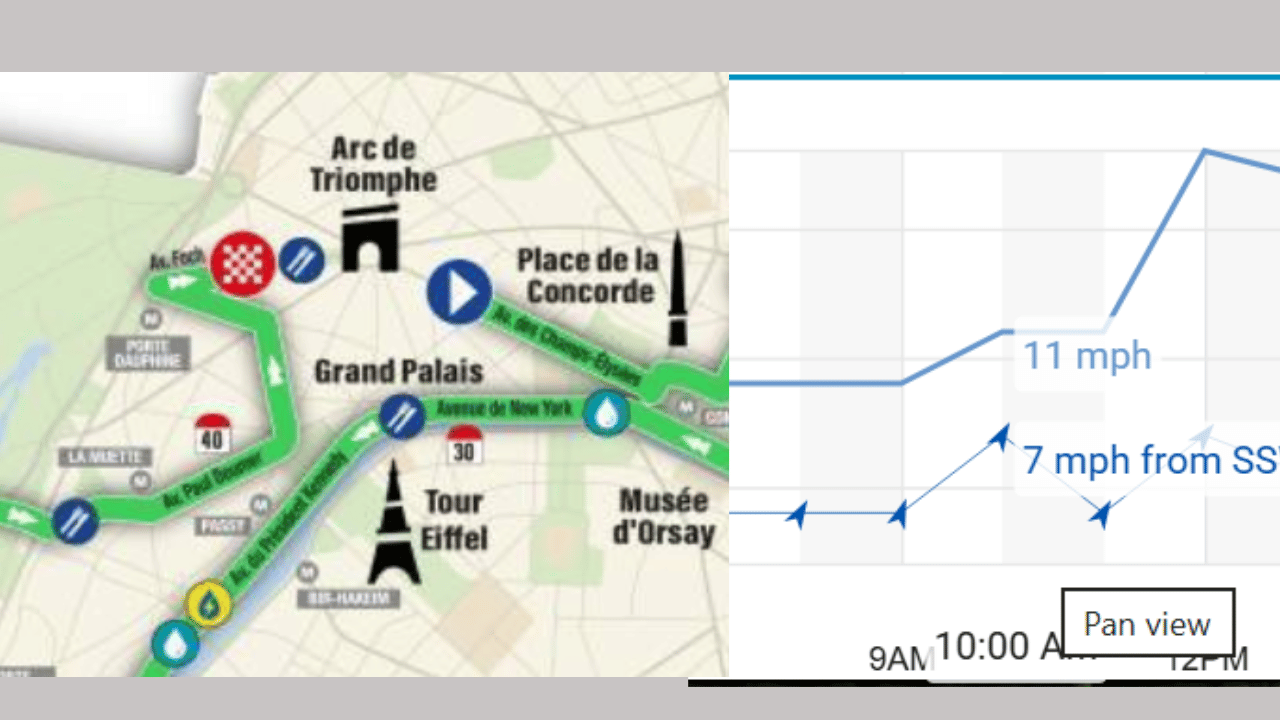
If the splits are legitimate, I know one thing -- they were wind-aided. The Paris Marathon course goes largely from south to north over the final 2.195 km, and the wind was coming out of the south.
But that type of wind would probably only provide about five seconds of help. Were there any other factors that could explain such a fast close?
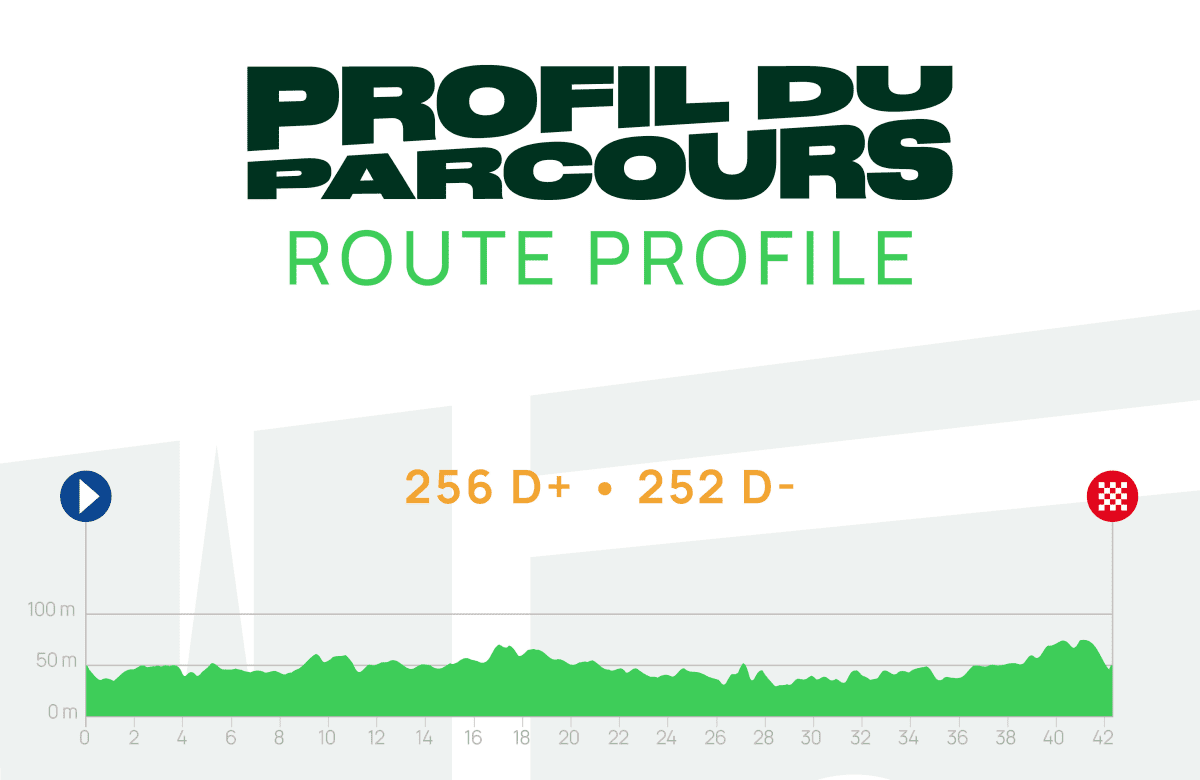
Actually, yes. Check out the course elevation profile:
The Paris course drops significantly over the final kilometer -- roughly 20 meters (65 feet) -- which is worth 10+ seconds. Wind plus a nice downhill could explain why the closes were historically fast on Sunday.