All of that supports my argument that these latter improvements are more likely to result from doping than the other factors you identify. We know doping is throughout the sport - Howman says the dopers are getting away with it - but you avoid including it as a likely factor in enhancing performances.
That doesn't make any sense. Hypothetically, let's go with your view that all the top athletes at every level of the sport have been doping for the last 30+ years. In your view, doping is the constant. That hasn't changed in the last 3 decades. If anything, it's been diminished because now dopers need to microdose instead of going full bore like they did in the 1990s.
The explosion of fast times on the track across all levels has happened in the last 5 years since the beginning of the widespread use of super shoes, pacing lights, and the new legal supplements.
If one thing is held constant (doping) while new variables get introduced and a dramatic change occurs, the logical conclusion is the new variables caused the change. Those new variables are the shoes, the pacing lights, and the new legal supplements.
You misunderstand what a "constant" is. The ubiquity of drugs in sports has continued if not grown over the years but the drugs constantly change as a result of both innovation and the need to avoid detection. So drugs are not all the same with the same effects. They will vary. They are not therefore a "constant" in the sense you are using that term.
But your argument, as you have phrased it, suggests that the effects of supershoes, pacing lights and supplements comes ON TOP of a platform of doping - hence the improvements in performances. These other variables certainly haven't replaced drugs. As Howman says, the dopers are getting away with it. So its use is not being eliminated or even reduced.
However, my view is that the effect of the variables you refer to will be less than drugs, as drugs improve the physiological capacity of an athlete far beyond what legal supplements can do and in ways that shoes and pacing lights don't. So in essence, we might say drugs plus the variables you mention are what are driving performances today.
Since you have long argued that the effect of drugs is all just in the mind and it is only a "belief" that they enhance performance there is no data that is going to convince you otherwise. I won't bother to try.
For someone with 44,000+ posts and counting, it seems like you are bothering to try.
I don't ever argue things like "all", or "only". The scientific experts you say you rely on know very well that placebo is an effect they need to address and account for, or rule out. But not all the athletes you say you rely on, inferring from their actions in silence, will, and may mistake placebo as proof of success.
That doesn't make any sense. Hypothetically, let's go with your view that all the top athletes at every level of the sport have been doping for the last 30+ years. In your view, doping is the constant. That hasn't changed in the last 3 decades. If anything, it's been diminished because now dopers need to microdose instead of going full bore like they did in the 1990s.
The explosion of fast times on the track across all levels has happened in the last 5 years since the beginning of the widespread use of super shoes, pacing lights, and the new legal supplements.
If one thing is held constant (doping) while new variables get introduced and a dramatic change occurs, the logical conclusion is the new variables caused the change. Those new variables are the shoes, the pacing lights, and the new legal supplements.
Doping is consistent, but so are newer variants that work better, better ways to mask it, hence all the bans for masking agents and three missed tests ....for those that understand the windows for getting caught.
The shoes have lowered times. Bi carb has not, it's been round since the 80s in heavy use and definitely pre dates that. The lights , yes they help ...the new legal supplements are like the legal ones in weightlifting, more for show than actual benefits that good diet can't also give you.
Someone else said the new mix allows you to go mad on bicarb... fundamentally misunderstanding what it does. The teaspoon done right is as effective and you'll get 50 lots for under a fiver , not 4 for 70 😂
Bicarb has been around a long time, but the key difference with the Maurten product is it reduces the awful GI side effects.
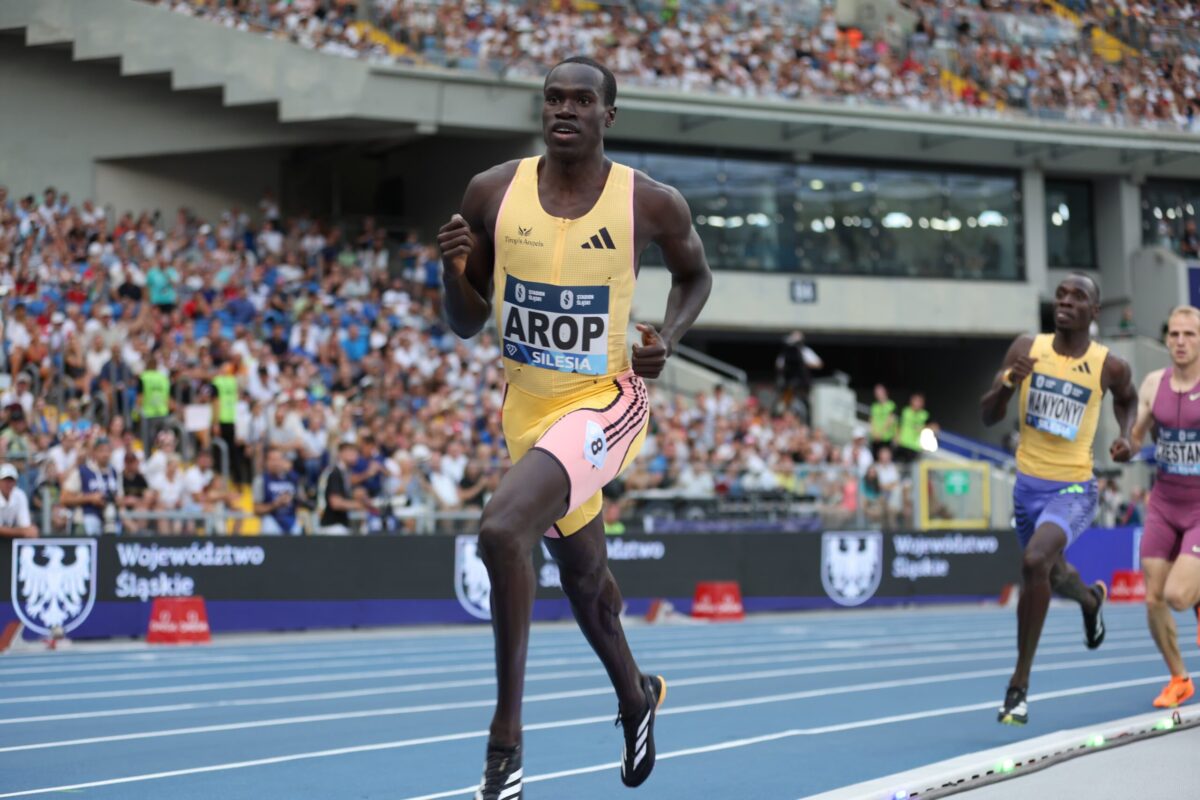
Marco Arop was a 1:42-1:43 guy before he started taking Maurten bicarb. Then he became a 1:41 guy.
Arop revealed he began incorporating the bicarbonate supplement into his training just weeks before the 2024 Olympics. “Everyone else was using it, so I tried it, and it worked wonders,” he said.
You misunderstand what a "constant" is. The ubiquity of drugs in sports has continued if not grown over the years but the drugs constantly change as a result of both innovation and the need to avoid detection. So drugs are not all the same with the same effects. They will vary. They are not therefore a "constant" in the sense you are using that term.
But your argument, as you have phrased it, suggests that the effects of supershoes, pacing lights and supplements comes ON TOP of a platform of doping - hence the improvements in performances. These other variables certainly haven't replaced drugs. As Howman says, the dopers are getting away with it. So its use is not being eliminated or even reduced.
However, my view is that the effect of the variables you refer to will be less than drugs, as drugs improve the physiological capacity of an athlete far beyond what legal supplements can do and in ways that shoes and pacing lights don't. So in essence, we might say drugs plus the variables you mention are what are driving performances today.
I guess we're making progress if you're finally acknowledging the shoes, lights, and legal supplements are contributing to the fast times.
The big question is: what percentage of people running fast are doping? It seems you believe it's 100%? I can't make that leap because we're seeing fast times across the board at all levels of the sport, from youth to pro. It's not just the top 10 athletes running faster than previous top 10s. The 20th fastest, the 50th fastest, and the 100th fastest runners today are all faster than their pre-2020 counterparts.
Unless you believe that every single one of those top 100 runners are doping at every level of the sport from youth to pro, the logical conclusion is to look to the other variables to explain the explosion of fast times.
I guess we're making progress if you're finally acknowledging the shoes, lights, and legal supplements are contributing to the fast times.
The big question is: what percentage of people running fast are doping? It seems you believe it's 100%? I can't make that leap because we're seeing fast times across the board at all levels of the sport, from youth to pro. It's not just the top 10 athletes running faster than previous top 10s. The 20th fastest, the 50th fastest, and the 100th fastest runners today are all faster than their pre-2020 counterparts.
Unless you believe that every single one of those top 100 runners are doping at every level of the sport from youth to pro, the logical conclusion is to look to the other variables to explain the explosion of fast times.
With respect to the shoes, according to one recent study, there was a clear step function improvement in the men's marathon starting around 2017. They looked at the trend of marathon times below 2:08 from 1985 through 2021, performing a linear regression analysis to determine the difference in the trend of improvements from before 2017, to what happened after 2017. They concluded that supershoes were responsible for about 24 sub-2:08 marathons per year more than would have been from the previous trend, equating it to about a 1m31s, or about 1.2%, decrease in time.
Bicarb has been around a long time, but the key difference with the Maurten product is it reduces the awful GI side effects.
Marco Arop was a 1:42-1:43 guy before he started taking Maurten bicarb. Then he became a 1:41 guy.
Arop revealed he began incorporating the bicarbonate supplement into his training just weeks before the 2024 Olympics. “Everyone else was using it, so I tried it, and it worked wonders,” he said.
The awful side effects were if you messed it up . The point being most athletes know about and took bicarb, especially in the 400/800. Maurten is no better for performance..but if you're getting it free then yeah go for it.
The awful side effects were if you messed it up . The point being most athletes know about and took bicarb, especially in the 400/800. Maurten is no better for performance..but if you're getting it free then yeah go for it.
Arops now a Maurten ambassador.
Arop didn't become a Maurten ambassador until May 2025, after he had already talked about the positive effect it had on him in the August 2024 article I linked.
The awful side effects were if you messed it up . The point being most athletes know about and took bicarb, especially in the 400/800. Maurten is no better for performance..but if you're getting it free then yeah go for it.
Arops now a Maurten ambassador.
Arop didn't become a Maurten ambassador until May 2025, after he had already talked about the positive effect it had on him in the August 2024 article I linked.
You misunderstand what a "constant" is. The ubiquity of drugs in sports has continued if not grown over the years but the drugs constantly change as a result of both innovation and the need to avoid detection. So drugs are not all the same with the same effects. They will vary. They are not therefore a "constant" in the sense you are using that term.
But your argument, as you have phrased it, suggests that the effects of supershoes, pacing lights and supplements comes ON TOP of a platform of doping - hence the improvements in performances. These other variables certainly haven't replaced drugs. As Howman says, the dopers are getting away with it. So its use is not being eliminated or even reduced.
However, my view is that the effect of the variables you refer to will be less than drugs, as drugs improve the physiological capacity of an athlete far beyond what legal supplements can do and in ways that shoes and pacing lights don't. So in essence, we might say drugs plus the variables you mention are what are driving performances today.
I guess we're making progress if you're finally acknowledging the shoes, lights, and legal supplements are contributing to the fast times.
The big question is: what percentage of people running fast are doping? It seems you believe it's 100%? I can't make that leap because we're seeing fast times across the board at all levels of the sport, from youth to pro. It's not just the top 10 athletes running faster than previous top 10s. The 20th fastest, the 50th fastest, and the 100th fastest runners today are all faster than their pre-2020 counterparts.
Unless you believe that every single one of those top 100 runners are doping at every level of the sport from youth to pro, the logical conclusion is to look to the other variables to explain the explosion of fast times.
We are not making the progress you think we are. The factors you think are contributing to fast times aren't matching my understanding of what doping does, which is substantially add to the physiological capacity of the athlete.
Not all runners are doping but many now will be. Not all athletes are improving across the board. But many are. For some of them it will include the effects of doping. The only way you can refute that is to say that doping isn't present in the sport. It is. Significantly so.
We are not making the progress you think we are. The factors you think are contributing to fast times aren't matching my understanding of what doping does, which is substantially add to the physiological capacity of the athlete.
Not all runners are doping but many now will be. Not all athletes are improving across the board. But many are. For some of them it will include the effects of doping. The only way you can refute that is to say that doping isn't present in the sport. It is. Significantly so.
In 2019, 30 athletes ran under 3:35 in the 1500. Last year, 111 did.
In 2019, 129 athletes ran under 13:30 in the 5000. Last year, 285 did.
In 2019, the 100th fastest runner in the 1500 ran 3:38.11. Last year, the 100th fastest runner ran 3:34.33.
In 2019, the 100th fastest runner in the 5000 ran 13:26. Last year, the 100th fastest runner ran 13:13.
We are not making the progress you think we are. The factors you think are contributing to fast times aren't matching my understanding of what doping does, which is substantially add to the physiological capacity of the athlete.
Not all runners are doping but many now will be. Not all athletes are improving across the board. But many are. For some of them it will include the effects of doping. The only way you can refute that is to say that doping isn't present in the sport. It is. Significantly so.
In 2019, 30 athletes ran under 3:35 in the 1500. Last year, 111 did.
In 2019, 129 athletes ran under 13:30 in the 5000. Last year, 285 did.
In 2019, the 100th fastest runner in the 1500 ran 3:38.11. Last year, the 100th fastest runner ran 3:34.33.
In 2019, the 100th fastest runner in the 5000 ran 13:26. Last year, the 100th fastest runner ran 13:13.
Is that not significant progress?
That wasn't the progress he was referring to. He was talking of reaching agreement. But it is the kind of progress enabled by drugs, which Howman has said top athletes are able to use and get away with. You can't rule it out.
In 2019, 30 athletes ran under 3:35 in the 1500. Last year, 111 did.
In 2019, 129 athletes ran under 13:30 in the 5000. Last year, 285 did.
In 2019, the 100th fastest runner in the 1500 ran 3:38.11. Last year, the 100th fastest runner ran 3:34.33.
In 2019, the 100th fastest runner in the 5000 ran 13:26. Last year, the 100th fastest runner ran 13:13.
Is that not significant progress?
That wasn't the progress he was referring to. He was talking of reaching agreement. But it is the kind of progress enabled by drugs, which Howman has said top athletes are able to use and get away with. You can't rule it out.
Time have improved in the last 5 years at all levels of the sport from youth to pro. Are you saying those dramatic differences between 2019 and 2025 cited above are the result of illegal PEDs?
That wasn't the progress he was referring to. He was talking of reaching agreement. But it is the kind of progress enabled by drugs, which Howman has said top athletes are able to use and get away with. You can't rule it out.
Time have improved in the last 5 years at all levels of the sport from youth to pro. Are you saying those dramatic differences between 2019 and 2025 cited above are the result of illegal PEDs?
Not every athlete has improved or at the same rate if they have. But the most conspicuous improvements that have occurred in the sport in the last 5 years are more likely to have been fuelled by drugs than anything else. What supports that view is Howman's recent admission that dopers are getting away with it.
Time have improved in the last 5 years at all levels of the sport from youth to pro. Are you saying those dramatic differences between 2019 and 2025 cited above are the result of illegal PEDs?
Not every athlete has improved or at the same rate if they have. But the most conspicuous improvements that have occurred in the sport in the last 5 years are more likely to have been fuelled by drugs than anything else. What supports that view is Howman's recent admission that dopers are getting away with it.
Of course not every single athlete improves or at the same rate. There are many variables like age and health that impact performance.
Overall, there is no denying that times have gotten significantly faster at all levels of the sport since 2019. You can't attribute that to illegal PEDs unless you think the top 300 in every event at every level of the sport are all doping.