Pretty much my story right there. The fall-off, the emotions, everything. I was getting fitter and fitter as I got into my mid-40s, got back to sub-60 for 10 miles, then got hit by a car and needed an ACL repair. The wheels just never returned. Fast-forward to now, turning 60 next year, doing all the "right things" people have discussed in this thread, but 8:30 miles feel like 5:30 miles, so return to being even at my age-grade equivalent from 15 years ago looks unlikely, and despite my best efforts to keep healthy, I'm shut down again with a stubborn adductor strain for who knows how long. I'm trying to stay motivated to continue the good fight - PT, cross-training, gym, nutrition, sleep, etc.. We'll see....
Resistance band exercises are good the adductor. Wrap one end around the bottom of your bed post and the other around the effected leg. Slowly move your leg sideways to feel a contraction in the adductor.
Thanks, SWOM. My PT started me on them last week, and I feel good with they way they are going. The guy I was working with before her had me do full Copenhagen side planks and they were way too much - they reaggravated my injury.
Yeap. Some extended rest and some bounding up stairs and plyos are good sometimes. I'm not old; but I've had my joints ground to dust and have had to really take things off of the burner for a while to heal up, so I'm at least familiar with that.
I've also experimented with growth hormone peptides and localized injections of BPC and TB-500 and have seen firsthand how physiology can be rapidly affected by these sorts of things, which rapidly change with age.
heck; IGF-1 levels drop off a cliff starting at age 16 after they reach their peak. By 25, they're at about 40% of their peak at age 16. By year 50, they're at 20-25% of their peak.
This post was edited 18 seconds after it was posted.
Yeap. Some extended rest and some bounding up stairs and plyos are good sometimes. I'm not old; but I've had my joints ground to dust and have had to really take things off of the burner for a while to heal up, so I'm at least familiar with that.
I've also experimented with growth hormone peptides and localized injections of BPC and TB-500 and have seen firsthand how physiology can be rapidly affected by these sorts of things, which rapidly change with age.
heck; IGF-1 levels drop off a cliff starting at age 16 after they reach their peak. By 25, they're at about 40% of their peak at age 16. By year 50, they're at 20-25% of their peak.
How did those hormones work for you? Are these like fountain of youth drugs? And what's "TB-500?"
I recall years ago a drug raid was executed on a lab in Spain that was providing PEDs to athletes & "TB-500" was found among the usual steroids & EPO.
Yeap. Some extended rest and some bounding up stairs and plyos are good sometimes. I'm not old; but I've had my joints ground to dust and have had to really take things off of the burner for a while to heal up, so I'm at least familiar with that.
I've also experimented with growth hormone peptides and localized injections of BPC and TB-500 and have seen firsthand how physiology can be rapidly affected by these sorts of things, which rapidly change with age.
heck; IGF-1 levels drop off a cliff starting at age 16 after they reach their peak. By 25, they're at about 40% of their peak at age 16. By year 50, they're at 20-25% of their peak.
How did those hormones work for you? Are these like fountain of youth drugs? And what's "TB-500?"
I recall years ago a drug raid was executed on a lab in Spain that was providing PEDs to athletes & "TB-500" was found among the usual steroids & EPO.
Yeap. Some extended rest and some bounding up stairs and plyos are good sometimes. I'm not old; but I've had my joints ground to dust and have had to really take things off of the burner for a while to heal up, so I'm at least familiar with that.
I've also experimented with growth hormone peptides and localized injections of BPC and TB-500 and have seen firsthand how physiology can be rapidly affected by these sorts of things, which rapidly change with age.
heck; IGF-1 levels drop off a cliff starting at age 16 after they reach their peak. By 25, they're at about 40% of their peak at age 16. By year 50, they're at 20-25% of their peak.
Did you find that BPC 157 and TB-500 was effective on chronic arthritis? Or was it mostly effective only on new injuries to muscles and tendons? What about running related bone spurs? Not many reports exist for these peptides on older runners.
Ive been a runner all my life and even after 50 I continued to work out, to lift, to bike, yoga, all the stuff you are told to do. While I have been able to keep from gaining weight like most of my peers, when I get out of bed, I ache! I have terribly arthritic knees, I've been dealing with sciatica for over a year, shoulder pains.. it sucks.
But... I went on vacation for 2 full weeks and all I did was eat, drink, and walk around doing tourist stuff... I feel GREAT. Almost all my pains are gone, I actually quickly jogged up some steps yesterday.. I haven't done that in years!
I think the sedentary lifestyle my be the key to pain free living. It's like my body was saying, at 60 you need to just walk some every day, and drink beer every night.
Each of us is an experiment of one. I am 73 and run 6+ miles four, and sometimes five, days a week. I lift and cycle. In the winter I downhill and cross country ski. I am on no medications and do not have any chronic pain or injuries.
Ive been a runner all my life and even after 50 I continued to work out, to lift, to bike, yoga, all the stuff you are told to do. While I have been able to keep from gaining weight like most of my peers, when I get out of bed, I ache! I have terribly arthritic knees, I've been dealing with sciatica for over a year, shoulder pains.. it sucks.
But... I went on vacation for 2 full weeks and all I did was eat, drink, and walk around doing tourist stuff... I feel GREAT. Almost all my pains are gone, I actually quickly jogged up some steps yesterday.. I haven't done that in years!
I think the sedentary lifestyle my be the key to pain free living. It's like my body was saying, at 60 you need to just walk some every day, and drink beer every night.
Each of us is an experiment of one. I am 73 and run 6+ miles four, and sometimes five, days a week. I lift and cycle. In the winter I downhill and cross country ski. I am on no medications and do not have any chronic pain or injuries.
Yep. We could all try to follow Ed Whitlock's methods down to every minute detail, yet none of us would be able to replicate his results.
Each of us is an experiment of one. I am 73 and run 6+ miles four, and sometimes five, days a week. I lift and cycle. In the winter I downhill and cross country ski. I am on no medications and do not have any chronic pain or injuries.
Yep. We could all try to follow Ed Whitlock's methods down to every minute detail, yet none of us would be able to replicate his results.
Is he the cat that use to run in graveyards for the bulk of his training? And if I recall, he was totally skin & bones? Hardly any impact forces with that light frame?
Here is the AI overview, FWIW. It provides links for all the statements it provided.
TB-500, also known as Thymosin Beta-4, is a synthetic peptide that has gained popularity in recent years for its potential therapeutic benefits. Mechanism of Action: TB-500 is believed to work by mimicking a naturally occurring protein in the body called thymosin beta-4. It stimulates the body's own healing and regenerative processes by: Promoting angiogenesis (new blood vessel growth), Enhancing cell migration, Reducing inflammation, and Stimulating stem cell activity. Potential Benefits: TB-500 has been suggested for the treatment of various conditions, including: Muscle and tendon injuries, Wound healing, Osteoarthritis, Heart disease, and Autoimmune disorders. Evidence: While some anecdotal evidence supports the benefits of TB-500, scientific research is limited. There have been a few small studies that suggest it may have beneficial effects on wound healing and muscle regeneration, but more robust studies are needed. Safety and Side Effects: TB-500 is generally considered safe when used as directed. However, some potential side effects include: Injection site pain and redness, Headache, Nausea, and Allergic reactions. Regulation and Availability: TB-500 is not currently approved by the FDA for any medical use. It is available as a prescription medication in some countries, but it is considered a prohibited substance in sports. Conclusion: TB-500 is a synthetic peptide with potential therapeutic benefits for wound healing, muscle regeneration, and other conditions. However, scientific evidence is limited, and it is not approved by the FDA. It is important to consult with a healthcare professional before using TB-500.
Yep. We could all try to follow Ed Whitlock's methods down to every minute detail, yet none of us would be able to replicate his results.
Is he the cat that use to run in graveyards for the bulk of his training? And if I recall, he was totally skin & bones? Hardly any impact forces with that light frame?
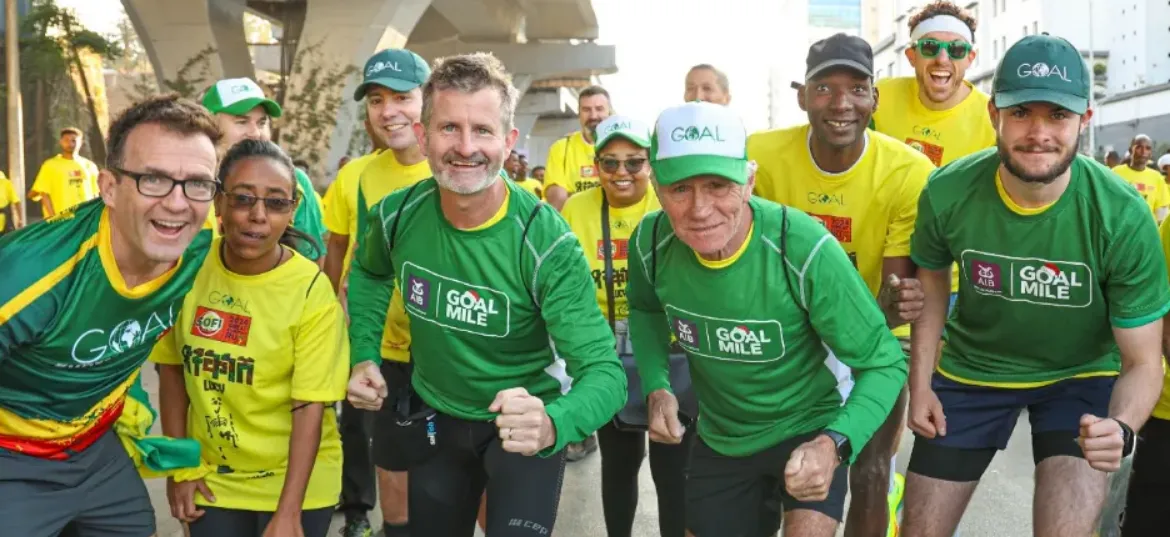
Separately, in a few weeks I’m heading to Ethiopia to run a 10K for GOAL USA, a humanitarian org supporting families facing conflict, hunger, and displacement. I’ll be running alongside Eamonn Coghlan — “The Chairman of the Boards” himself — as part of the GOAL USA team.
To make it fun, Brad Fawley, author of The Frontrunner, donated signed copies to help the cause. 📘 First 10 donors of $75+ get a signed book as a thank-you. 🔗
Hi All, On November 23rd, 2025 , I’ll be taking part in Africa’s biggest road race — The Great Ethiopian Run — to raise funds for GOAL USA . GOAL was founded in 1977 by Irish journalist John O’Shea an
Yeap. Some extended rest and some bounding up stairs and plyos are good sometimes. I'm not old; but I've had my joints ground to dust and have had to really take things off of the burner for a while to heal up, so I'm at least familiar with that.
I've also experimented with growth hormone peptides and localized injections of BPC and TB-500 and have seen firsthand how physiology can be rapidly affected by these sorts of things, which rapidly change with age.
heck; IGF-1 levels drop off a cliff starting at age 16 after they reach their peak. By 25, they're at about 40% of their peak at age 16. By year 50, they're at 20-25% of their peak.
Did you find that BPC 157 and TB-500 was effective on chronic arthritis? Or was it mostly effective only on new injuries to muscles and tendons? What about running related bone spurs? Not many reports exist for these peptides on older runners.
What I read about BPC 157 is that for it be effective it should be injected into the site that is damaged. And while it may help reduced inflammation, it does not heal arthritis. Taken orally it will aid with gut health, but that's it.
Also I am skeptical about it because how do you know whether your injury was going to heal anyway given the time? So maybe you are injecting this unknown, unregulated substance in your body for 8 weeks, and you would have healed up without that risk?
So much of this stuff is hype and/or promise to help these very general things like "fatigue" "recovery" "brain fog" "improved sleep". Those are all very difficult to test and quantify.
Excersize has to be “ rethought” sooner or later and it depends on genes, how long you’ve been at it, how hard you did it and if you have had any breaks.
I noticed a direct indication that I was mortal at 68.
I could still follow a plan and the plan was only similar to the training plan that I followed since 1977 ( over 100,000 miles)
But at 68, something happened. Profound, nearly indescribable and permanent. I can’t call it an injury, it just IS WHAT IT IS.
After a daily workout effort anymore, afterwards I can just sit and let what’s on the TV drip into my eyes. The hours pass, I don’t notice it and unlike in the previous years, I’m content with it. My body just somehow said “ Ok, I’ve had enough “
This post was edited 1 minute after it was posted.
Interesting thread. At 70 I'm trying to follow roughly the same 6 day a week training plans that had me running sub3s in my mid-50s, but I adjust them (with slower paces) to aim at the same age-graded targets of 2:30-2:40. It's been OK except for injuries that take longer to heal -- a couple calf strains that knocked me out for 8-10 weeks each, hamstring issues that also took frustratingly long to resolve. My attitude is that I'm going to keep at it until I can't. If my last marathon was my last so be it. If I can still do it at 90 I will!