The point was that summiting Everest with supplemental O2 doesn’t represent a great athletic or mountaineering achievement.
Stephen Venables is an elite mountaineer with many first ascents, who among other achievements summited Everest without O2 partly via a new route on the East face.
Scott Fischer, also not counting among the top elite climbers of his era, does have an impressive track record at high altitude climbing with both Everest and K2 without supplemental O2.
Rob Hall never counted among the “great western climbers” and is more known as a ver skilled and successful commercial outfitter having lead many clients to the top of Everest. All his own summits on Everest and K2 were done with supplemental O2.
Most Sherpas indeed use supplemental O2 on Everest, which does clearly not represent an extraordinary athletic achievement. Most Sherpas do however use less O2 than their guided clients and carry a heavier load, so their performance is somehow stronger but not extraordinary either. Likewise, a 3h Kenyan marathon runner is a good runner but not an exceptional athlete. A few Sherpas do however belong to the elite mountaineers community.
In technical terms, climbing Everest via the normal route on both Nepalese and Tibetan side doesn’t require exceptional skills. Being ok at jumaring is usually sufficient.
The sherpas that, using supp. O2, open the route set the fixed lines on the South Col route yearly are doing something more impressive in terms "athletic or mountaineering" performance than anyone that follows regardless of O2 use.
As much free diving achievements cannot be compared with scuba diving, the same applies for climbing with or without O2. I think most people cannot really apprehend the enormous impact on supplemental O2 while climbing at high altitude for a prolonged duration.
Obviously the rope fixing task requires some higher technical skills, but only a small minority of skilled Sherpas, Tibetans and foreign top level climbers are involved in it. However, the normal routes on both Nepalese and Tibetan sides do not exceed the PD+/AD difficulty grade, a route that any moderately gifted mountaineer should be able to climb unaided, and that any IFMGA/UIAGM guide should be able to equip easily. For those not knowing the grading scale: F (easy), PD-/PD/PD+ (somewhat difficult), AD-/AD/AD+ ( fairly difficult), D-/D/D+ (difficult), ED-/ED/ED+/ED4 and beyond (extremely difficult).
For sure, the commitment (engagement) grade is very high due to the altitude and length of the route, but still nothing superhuman with supplemental O2 and modern equipment.
I would argue that the job made by the small team of "icefall doctors", even though working at a much lower altitude not exceeding 6000m, is technically more demanding and globally much more impressive due to the very high exposure. But here again, it is not very different from the job of those securing construction sites on alpine terrain.
I know there is a lot of romanticisation of the Sherpas capabilities, and many Sherpas are also rightfully pissed off by the occasional hobby climbers portraying themselves as heroes while they wouldn’t have crossed the first serac without fixed lines… But without diminishing their great abilities at high altitude, it remains a fairly common mountaineering performance to fix a line on a very well known route with modern climbing gear, O2 supply and additional porters bringing up the anchors, ropes and other materials needed.
In reading about Everest this year I saw a team is using Xenon gas. It gives EPO benefits. Does anyone here know anything about this. I know Nick will just be using Run Gum or Climb Gum to help him.
This is difficult climb for most, even with fixed ropes and ladders in place compliments of the sherpas. Which is why is amazes me that Edmund Hillary and Tenzing Norgay did it without any sort of help. No fixed ropes, no ladders, no large group to help each other, nothing. And they were going into the unknown - nobody had ever reached the top so once they got to above 28,000' most of the route was a mystery. Imagine them coming to the Hilary Step and thinking, "How the hell are we going to get up THAT?" But they found a way, just the two of them. Even more surprising to them may have been the irony when they saw the sign reading "Hilary Step."
In reading about Everest this year I saw a team is using Xenon gas. It gives EPO benefits. Does anyone here know anything about this. I know Nick will just be using Run Gum or Climb Gum to help him.
The xenon boosted team will fly out from UK this coming Friday. I hope their flight will be delayed or cancelled due to a strike and that they won’t even make it to base camp.
Here the statement from the UIAA medical commission:
UIAA Medical Commission recommends established methods for acclimatization: Statement on xenon and high-altitude mountaineering The UIAA Medical Commission has recently received multiple reports and correspondence from mounta...
According to current literature, there is no evidence that breathing in xenon improves performance in the mountains, and inappropriate use can be dangerous. Although a single inhalation of xenon can measurably increase the release of erythropoietin, this increase is not sustained over four weeks use, nor is it associated with any changes in red blood cells. According to the literature, the effects on performance are unclear and probably non-existent. Acclimatization to altitude is a complex process that affects the various organs/systems such as the brain, lungs, heart, kidneys and blood to different degrees, and is not fully understood. Since the physiological changes take days to weeks to influence the organism, from a physiological point of view, a single, one-off drug cannot be the key to improved acclimatization or increased performance. For erythropoietin in particular, the target of xenon, the effects take weeks to increase red blood cells, so use just before climbing would not be expected to make any difference in hemoglobin, hematocrit or performance. Moreover, xenon has been on the World Anti-Doping Agency (WADA) Prohibited List of banned substances since 2014. A ban on the use of performance-enhancing substances can only be applied to sports that are subject to WADA rules, thus applying for example to competitive ice climbing but not to high-altitude mountaineering. Xenon is an anesthetic gas, and thus a medicine, with corresponding adverse effects and health risks, meaning in an unmonitored setting this could be impaired brain function, respiratory compromise, and even death. One study showed significant sedation in people using it at doses recommended for mountaineering. Even slight sedation is detrimental in the potentially dangerous setting of high-altitude mountaineering. Xenon is rarely used in medicine and is not approved in all countries. Its use should be reserved for the operating room and procedural sedation by specialists with appropriate training in anesthesia. From a medical point of view, off-label use without a scientific basis and with unknown health risks must be rejected.
Which is why is amazes me that Edmund Hillary and Tenzing Norgay did it without any sort of help. No fixed ropes, no ladders, no large group to help each other, nothing. And they were going into the unknown - nobody had ever reached the top so once they got to above 28,000' most of the route was a mystery. Imagine them coming to the Hilary Step and thinking, "How the hell are we going to get up THAT?" But they found a way, just the two of them.
Edmund Hillary and Tenzing Norgay were part of a military-style heavy expedition with an extremely large team of 40 climbers and high altitude Sherpas with siege tactics and well stocked high altitude camps.
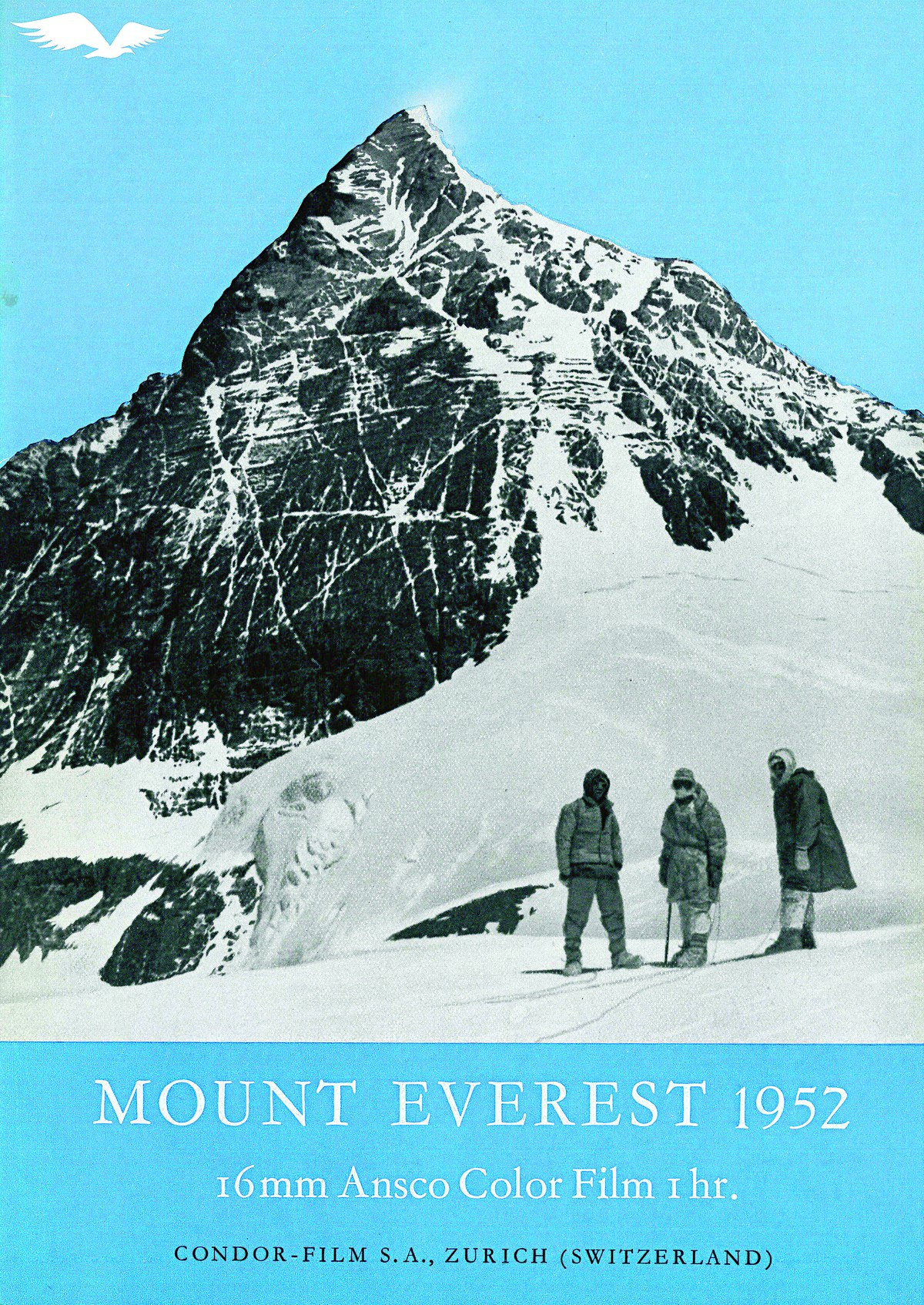
The route up to 8600m had been climbed the year before by the much smaller Swiss expedition, in which Tenzing was a full member reaching 8600 together with Raymond Lambert.
But yes they were in the unknown for the last 250m, including the Hillary Step that couldn’t be seen from lower on the mountain.
The 1952 Swiss Mount Everest expedition was an attempt to summit Mount Everest. Led by, Edouard Wyss-Dunant, the expedition, which included Tenzing Norgay, reached a height of 8,595 metres (28,199 ft) on the southeast ridge,...
As Dave Ramsey claims, couples who live together before marriage are more likely to divorce.
But for reals - Nick seemed to be in a perpetual midlife crisis since retiring, and tats aside - she's aging poorly.
Only if you don’t correct for all the other factors. If you do that cohabitation basically doesn’t matter. But that isn’t what a lot of people want to preach.
Things like life style switches (pro runner to YouTuber) have been linked to more divorces in pretty much every study. You had a relationship that was working and then you change it up. But who knows about the specifics of this case…
Taking advantage of a brief respite in the high winds, around 54 people summited Everest from the Nepalese side on May 13, 2025. Meanwhile, dozens are staged at high camps, looking to storm the top after May 18th. On the Tibe...