There's more depth than ever before. The difference from 1st to 10th is very small. Same with 1500m outdoors, 5,000m, 10,000m... The time spread from fastest in the world to 20th in the world for 5,000m is like 15 seconds. Back in the 90's/early 2000's we had a couple guys running 12:39 and 20th in the world was way back at like 13:10. Because there is so much depth now it's like there are pacers for most of the field that never drop out. Everyone can pack run the whole thing at very fast paces. The fastest people aren't really getting a ton faster, there are just way more people near the front. And that is helping push the records down. If hocker weren't in the 3k Grant probably only runs 7:23, maybe 7:24. If Kessler weren't in the mile giving Nuguse a push in the final laps then Nuguse probably only runs 3:47. The increased depth is making the best faster. Shoes are not an explanation for so many people being close to the best. If shoes simply made you faster then we'd have the same old spread times from 1st to 20th and they'd all just be a little faster.
If there's "more depth" now then that must mean more athletes are involved in the sport than the past. How does that figure with running declining in relation to major sports as well as the proliferation of niche sports? Most people outside running have no idea who the athletes are that are routinely discussed on these threads. Running is now a "niche" sport. That doesn't create "depth".
Populations keep increasing, so even with a stagnant percentage of participation it means more people doing it. The bigger factor though is more people going 'all in' on running. It's known in all sports that more high schoolers are single sport athletes now than 'back in the day'. More people are doing top level training for a much longer chunk of their life. Starting at 14 years of age doing big time training, plus increased usage of red-shirt seasons in NCAA. Plus covid year. Plus the increase of post-collegiate training groups. Even in other countries life has gotten easier such that people can train more and focus less on getting a job. More people going all in means more people near the best in the world.
I've had the same thoughts. While the sport definitely HAS evolved I don't believe runners today are THAT much better than runners from 20 years ago. The shoes and track surfaces have definitely made a difference of ~1-4 seconds for the mile distance. Kenenisa Bekele's PBs at 3000m were 7:25 outdoor and 7:30 indoor. Do we really think multiple US men are significantly better distance runners than Kenny B? I have incredible respect and appreciation for the US men and others, but I think it's fair to say their times are not entirely due to them being better runners. 7:22 indoors is absolutely insane.
If there's "more depth" now then that must mean more athletes are involved in the sport than the past. How does that figure with running declining in relation to major sports as well as the proliferation of niche sports? Most people outside running have no idea who the athletes are that are routinely discussed on these threads. Running is now a "niche" sport. That doesn't create "depth".
Populations keep increasing, so even with a stagnant percentage of participation it means more people doing it. The bigger factor though is more people going 'all in' on running. It's known in all sports that more high schoolers are single sport athletes now than 'back in the day'. More people are doing top level training for a much longer chunk of their life. Starting at 14 years of age doing big time training, plus increased usage of red-shirt seasons in NCAA. Plus covid year. Plus the increase of post-collegiate training groups. Even in other countries life has gotten easier such that people can train more and focus less on getting a job. More people going all in means more people near the best in the world.
It’s shoes bruh. Deal with it. Fisher and whats-his-face and whoever else can prove at anytime that they are 7:23 runners. I have a pair of 20-year old spikes that are perfectly fine and anyone can have.
Or maybe everyone should be required to run in leather spikes with leather shoes on cinder tracks? I think know that you're the one who's being disrespectful and ignorant. Runners are better today, even accounting for the technology. Accept it and move forward. I think it's cool, perhaps you should too?
Yes, Hobbs Kessler is nearly 2 seconds better at the mile than El Guerrouj! Strand is a better miler as well!
Yes, Hobbs Kessler is nearly 2 seconds better at the mile than El Guerrouj! Strand is a better miler as well!
Why does this bother you so much? I look forward to seeing how fast everyone runs outdoors, arent you? I've had the privilege of watching the sport improve for over six decades.
"Track is good!" shouted Mike Goodman, an enthusiastic young runner from Easter Michigan in the mid '70s.
Better coaching, training, sharing of training information, AND being able to watch other elites/collegiates training/racing 24/7 online.
Every event, the knowledge is here online 24/7.
Are future 21XXers(and beyond) going to be digging through the crates and studying how we lived way back when?
Crazy how all of that just started happening for all athletes and coaches independently around the world at all levels in the same year and had immediate impacts on results. Nothing to do with the footwear that was released at that exact time.
The first ones I remember were the Tokyo spikes which were reverse kangaroo skin. That same time Adidas had a non-spike shoe called Gazelles. I think it was also reverse kangaroo skin. Not really a training shoe.... more like just walking around. Maybe the most comfortable shoe for its time. Four years later for the 1968 Games, the Tokyo spikes morphed into the Aztec Gold and the Gazelles into the Mexicana.
What is crazy about 3:27-3:30 guys running 3:46-3:48? The indoor records have been soft for a long time.
Yep.
3:30 1500m conversion is a 3:46.8 mile.
Basically, a bunch of guys ran 3:29-31ish indoors in February.
It’s crazy because they’re in 3:30 shape in February. Are you thinking? Like are you thinking at all? Remember 5+ years ago when guys would work all year to peak to be in 3:30 shape in July/August? Now it’s just random indoor meets in January and February.
Fans are the last to face up to what is happening in the sport. We aren't seeing a gradual increase in overall performances in the sport but sudden explosions in performance levels that make great runners of the past look pedestrian. Fans seeking to understand it produce contorted explanations or simply assert it must be "better shoes" - anything they can think of - because the most likely explanation, that is found in every sport today, is too hard for them to accept.
Fans are the last to face up to what is happening in the sport. We aren't seeing a gradual increase in overall performances in the sport but sudden explosions in performance levels that make great runners of the past look pedestrian. Fans seeking to understand it produce contorted explanations or simply assert it must be "better shoes" - anything they can think of - because the most likely explanation, that is found in every sport today, is too hard for them to accept.
What!? PEDs!? It is PEDs. And it’s shoes. PEDs have been around a while. Remember all the ARs broken in 2019? Yeah, me neither.
The first ones I remember were the Tokyo spikes which were reverse kangaroo skin. That same time Adidas had a non-spike shoe called Gazelles. I think it was also reverse kangaroo skin. Not really a training shoe.... more like just walking around. Maybe the most comfortable shoe for its time. Four years later for the 1968 Games, the Tokyo spikes morphed into the Aztec Gold and the Gazelles into the Mexicana.
Tokyos were suede. Those were my first spikes. I can't believe my dad let me buy them. They were $20. adidas Interval were leather. Gazelles were leather (flats). The worst shoes were EB Lydiard. Difficult break-in period as is, but when they got wet, they hardened, so that there were hard fold on your toes which dug in on your toes.
The first ones I remember were the Tokyo spikes which were reverse kangaroo skin. That same time Adidas had a non-spike shoe called Gazelles. I think it was also reverse kangaroo skin. Not really a training shoe.... more like just walking around. Maybe the most comfortable shoe for its time. Four years later for the 1968 Games, the Tokyo spikes morphed into the Aztec Gold and the Gazelles into the Mexicana.
Tokyos were suede. Those were my first spikes. I can't believe my dad let me buy them. They were $20. adidas Interval were leather. Gazelles were leather (flats). The worst shoes were EB Lydiard. Difficult break-in period as is, but when they got wet, they hardened, so that there were hard fold on your toes which dug in on your toes.
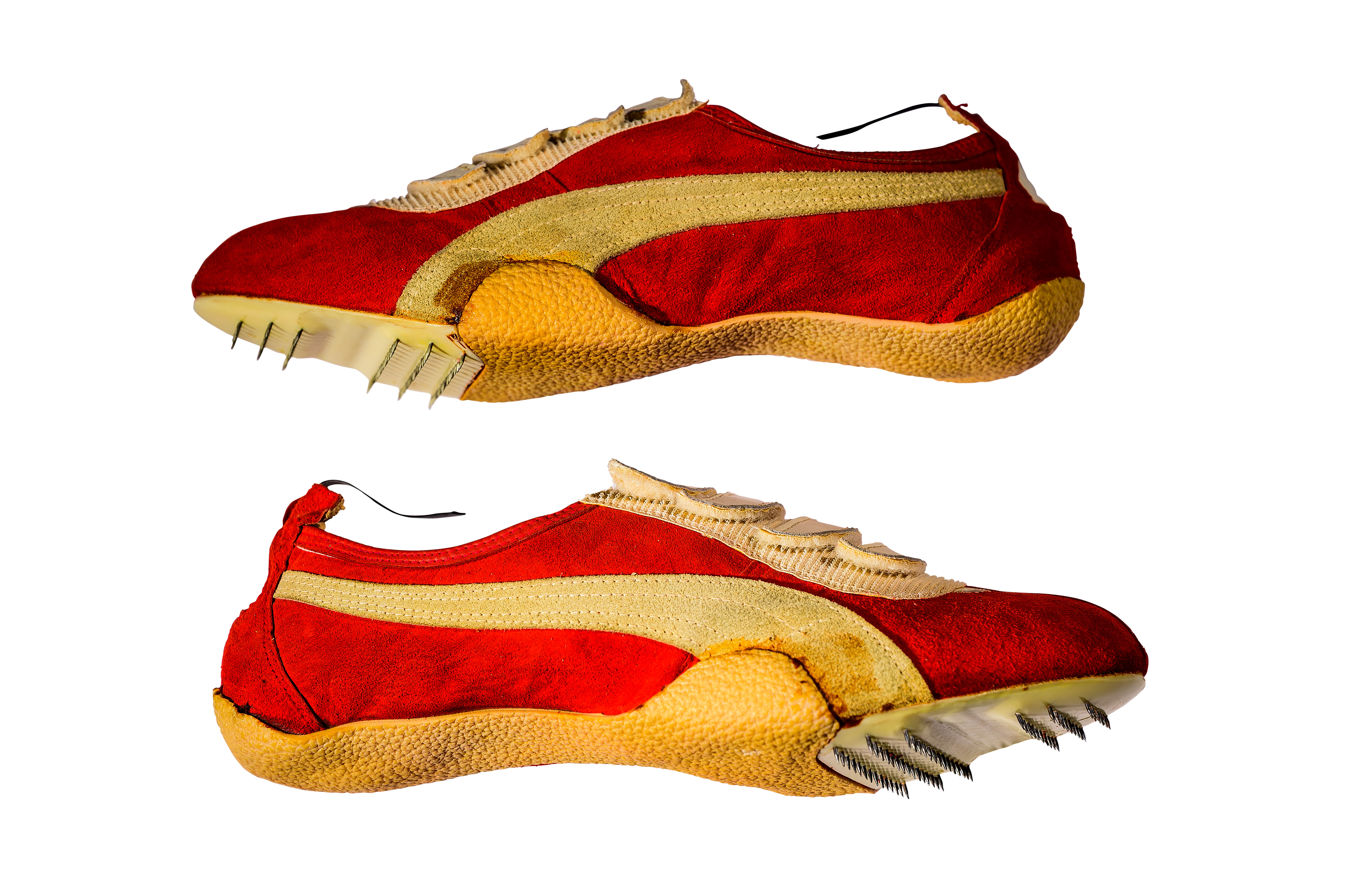
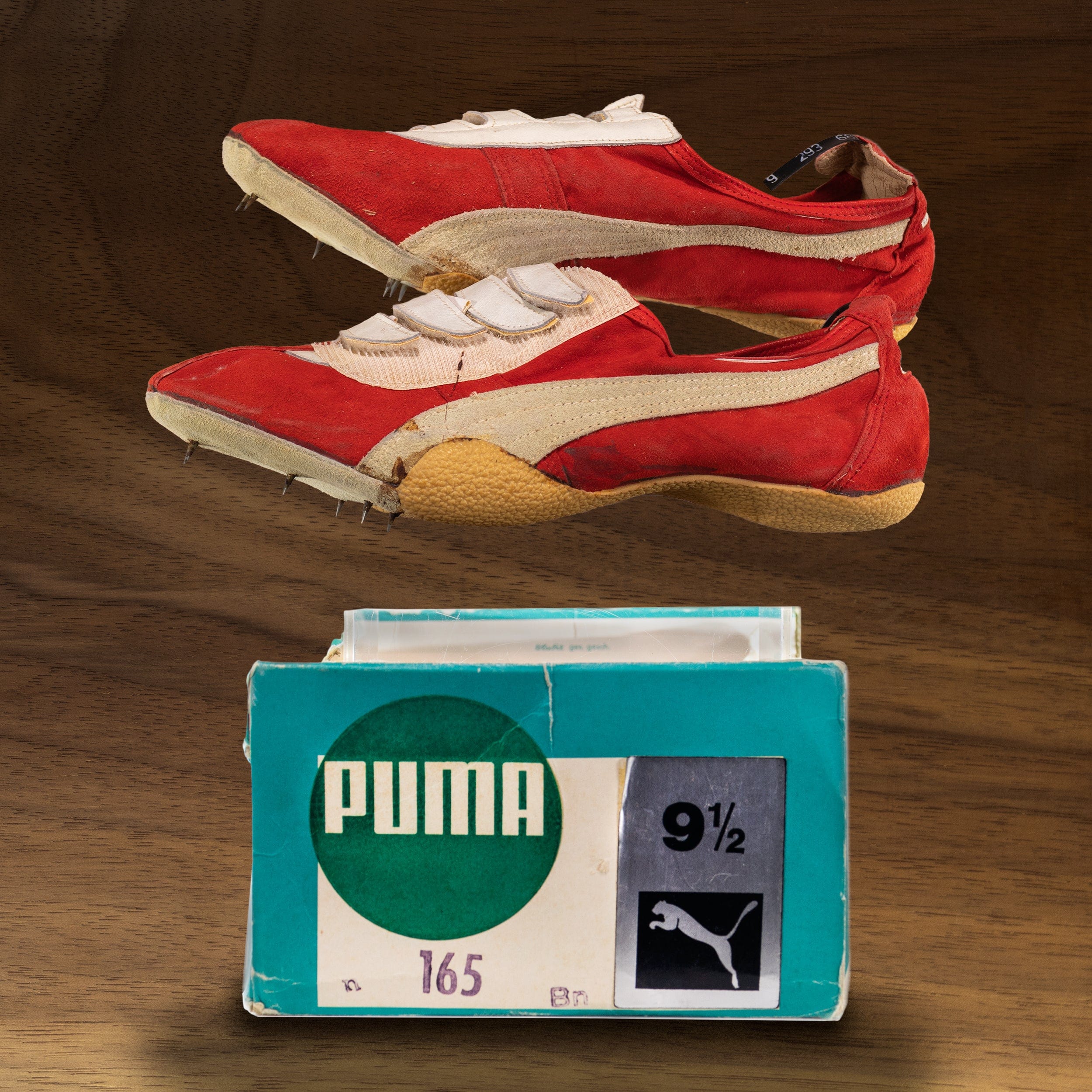
My second pair of spikes was the Puma with the velco close. Everyone remembers the banned brush spike, but Puma made a legal version with a six spike plate.
The first ones I remember were the Tokyo spikes which were reverse kangaroo skin. That same time Adidas had a non-spike shoe called Gazelles. I think it was also reverse kangaroo skin. Not really a training shoe.... more like just walking around. Maybe the most comfortable shoe for its time. Four years later for the 1968 Games, the Tokyo spikes morphed into the Aztec Gold and the Gazelles into the Mexicana.
It's been almost 50 years! In the summer of 1972, the entire sporting world looked eagerly to Munich, where the Olympic Games were taking place. But not only fans and athletes were looking forward to the event. Here we want t...
Basically, a bunch of guys ran 3:29-31ish indoors in February.
It’s crazy because they’re in 3:30 shape in February. Are you thinking? Like are you thinking at all? Remember 5+ years ago when guys would work all year to peak to be in 3:30 shape in July/August? Now it’s just random indoor meets in January and February.
Yeah, generally people are faster or less afraid to try and run fast.
but it's actually not random indoor meets. It's a time of year where everyone is aiming to run fast in a 1-2 week period, then refocus on the outdoor season.
Lagat and El G could have adjusted their training calendars to a few February indoor meets and run 3:46 miles for sure if it felt important, but it was different back then. El G has the world records in 1500m and mile and he ran under 3:30 32 times.
I think the talent pool is deeper these days so guys are racing and shoes, training, and tracks are a little different too to understate it.
In 1976 the Tiger rep showed up to the NCAA track championships in Philadelphia. At least half of the distance runners were given the Tiger Spartan B, which turned out to be a great spike.
Then the adidas Spider (green) came out, which was my favorite spike of all-time.
If there's "more depth" now then that must mean more athletes are involved in the sport than the past. How does that figure with running declining in relation to major sports as well as the proliferation of niche sports? Most people outside running have no idea who the athletes are that are routinely discussed on these threads. Running is now a "niche" sport. That doesn't create "depth".
Populations keep increasing, so even with a stagnant percentage of participation it means more people doing it. The bigger factor though is more people going 'all in' on running. It's known in all sports that more high schoolers are single sport athletes now than 'back in the day'. More people are doing top level training for a much longer chunk of their life. Starting at 14 years of age doing big time training, plus increased usage of red-shirt seasons in NCAA. Plus covid year. Plus the increase of post-collegiate training groups. Even in other countries life has gotten easier such that people can train more and focus less on getting a job. More people going all in means more people near the best in the world.
Those were all assumptions. How many are in the sport today compared to the 60's, 70's, 80's etc? How do you know they are mostly training differently or better - some of the more conspicuous examples aren't doing anything very different from Ryun - but less of it.
Kids are professionals - they still go to school. Being outstanding in their midteens hasn't necessarily equated to being a top adult runner. We've seen promising youngsters for decades who didn't come through. Professionals have also been professionals since the 80's. The biggest changes in what has now become a niche sport are technology: shoes and drugs.