Probably not the answer you are looking for. But, the good news is if you have previously been able to sustain higher loads and not get injured like most of us, then plenty of that more aggressive plans will work for you. Personally, if I could handle it I like the look of Pitfz high end plans. But, the chance of survival for old hobby joggers is less than a coin toss.
Thanks for that, that’s a good gut check. I do like this training! But I think the trouble I’m getting into is how often people say to start conservative in paces and also how long sirpoc took to go from 6 to 8 hours. We’re all coming from different starting points and react differently to load, so seems like this is a tweak I need to make at this point.
To the other poster, I have increased paces, but was cautious with it. For the 6 min reps, roughly from 7:00 pace to 6:45 over the past 6-9 months. So load has been increasing in that regard. But still running similar race times
People say to beginners to slowly ramp up. If you've been at a higher load before, then you need to be getting back there again.
As good as NSM is, if you're running less now than previously, you won't see the improvement
About the 70% rule. Yeah, its good, but you need to know your max heartrate. My brother said he was sure his maximum heartrate was 180. Got him on a HR chest belt and paced him for a 5k. His max HR reached 197 (I almost killed him).
I see a lot of fast runners who runs their easy jogs too slow. I guess, at least for some part, has to do with wrong calculated max heartrate. I saw som guy running 5k in 17 min and did his easy jogs at 7:00 min/km. Many people write posts like "there is no such thing as an too easy pace"....but ofc there is. Otherwise, why even bother with volume?
7 min/km is ridiculous for a 17 min 5k runner. A simple rule of thumb for really easy runs are 90s/km slower than your current 10k pace. For this runner it would be around 5 min/km.
I promise this isn’t a troll post. I’ve been doing this training more or less for two years, and pretty strictly over the past 12 months. I tried to follow sirpoc’s London build as closely as possible, probably ~95% of the same runs, just swapping a couple days near the end. The marathon went really well. I PR’ed by 15 minutes and ran 3:15. But my other times have more or less stayed the same - 19 min 5K and 1:30 min half, which I’ve run 3 times with this, and like 5 times total. I’m discouraged because I stopped going to my run club to focus on ST work and slowed down my easy runs to 10-11 min per mile. Meanwhile I see so many people with fantastic results. I feel like I’m a rare non responder or low responder that the book kinda talks about.
The two things I can think of: - Down periods / inconsistency. I’ve had to take a couple days off here and there over, sometimes a week due to illness. Is everyone else just really being consistent and running through illnesses? - Training load is too low. Even during the marathon build, my total load was never as high as with previous plans. Those plans did have much faster easier runs (closer to 8:30-9) which probably inflated the numbers, but I still seem to make slower fitness gains (based on intervals.icu). Right now I’m running roughly 7 hours per week or 45 miles. I’ve peaked closer to 70 in previous plans.
Any thoughts? I truly believe this works, and really want it to work for me. My tentative plan is to just start gradually adding more and more TL, slowly increasing duration until I top out at 9 hours (hopefully closer to 65 miles per week) and adding cycling/stairmaster doubles. I genuinely appreciate any feedback here! Sorry if the formatting is weird, sending this from my phone
The whole idea at its core is this allows you to do more over X amount of time, not less.
I find all your upvotes relatively amusing after you said this. I said the same thing a few weeks ago and it went just the opposite.
People say to beginners to slowly ramp up. If you've been at a higher load before, then you need to be getting back there again.
As good as NSM is, if you're running less now than previously, you won't see the improvement
I broadly agree with this. Less is less, more is more up to a point, and the rest is just being consistent. But there's probably some overlap. 10-11 hours of anything, is likely going to beat 7 hours of NSM - that's just pure sense.
But, there's probably a point in which maybe 7 hours of NSM, could beat 8.5 hours of other training, where you get close.
But of course, the point being that 7 hours of this, beats easily 5-6 hours of inconsistent training even if it looks more well balanced or traditional on paper, and still beats 7 hours of any other training, whilst probably could topple 8-9 hours of other training but that is in boom and bust blocks. But, for sure, those going past the 10 hour mark are already doubling, can handle what most of us already can't and this isn't going to be for them if they have managed that for months or years with little down mileage.
I promise this isn’t a troll post. I’ve been doing this training more or less for two years, and pretty strictly over the past 12 months. I tried to follow sirpoc’s London build as closely as possible, probably ~95% of the same runs, just swapping a couple days near the end. The marathon went really well. I PR’ed by 15 minutes and ran 3:15. But my other times have more or less stayed the same - 19 min 5K and 1:30 min half, which I’ve run 3 times with this, and like 5 times total. I’m discouraged because I stopped going to my run club to focus on ST work and slowed down my easy runs to 10-11 min per mile. Meanwhile I see so many people with fantastic results. I feel like I’m a rare non responder or low responder that the book kinda talks about.
The two things I can think of: - Down periods / inconsistency. I’ve had to take a couple days off here and there over, sometimes a week due to illness. Is everyone else just really being consistent and running through illnesses? - Training load is too low. Even during the marathon build, my total load was never as high as with previous plans. Those plans did have much faster easier runs (closer to 8:30-9) which probably inflated the numbers, but I still seem to make slower fitness gains (based on intervals.icu). Right now I’m running roughly 7 hours per week or 45 miles. I’ve peaked closer to 70 in previous plans.
Any thoughts? I truly believe this works, and really want it to work for me. My tentative plan is to just start gradually adding more and more TL, slowly increasing duration until I top out at 9 hours (hopefully closer to 65 miles per week) and adding cycling/stairmaster doubles. I genuinely appreciate any feedback here! Sorry if the formatting is weird, sending this from my phone
If I read correctly, your highest training load plans were: 1 (highest TL). Prior marathon builds, 2. NSM marathon build, 3. Current training
So I would think increasing TL is the most straightforward solution. Around our marathon times, I don’t think increasing load by cross training is that necessary (unless you just enjoy cycling or stair master more, then go do it). Because you were able to handle the NSM marathon build (which is pretty hard tbh), I’d try going faster on the subT runs on standard NSM. I’d surmise you’re able to handle it because of your past experience with other plans. I started NSM 13 months ago for summer marathon. Didn’t attempt the sirpoc build (just did standard NSM, 2-3 x 30subT/week with a few moderate pace long runs) as the Sirpoc build was too strenuous for me and i don’t think I could’ve handled more than 50 mpw and ran 2:45. Followed NSM until a month ago and started doing 1 x T/week and faster paced long runs and look on track to run ~10 min faster for spring marathon. Illness is different than injury but I sprained my ankle playing basketball and had to take 3 weeks off - it took 1 month of standard plan to get back into the shape I was prior. So if you only had a couple days off or 1 week off randomly, I don’t think that would curtail your progress that much.
I promise this isn’t a troll post. I’ve been doing this training more or less for two years, and pretty strictly over the past 12 months. I tried to follow sirpoc’s London build as closely as possible, probably ~95% of the same runs, just swapping a couple days near the end. The marathon went really well. I PR’ed by 15 minutes and ran 3:15. But my other times have more or less stayed the same - 19 min 5K and 1:30 min half, which I’ve run 3 times with this, and like 5 times total. I’m discouraged because I stopped going to my run club to focus on ST work and slowed down my easy runs to 10-11 min per mile. Meanwhile I see so many people with fantastic results. I feel like I’m a rare non responder or low responder that the book kinda talks about.
The two things I can think of: - Down periods / inconsistency. I’ve had to take a couple days off here and there over, sometimes a week due to illness. Is everyone else just really being consistent and running through illnesses? - Training load is too low. Even during the marathon build, my total load was never as high as with previous plans. Those plans did have much faster easier runs (closer to 8:30-9) which probably inflated the numbers, but I still seem to make slower fitness gains (based on intervals.icu). Right now I’m running roughly 7 hours per week or 45 miles. I’ve peaked closer to 70 in previous plans.
Any thoughts? I truly believe this works, and really want it to work for me. My tentative plan is to just start gradually adding more and more TL, slowly increasing duration until I top out at 9 hours (hopefully closer to 65 miles per week) and adding cycling/stairmaster doubles. I genuinely appreciate any feedback here! Sorry if the formatting is weird, sending this from my phone
If I read correctly, your highest training load plans were: 1 (highest TL). Prior marathon builds, 2. NSM marathon build, 3. Current training
So I would think increasing TL is the most straightforward solution. Around our marathon times, I don’t think increasing load by cross training is that necessary (unless you just enjoy cycling or stair master more, then go do it). Because you were able to handle the NSM marathon build (which is pretty hard tbh), I’d try going faster on the subT runs on standard NSM. I’d surmise you’re able to handle it because of your past experience with other plans. I started NSM 13 months ago for summer marathon. Didn’t attempt the sirpoc build (just did standard NSM, 2-3 x 30subT/week with a few moderate pace long runs) as the Sirpoc build was too strenuous for me and i don’t think I could’ve handled more than 50 mpw and ran 2:45. Followed NSM until a month ago and started doing 1 x T/week and faster paced long runs and look on track to run ~10 min faster for spring marathon. Illness is different than injury but I sprained my ankle playing basketball and had to take 3 weeks off - it took 1 month of standard plan to get back into the shape I was prior. So if you only had a couple days off or 1 week off randomly, I don’t think that would curtail your progress that much.
Appreciate the feedback. You’re right, I was able to handle the marathon plan pretty well IMO so I’m thinking I’ve just been overly cautious and should be able to handle faster paces or slightly more load per session. Seems like it’s worth trying for 3-6 months at least.
I roll out the red carpet. Unbelievable you are back out of the bushes :)
A question to you:
How can A. Maders lactate model be used to explain changes in running performance in Sirpocs training concept? What parameters change short (6 weeks) or long term (half a year)?
Paper: A. Mader, 2003, Glycolysis and oxidative phosphorylation as a function of cytosolic phosphorylation state and power output of the muscle cell
If I'm going to be doing ad hoc projects for you, I might as well give ChatNB's website some traffic...
Two years ago this month, a now fellow Norwegian Singles Method cult escapee contacted me and asked if I understood Alois Mader’s muscle metabolic simulation model. They were working to put t???
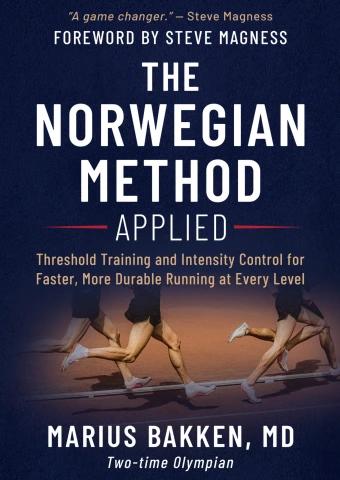
The Norwegian Method Applied: Threshold Training and Intensity Control for Faster, More Durable Running at Every Level [Bakken MD, Marius, Magness, Steve] on Amazon.com. *FREE* shipping on qualifying offers. The Norwegian Met...
Fun little shift in tone from the Norwegian version
-
Looks like the assumption is that non-norwegians don't know who Marius Bakken is, so Magness is called in to give a stamp of approval and the title "Running!" is now "The Norwegian Method -Applied-"
Interesting that the foreward is by Magness given his critical stance against strictly sub-threshold training.
Bakken does mention Norwegian Singles and how it funnily enough originated with "unknown" Ingebrigtsen brother Kristoffer and then was refined by Englishman James Copeland and he does recommend it as a very safe way to train.
-
The book does not stop there tho. It book culminateshaving you running doubles combined with a weekly xfactor session.
Further more he also has you periodizing aiming at two yearly peaks, one in spring and one in the fall.
(He does discuss flat (in other words sustainable) training vs. periodizing and does single NSM out as an example of flat training. He recommends flat training for running with life/family obligations that primary train for fitness. Something he has done himself for many a year)
-
So yeah .. There is room for Magness to do his shtick without being misplaced
Yes it is. Interesting comparisons between Lydiard, Hadd, & NSM.
I suggested doing this awhile ago & got downvoted, lol. "Another thing to consider is potentially using Hadd’s approach as a prologue of sorts to NSA. In other words, building up your ability to train with the lower HR work and “earning” the ability to do an approach like NSA effectively."
Yes it is. Interesting comparisons between Lydiard, Hadd, & NSM.
I suggested doing this awhile ago & got downvoted, lol. "Another thing to consider is potentially using Hadd’s approach as a prologue of sorts to NSA. In other words, building up your ability to train with the lower HR work and “earning” the ability to do an approach like NSA effectively."
Yes. It is worth remembering that HADD recommended getting up to running 50 mpw easy as a pre-requisite to starting training. This could also be a good pre-requisite to starting full vanilla NSM. 50 mpw easy, plus a bit of HADD, could be an excellent gateway into NSM.
My current goal for the next several months is to break my weak PBs in the 200, 400, and 800 while keeping or even continuing to build an aerobic base, so I'm testing a variation where I replace one of the Sub-T workouts with an anerobic workout but keep the rest pretty similar.
Doing workouts like 8x400 at mile pace with 2 minute rest, 2x300/200/100 at close to max pace, and sprint/float/sprint 400s. Also adding one rest day a week and may add a few strides to easy runs. I'm continuing to run lots of doubles, but that's so I can run both ways for my commute and I don't think matters much to the overall plan. It's probably less load overall, but two months in I'm feeling fresh and having fewer niggles than while using vanilla method. We'll see how it goes.
Th: Sub-T Workout (3 * 2000, sometimes an extra 1*1000), 2.5 easy double
Fri: Rest
Sat: Track Workout, 3200 or less of work, mile pace or faster
Sun: 90 min Easy
Update: although I was mercilessly ridiculed for this post, there was good discussion on the following pages about what if any adjustments would be helpful for primarily 800/1600 runners, so I figured another update wouldn't be a total waste.
I've continued this plan basically as described.
The track workouts generally are speed endurance with long rests rather than VO2max sessions. I recover pretty quickly from these sessions, and it helps to go into them with a rest day, as my legs have more pop. I don't think I could do tough vo2max sessions every saturday without burning myself out. Recovery is also helped by the two subsequent easy days.
I tried to add strides or analactic sprints to one of the easy days, but couldn't keep it up. Maybe if I wasn't working full time and had more time to relax and stretch I could tack it on to easy runs. But it just felt like that would push me over the edge of sustainable. Keeping the easy runs at 9:00/9:30 pace, and mostly running them as 25 minute commute doubles, just feels like it holds the whole program together.
Load is lower; I'm short one easy day, and the load on my saturday workout according to intervals is about 30% lower than a Sub-T day. My Sub-T days have improved, but I suspect they would improve more if I was doing plain vanilla.
My speed has improved; I hit a 28 second 200 and 46 second 300 as the last reps of workouts while in superblasts, so I think I'm on track for my current goal of a 57 second 400. Would the speed workouts be faster without the Sub-T, the easy miles, and the lack of strength training? Probably also yes.
My current conclusion is that I may be doing jack-of-all-trades-but-master-of-none training, but i'm feeling fresh and niggle-free, so enjoying it for now.
I somehow don't think that Magness is aware of this ... I dunno
His main argument against NSM was that it's going to hurt your 800m race results
If not high school kids then I have no idea, who he thinks his audience is ???
Here are Magness' actual main arguments:
1. NSM is unbalanced. It focuses too much on aerobic/threshold development and ignores the anaerobic system. NSM leaves out the faster paces that are part of Bakken's training model.
2. Magness read Bakken 20 years ago and tried a system like NSM, including measuring his blood lactate. It was very effective up to a point, but he felt like he regressed in some areas.
3. The body needs occasional exposure to high lactate levels as a stimulus to develop lactate buffering. Sub-T is good for developing lots of pipes for moving lactate around, but we also need higher lactate levels as a stimulus to build thick pipes that can deal with higher demands.
4. Targeting threshold is good, but it leaves the other factors of VO2max, running economy, and resilience underdeveloped.
5. NSM can build endurance, but it doesn't build racing-specific skills that some athletes need, which often depend on anaerobic capacity.
6. In addition to needing some faster-pace work for balance, runners also need to do race-specific pace training.
Bonus: If you listen to the preceding episode, Magness mentions that there are signaling pathways for athletic development at every speed from easy running to sprinting, and runners who completely ignore any speed range are going to leave some aspect of athletic development on the table.
These are not dumb arguments. They are all smart, informed, valid objections to NSM.
I'm sticking to vanilla NSM, but not because Magness is wrong. In each case, I take his argument seriously, but still decide that the trade-off works for me. At some point in my NSM workouts each week, I'll hit every pace from 10K to MP, and that's probably good enough for running 5K on up. The long time horizons of NSM are probably more effective for me than a peaking-recovery cycle. Sirpoc has come up with a local optimum solution that works very well for me, so I'm sticking with it.
Yes. It is worth remembering that HADD recommended getting up to running 50 mpw easy as a pre-requisite to starting training. This could also be a good pre-requisite to starting full vanilla NSM. 50 mpw easy, plus a bit of HADD, could be an excellent gateway into NSM.
If you want to do Hadd, go do Hadd. If you want to do NSM, do NSM. There's no need to build up to 50 mpw first.
Hadd, bless his soul, was wrong about how endurance is built. His theory is at least a couple decades out of date at this point.
1. NSM is unbalanced. It focuses too much on aerobic/threshold development and ignores the anaerobic system. NSM leaves out the faster paces that are part of Bakken's training model.
2. Magness read Bakken 20 years ago and tried a system like NSM, including measuring his blood lactate. It was very effective up to a point, but he felt like he regressed in some areas.
3. The body needs occasional exposure to high lactate levels as a stimulus to develop lactate buffering. Sub-T is good for developing lots of pipes for moving lactate around, but we also need higher lactate levels as a stimulus to build thick pipes that can deal with higher demands.
4. Targeting threshold is good, but it leaves the other factors of VO2max, running economy, and resilience underdeveloped.
5. NSM can build endurance, but it doesn't build racing-specific skills that some athletes need, which often depend on anaerobic capacity.
6. In addition to needing some faster-pace work for balance, runners also need to do race-specific pace training.
Bonus: If you listen to the preceding episode, Magness mentions that there are signaling pathways for athletic development at every speed from easy running to sprinting, and runners who completely ignore any speed range are going to leave some aspect of athletic development on the table.
These are not dumb arguments. They are all smart, informed, valid objections to NSM.
I'm sticking to vanilla NSM, but not because Magness is wrong. In each case, I take his argument seriously, but still decide that the trade-off works for me. At some point in my NSM workouts each week, I'll hit every pace from 10K to MP, and that's probably good enough for running 5K on up. The long time horizons of NSM are probably more effective for me than a peaking-recovery cycle. Sirpoc has come up with a local optimum solution that works very well for me, so I'm sticking with it.
1. 99% of people should be prioritising aerobic development, even if it's to the detriment of "giving up" other things. I see this as a huge positive and the reason so many in this thread have gotten faster.
2. "Because he felt like he regressed" isn't really a reason. As athletes, we are the last people to really have an understanding of how we feel our training is going. We are also bias and shape our feelings on what we want to see/believe.
3. Possibly. I can see an argument for it. But there's also an incredible amount of evidence in the real world in this thread that a lot of this simply doesn't matter as much as you think. For me, this is simply sorted in the warm up to a race.
4. If anything, running economy is going to be developed even better if you based your training off this thread. You are getting near on 90 mins a week, sometimes more at what would be considered faster than Marathon paces.
5. This is a ridiculous argument. Again, you are developing insanely good race pace skills by following paces and guides that will allow you to understand actually how to pace a race. It's again silly to suggest you need to train at race pace, to race at race pace. That's just not how it works. The idea you do is make a comfort blanket, than anything else.
6. Do some strides if you want. But top athletes are making icing their cake and getting a tiny edge by doing this. Just about nobody here needs to worry about this.
If that is truly Magness position then fair enough. He's old and stuck in his ways. There's an incredible amount of evidence here to show how this works for hobby joggers. Note, I'm saying hobby joggers. There's a big difference between how an elite runner and we all need to train.
Disclaimer, I used to sit firmly on Magness side of the fence until I did two things: looked at what is happening in the real world go guys like me and secondly until I actually trained like this myself.
Bakken does mention Norwegian Singles and how it funnily enough originated with "unknown" Ingebrigtsen brother Kristoffer and then was refined by Englishman James Copeland and he does recommend it as a very safe way to train.
-
The book does not stop there tho. It book culminateshaving you running doubles combined with a weekly xfactor session.
Further more he also has you periodizing aiming at two yearly peaks, one in spring and one in the fall.
(He does discuss flat (in other words sustainable) training vs. periodizing and does single NSM out as an example of flat training. He recommends flat training for running with life/family obligations that primary train for fitness. Something he has done himself for many a year)
-
So yeah .. There is room for Magness to do his shtick without being misplaced
Does anyone know what Magness shtick is anymore? Scattergun approach. Full of contradictions because he tries to cram everything he believes into short, click baity YouTube videos. Fine, cool, that's the game these days. But he used to have something relevant to say but he's in all honesty been out of touch for a long time now.
1. NSM is unbalanced. It focuses too much on aerobic/threshold development and ignores the anaerobic system. NSM leaves out the faster paces that are part of Bakken's training model.
2. Magness read Bakken 20 years ago and tried a system like NSM, including measuring his blood lactate. It was very effective up to a point, but he felt like he regressed in some areas.
3. The body needs occasional exposure to high lactate levels as a stimulus to develop lactate buffering. Sub-T is good for developing lots of pipes for moving lactate around, but we also need higher lactate levels as a stimulus to build thick pipes that can deal with higher demands.
4. Targeting threshold is good, but it leaves the other factors of VO2max, running economy, and resilience underdeveloped.
5. NSM can build endurance, but it doesn't build racing-specific skills that some athletes need, which often depend on anaerobic capacity.
6. In addition to needing some faster-pace work for balance, runners also need to do race-specific pace training.
Bonus: If you listen to the preceding episode, Magness mentions that there are signaling pathways for athletic development at every speed from easy running to sprinting, and runners who completely ignore any speed range are going to leave some aspect of athletic development on the table.
These are not dumb arguments. They are all smart, informed, valid objections to NSM.
I'm sticking to vanilla NSM, but not because Magness is wrong. In each case, I take his argument seriously, but still decide that the trade-off works for me. At some point in my NSM workouts each week, I'll hit every pace from 10K to MP, and that's probably good enough for running 5K on up. The long time horizons of NSM are probably more effective for me than a peaking-recovery cycle. Sirpoc has come up with a local optimum solution that works very well for me, so I'm sticking with it.
But here is the thing .. Magness is wrong despite all the arguments that you have listed in principle being correct.
The reason he is wrong is that he ignores context.
The title of that video is "The best training for amateurs?", it is not "How to be the fastest runner possible"
No one here claims that NSM is the best way to train period. But there is a claim that it's the most optimal way for hobby joggers. NSM is specifically targeted at amateurs looking to balance their job and families with running and getting the max out of that.
Unless you're a sub 15 min 5k runner or whatever is equivalent of that on your favorite distance then all of the points from Magness that you've listed might be correct, but they are irrelevant.
And let's be honest .. How many amateurs are that fast?
-
The equivalent of what Magness does is me going into a car dealership and saying:
Me:
Listen I have a wife and two kids, so I need a car that can accommodate four people and have room for whatever we might need to bring along. But I travel a lot on my own too and thus also would like it to be as fast as possible when I do that.
Car dealer Magness:
You need the Lamborgini Temarario !!
It has undergone a process that ensures efficient energy transport and clearning for when you need that extra kick!
So it's got a max power of 677 kW, a max speed of 343 km/h and will do 0-100 km in 2.7 seconds.
Totally ignoring most of what I asked for and only focusing only on speed.