He is not a 'real' 3:27 guy, just like Jakob is not a 'real' 3:26 guy! Too many delusional people who can't see the wood for the trees. All endurance events and times have improved dramatically over the last 5 years because of; a) shoes improving energy return and times by between 1 - 1.5%; b) faster tracks (Mondo, the manufacturers are claiming this themselves); and c) light wave pacing; although that clearly doesn't apply in Paris.
1% for a 3:32 1500m runner is worth 2.1 secs, bringing a pre super shoe athlete to 3:29.9. This is a conservative estimate and with the tracks as well, it is probably another 0.5secs.
The improvement in times for the aerobic events in the last 5 seasons has been as dramatic as the improvement in times during the EPO era, and not far off the progression made between cinders and synthetic.
Most people are happy to be Egyptians (living in Denial) and accept these ridiculous times. But, those who have been around a while and actually read articles and follow the sport with even a modicum of analysis, know that for an elite 800m guy, the conversion from pre super shoes (I believe the prototype were first worn by Nike athletes at the 2016 marathon, but only used by track athletes for 1st time in the 2019 Worlds, e.g Brazier's 1:42.34) to today's super shoes is about 1.0 to 1.5 secs. So for 1:41.5, it is more like a high 1:42 or 1:43 flat.
For a 1500m guy, the extra energy return is the reason why they can run faster for longer at the end of a race. The conversion here is more like 2.1 to 3.1secs, and that's just for the shoes.
If you convert Hocker's Olympic win to a pre super shoe equivalent by using a 1% improvement, and for arguments sake a 0.5% improvement for the track (which Mondo has already claimed to be designed especially for the super spike: -
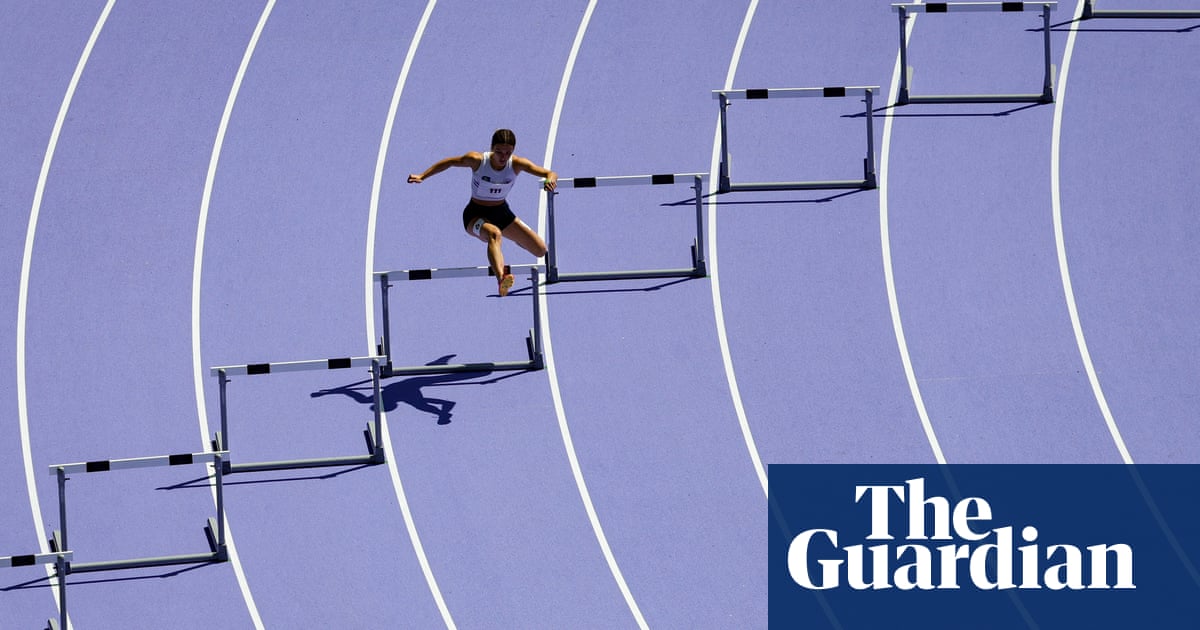
"The track is made by Mondo, the Italian manufacturer that has been responsible for every Olympic track since 1976. In Tokyo it insisted its design gave a 1-2% edge compared with previous versions – although the new super-spike technology and hot weather were also big factors in the numerous Olympic and world records that fell.
But Alessandro Piceli, a research and development manager at Mondo, believes that the latest version – which the Guardian understands was debuted at the World Athletics Championships in Budapest last year – is even better than the one used in Japan.
“We are focusing on the dynamic connection between the track and a new generation of shoes,” he says. “For the track, we only see the aesthetics, but there is great work that goes into the underlayer.
“A new granule of polymeric material, made especially for it, was inserted in the Tokyo track. We have made it even better now. We have chemists, engineers and physicists who take care of the performance of the material.”
All this high performance, however, does not come cheap. The track is estimated to have cost between €2m and €3m."
If we adjust Hocker's performance (and this can be applied to pretty much any middle distance performance from 800 upwards since 2019, I'm not just picking on Hocker) in the Paris 1500m final for the shoes (1%) and track (0.5%) then we get the following splits:
Time - 3:30.76 (56.4, 57.5, 56.6, 40.2/54.2)
last 800m - 1:51.2
last 700m - 1:36.8
last 400m - 54.2
last 300m - 40.2
last 200m - 26.7
last 100m - 13.3
This seems far more in keeping with similar splits of global champs prior to 2019.