No, I follow Grandma's guy on Strava. He did post here, but I forgot his username. There was him and cheetodust (very fast old dude) who posted around the same time.
For what it's worth, Grandma's guy looks like he's still working with sirpoc based on Strava interactions that pop up and looks in absolutely incredible shape. He's stateside, I don't know what trials Q time is, but he can't be far off. Seems to basically be doing the same thing again for a marathon and looks like NSM marathon bolt on is working incredibly well even second time around. PB is almost a guarantee, you would say it's only a question of how fast. Sub 2:20 incredibly likely, still very, very moderate mileage to what others would expect for targeting that time.
Ok, thanks. I've already found out who it is. I thought it was ML because he also follows Sirpoc and seems to train according to NSM principles, achieving a 2:25 in the Chicago Marathon.
Canova plans ARE the marathon and if you don't know that, running is not the sport for you.
I always got the impression that the Canova approach was throwing eggs at the wall and maybe one or two won't break. And those that don't break become your world beaters. Maybe doing those garguntuan sessions and surviving them are what it takes to produce an athlete that is truly exeptional; we are probably taking about a different kind of aim in which someone can produce a performance that will change their life financially. However, given the pile of injured, and burnt out cases for every success I've seen with the Canova approach, I would have thought that the chances of success with the NSM will be much higher for your everyday runner especially over the long term.
I always got the impression that the Canova approach was throwing eggs at the wall and maybe one or two won't break. And those that don't break become your world beaters. Maybe doing those garguntuan sessions and surviving them are what it takes to produce an athlete that is truly exeptional; we are probably taking about a different kind of aim in which someone can produce a performance that will change their life financially. However, given the pile of injured, and burnt out cases for every success I've seen with the Canova approach, I would have thought that the chances of success with the NSM will be much higher for your everyday runner especially over the long term.
This is also the college system. It's insane when you think about it. I came out of that system 25 years ago and am now the worse off for it. Unfortunately, it's hard to break the habits of a lifetime learned. For me, NSM is started to untangle all of that. For me, that's game changing and even into my 40s I've managing to reverse the sands of time.
I always got the impression that the Canova approach was throwing eggs at the wall and maybe one or two won't break. And those that don't break become your world beaters. Maybe doing those garguntuan sessions and surviving them are what it takes to produce an athlete that is truly exeptional; we are probably taking about a different kind of aim in which someone can produce a performance that will change their life financially. However, given the pile of injured, and burnt out cases for every success I've seen with the Canova approach, I would have thought that the chances of success with the NSM will be much higher for your everyday runner especially over the long term.
Are Canova and pitfz really that hard? I haven't ran a marathon but see them referenced a lot as quite labor intensive.
Are Canova and pitfz really that hard? I haven't ran a marathon but see them referenced a lot as quite labor intensive.
Quite simply, yes.
I've ran previous marathons and it wasn't until I used NSM that I actually realised the hole these plans can put hobby joggers in, renders the load sustained irrelevant. NSM I felt fresh, ready and strong. That was honestly a new feeling to me. It's anecdotal, but a lot of people have described this sensation when training for the marathon this watt, so much so I think it's impossible to over look.
I subscribe to the throwing the eggs against a wall theory as above, probably does separate the great from the true elite. But how this is applicable to me, with a wife and kids , a full time job, is basically irrelevant.
To start - I'm a fan, especially the 70% (probably will get some lab tests out of curiosity since it can vary A LOT between people anyway) of MHR for easy runs - this has made me feel so much stronger in my workouts, it was worth reading the thread for anyway. However, I absolutely cannot agree with the CTL. Yes, if you train the same way week in, week out, the CTL will correspond with performance quite well, but so will mileage, time, and everything else you can think of (even elevation gain if you run the same route day in, day out).
My previous PR was 44:XX on a ~60 fitness score on intervals ICU; now it's in the low 40s, and my load is about 35. Weight is the same, by the way; I'm just training differently. So, for me at least, I like to try out different training methods, and load is not really a good indicator of my fitness.
This CTL idea would also go against Jack Danniel's VDOT adjustments - 11% down for 42 days is absolutely not even close to what will happen with your CTL graph - and yet, from experience, it is a lot closer to what would happen to me in reality. Also, to take it to the extreme - a sub-13 runner taking a 6-month break would both have CTL of 0 and be faster than I ever will. (I know it is individual, but then you can compare his CTL 0 time to his CTL when he was running 17 mins, for example - the main point is, there are permanent fitness adaptations). = Also, I have to comment about the shoes - maybe because I’m in the EU, but most of the shoes are maybe 50EUR cheaper than MSRP of the western shoes - but I can send them back easier, try them in store, and most importantly - they go on sale 50% off regularly, so it’s actually cheaper than the chinese brands? Maybe because I’m checking on Aliexpress, but it’s not the low price hack I was promised, hah.
To be honest, if you hadn't run for 42 days, or 6 months, that is the least of your worries as to what your CTL looks like. There's a pretty good explanation in the book of how to use it, but also it's big flaws. It's only a small part of the theory behind it all really, or tool available to use.
This would be the same for cycling as well, in the end, it probably always evens back out over time as a rough guide as to if you have done more, less, or managing fatigue. The PMC isn't the golden ticket, but even for running if you train the same way most of the time, it will give you a pretty good snapshot and I've found it incredibly useful and I don't come from a cycling background.
Of course we all know and have debated to death, the problem of below and above threshold, where it falls down. But for most in this thread, that's not a concern as presumably most of us have an interest in Subthreshold, where it performs very well.
Even the book will say you don't even have to track load if you don't want to. Tracking it by time week to week, is stripping load down to its most basic level, which actually will work surprisingly well again if you are just doing a long term vanilla nsm plan.
Maybe another shout-out to sirpoc and Hard2find to reignite their interest in solving a few of these problems. But actually, I agree that if training like this, it'll probably do. But it would be nice to fix some of the flaws.
Re: shoes. I guess I fell into the Alfie camp when it came to shoes: I found it a little annoying. But having taken delivery of the Dynafish Xioanian for €80+ postage of about €15, I can honestly say I am now in the china camp! It's way better than the megablast. The Megablast feels cheap in comparison and more than twice the price I paid! Enough to make you feel sick at what these mainstream brands are doing. Maybe this will even encourage poor Alfie to rethink lol
You say that it's "only a small part of the theory behind it all, really," but it was the main premise of the entire thing, no? That the load is load, and this is the best way to increase it. But clearly that cannot be true, else MP every day would produce better results.
So I'm not disagreeing about whether the method works, it clearly does for some people, but the reason it works must be something else, and it's kinda annoying anytime this question comes up in this thread, it is ignored lol.
You say that it's "only a small part of the theory behind it all, really," but it was the main premise of the entire thing, no? That the load is load, and this is the best way to increase it. But clearly that cannot be true, else MP every day would produce better results.
So I'm not disagreeing about whether the method works, it clearly does for some people, but the reason it works must be something else, and it's kinda annoying anytime this question comes up in this thread, it is ignored lol.
Load is the prominent driver of gains, not the only one. There's probably other ways you can spam more load, but if your fatigue is out of control you don't absorb it. So that's where the balance of ramp rate comes in. I would also say some people is a bit unfair, it's clearly a significant majority of people. Again, not all, but the strike rate is huge. Which is why we are at 450 pages.
Load and mileage being the prominent driver of gains is hardly new. That's where I'm a little confused as your posting. I'm in my 50s, but even back in the day 6 hour runners would say to get faster, run 7 or just run more. It's essentially the same principle with just a little more user friendliness with using the pmc. It's probably just not the answer you are looking for, but this has come up many times and I think is satisfying to most of us and ease of us. If course, a better load balance model would be nice. But if sirpoc and Hard2find can't be bothered I doubt it'll happen.
I would probably die on the hill that impact of load is the prominent driver of gains. I don't think that's particularly revolutionary though. People have been using this principle in different endurance sports for a long time, in various guises. Subthreshold probably solves the load versus fatigue balance, to get where we need to be on limited hours without over cooking ourselves or being unable to appropriately absorb the work we are doing. Again, coming from sweet spot and the cycling time trial world, this isn't really a surprise to me.
As I've posted before, the range significantly below and above threshold, we have talked about many times, has flaws in just about any system you can use to track load. Whether it be a coincidence or not, myself and Hard2find actually started discussing it again at the weekend. He had his own "Eureka" moment that makes sense, of how to solve that problem. Update coming one day. Maybe. Ha ha
I read the book (good stuff!) and I've got a couple of silly questions.
1) I bike to work 5 times per week (20'+20' of very relaxed bike on a flat road). Should I track these commutes on Intervals dot com? Does it matter?
2) I can and want to commit to around 8 hours of running per week, but squeezed on 6 days (with Sunday off). I have used this structure in the past, and now that I'm building back after a recent surgery I would like to adapt it to NSA. The book gives a nice 8-hour plan that I'd like to use (10x3, 6x6, 4x10). Can I just spread the Sunday 60' easy over the remaining days however I like?
Having just read John Davis' book (as well as Sirpoc's), I was struck by how almost every physiological variable he talked about being important to marathon training he also said was most strongly influenced by high volumes of moderate to long intervals at "high end aerobic" to ~90% VO2. This is "sub-threshold" in the parlance of the thread.
So... I wouldn't be surprised if there's a significant point where load =/= load, but the total "load" spent with blood lactate elevated over baseline, but not out of control, is one of the big fitness drivers.
Having just read John Davis' book (as well as Sirpoc's), I was struck by how almost every physiological variable he talked about being important to marathon training he also said was most strongly influenced by high volumes of moderate to long intervals at "high end aerobic" to ~90% VO2. This is "sub-threshold" in the parlance of the thread.
So... I wouldn't be surprised if there's a significant point where load =/= load, but the total "load" spent with blood lactate elevated over baseline, but not out of control, is one of the big fitness drivers.
My biggest issue with long high end aerobic intervals is just how taxing they are. As a few others have pointed out, for me personally, this is what drives me into the ground in marathon build. E.g 20-25km as part of a long run at ~90% of MP or sometimes harder, which can get out of control really quickly. Especially week after week. That's just my view and having used NSM for CIM and a really solid PB. The difference in how I felt on the start line, halfway and by 30km is night and day compared to previous marathon builds doing a lot of the above. Even in the shorter taper week, I just felt good, not overcooked. Just my view, but seems to match up to a lot of what others have reported.
My biggest issue with long high end aerobic intervals is just how taxing they are. As a few others have pointed out, for me personally, this is what drives me into the ground in marathon build. E.g 20-25km as part of a long run at ~90% of MP or sometimes harder, which can get out of control really quickly. Especially week after week.
I totally agree that those long runs at 90% MP can be a real drag, especially when you're trying to get in the other workouts too.
Based on Davis' own writing, I don't know how much bang for your buck you'd actually get from those. It really looks like his book points to time spent between LT1 & LT2 being the biggest driver of most marathon (and other distance) fitness components. 90% MP would be noticeably slower than LT1. And in fact, if I interpret Davis correctly, this pace would be mostly indistinguishable from any easy pace with respect to performance adaptations.
The "long high end aerobic intervals" would be something more like 4x5k around marathon pace or a tad faster... just as we see in Sirpoc's marathon block. Or maybe something like 16k of alternating kilos a bit faster and a bit slower than MP.
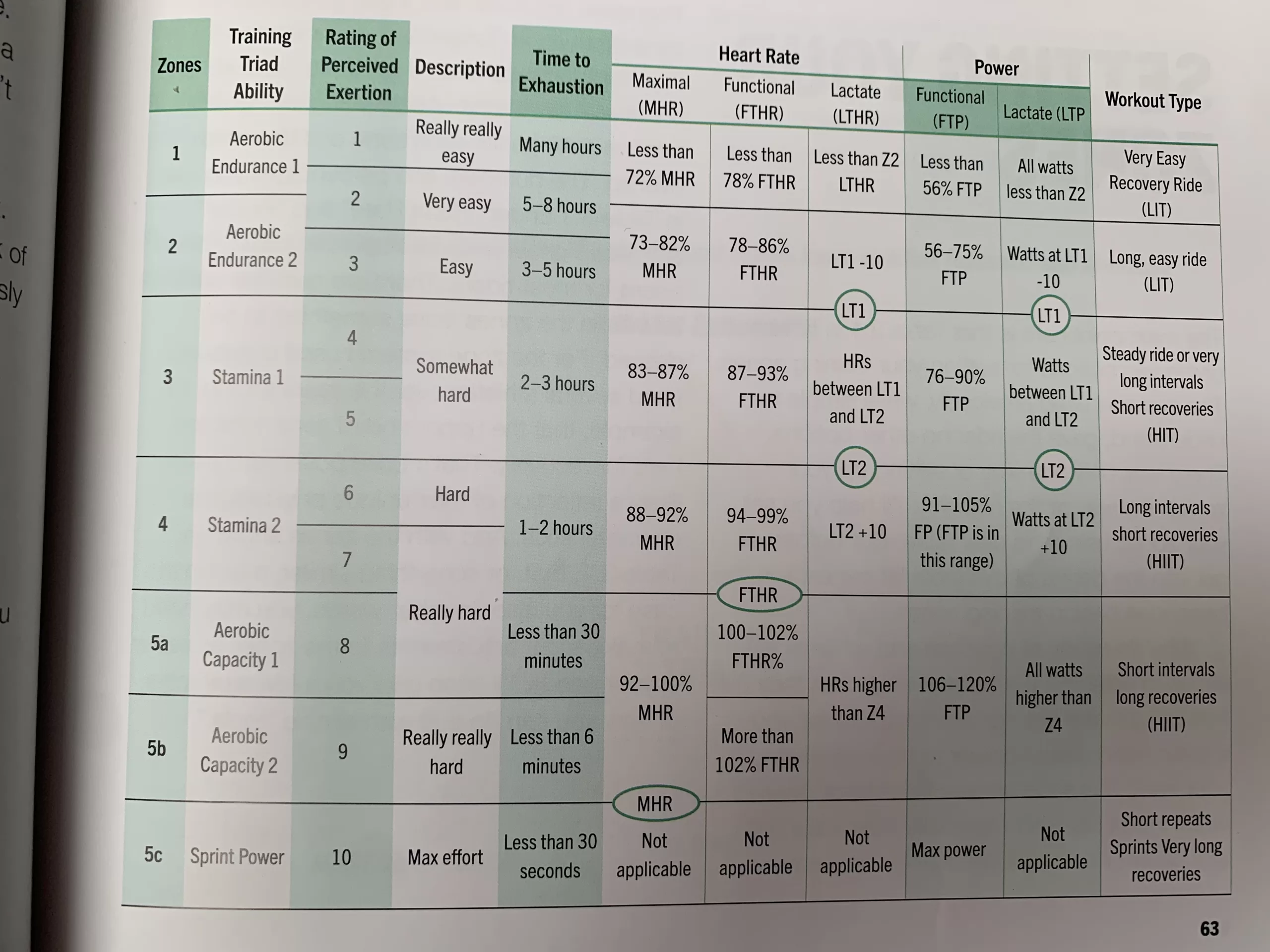
I did a Parkrun on Saturday and got the following email from Intervals.icu - "Your threshold HR has increased by 8 to 187 bpm from 98% of 20m at 191 bpm"
What exactly does this mean as to me it makes no sense at all? I'm tired and ill so probably being a bit thick
I did a Parkrun on Saturday and got the following email from Intervals.icu - "Your threshold HR has increased by 8 to 187 bpm from 98% of 20m at 191 bpm"
What exactly does this mean as to me it makes no sense at all? I'm tired and ill so probably being a bit thick
Based on your activity intervals.icu believes your LTHR is 187. It previous believed it was 179
I think this is just running the Friel test on your run.
The Friel test specifically says not to do this calculation based on a race, but rather a time trial after spending 10 minutes warming up. So this may overstate your LT2 HR.
I always got the impression that the Canova approach was throwing eggs at the wall and maybe one or two won't break. And those that don't break become your world beaters. Maybe doing those garguntuan sessions and surviving them are what it takes to produce an athlete that is truly exeptional; we are probably taking about a different kind of aim in which someone can produce a performance that will change their life financially. However, given the pile of injured, and burnt out cases for every success I've seen with the Canova approach, I would have thought that the chances of success with the NSM will be much higher for your everyday runner especially over the long term.
This is also the college system. It's insane when you think about it. I came out of that system 25 years ago and am now the worse off for it. Unfortunately, it's hard to break the habits of a lifetime learned. For me, NSM is started to untangle all of that. For me, that's game changing and even into my 40s I've managing to reverse the sands of time.
Couldn't agree more. Currently running similar 5k + times to college without the burnout and injuries. Testing out mile fitness this weekend, curious to see how well NSM translates for myself. I did a huge speed + lifting block that yielded a solid 1k/Mile time, so this is the complete other end of the spectrum. If I even close in on times I've run off of pure speed I'm completly sold on this.
I am using it to train for a 50km ultra right now - only difference I am going to make though is to do 2 back to back long runs on the weekend, first day with some 'steady (ie mid zone 2, but lower than mara effort - around the heart rate i think i can hold (130), intervals of 30 to 45 minutes - building to 2 x 45 mins with 10 to 15 easy between) - then next day a a long easy day.
now it's time to wait for me to be flamed.
i don't really have time to do a longer run mid-week unless i am up at 4.30am....
I would treat a 50k like a marathon. A slightly longer slower marathon. I’ve never felt the need to do anything different to getting “marathon fit” as long as other factors are comparable, such as terrain. Beyond that distance, I would be doing non-marathon training like B2B long runs.
This particular race will take at least an hour to 1.20 longer than a marathon for me - given the terrain. So, not sure the longer marathon paced workouts are the best thing when more time on feet is maybe what is needed?
I can't get my head around this method. Doesn't seem to work or make sense. For a 5k, the lack of speedwork is alarming. For a marathon, is laughable anyone would choose to do this over a Canova or Pitfz block. So, what's the point? Not a lot if you ask me.
I can't get my head around this method. Doesn't seem to work or make sense. For a 5k, the lack of speedwork is alarming. For a marathon, is laughable anyone would choose to do this over a Canova or Pitfz block. So, what's the point? Not a lot if you ask me.
The first step, is to accept your ignorance and ego, once you do that you can start to understand why training works and fails.
Help us build the best running shoe review site for a chance to win a LetsRun t-shirt.Help us build the best running shoe review site for a chance to win one of 10 LetsRun t-shirts.