That wasn't a 1500m race. It was en route to a mile. The only time he raced the 1500 was at the Tokyo Olympics, which he won convincingly. He never lost over the distance and was the best miler of his era.
But to compare him with Ingebrigtsen over longer events - which Snell never raced - invites comparing Ingebrigtsen with Snell over the 800 - which they both raced. Ingebrigtsen would have been annihilated.
He raced the 1500m not only in Tokyo. And he lost many Mile races during his senior career.
Snell was much better over 800m than Ingebrigtsen - great contribution to to the subject. A contribution on YOUR OWN level.
Snell was a great runner, an all-time great. Ingebrigtsen is a great runner, an all-time great with a realistic chance to become the greatest in history.
Snell didn't race the 1500 outside the Tokyo Olympics. He ran the imperial distances - which were far more usual then - and the mile was his main distance, with the 800m/880y. He never lost a big race in his era from 1960-64, and only a couple of times at a national level when he wasn't at peak fitness. John Davies, who beat him, acknowledged that. The losses in his final tour in '65, before his retirement, came when he was inadequately trained and fell ill on the tour. He came last in a mile in Ireland. He was then far from the double-champion of Tokyo. But the sport has never seen a runner who so dominated the two events as Snell did in his era.
He raced the 1500m not only in Tokyo. And he lost many Mile races during his senior career.
Snell was much better over 800m than Ingebrigtsen - great contribution to to the subject. A contribution on YOUR OWN level.
Snell was a great runner, an all-time great. Ingebrigtsen is a great runner, an all-time great with a realistic chance to become the greatest in history.
Snell didn't race the 1500 outside the Tokyo Olympics. He ran the imperial distances - which were far more usual then - and the mile was his main distance, with the 800m/880y. He never lost a big race in his era from 1960-64, and only a couple of times at a national level when he wasn't at peak fitness. John Davies, who beat him, acknowledged that. The losses in his final tour in '65, before his retirement, came when he was inadequately trained and fell ill on the tour. He came last in a mile in Ireland. He was then far from the double-champion of Tokyo. But the sport has never seen a runner who so dominated the two events as Snell did in his era.
Snell raced the 1500m outside of Tokyo.
He lost many national and international races over 1500m and the Mile in his prime from 1960 to 1965 (not in 1962).
Snell is one of the all-time greats in middle and long distance running, probably around number 10.
His 3 golds and his WRs are strong arguments. His relatively short time at the top, his losses and the fact that his WRs were soon bettered or equaled are points against him (his Mile WR was inferior to Elliott's 1500m mark).
Compared to Ingebrigtsen? Both have strong arguments to be ranked ahead of the other - just a thing of personal opinion. For me, Ingebrigtsen's achievements are stronger.
He was one of the greatest runners of all-time, so that helps. He was, at the time, the GOAT of the middle distances.
The high mileage was periodized. So he didn't run 100 miles the week he ran the 1:44. Lydiard had them running high mileage but also doing other things as well.
His lifestyle was very running-centric at a time when the idea of a "pro runner" was still a couple decades away. He could run a lot of doubles because he wasn't working a real full-time job for most of his years at the top.
The grass tracks are firm/hard like the grass courts at Wimbledon, England. They are obviously very slow compared to a super track like BU or the streets of Valencia, but they aren't like running on a cross country course.
Finally, he was a strength-based runner who thrived with lots of training. He wasn't a 400-800 guy, but rather an 800-1500 guy (as we see from his Olympic results).
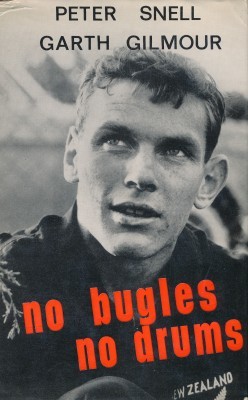
You can get all this information in the amazing book called No Bugles, No Drums.
What was his best 400m split? That would be important to know to consider his potential on modern tracks.
He was tough. Probably could have had a time somewhere between Seb Coe and Nick Symmonds in recent equipment and facilities, but I assume he didn't have the leg speed of someone like Coe.
Let's not speculate that he was some superhuman with more potential than anyone else.
You're silly if you think 1:44.3 on grass in February over half-a-century ago whilst working full-time isn't worth more than 1.5 seconds today.
I’d confidently guess he could be in the 1:42’s today.
Would you equally confidently predict that Gabriel Tual would run in the 1:43s on grass and leather spikes and working full-time and on Peter Snell's training in 1962?
He was one of the greatest runners of all-time, so that helps. He was, at the time, the GOAT of the middle distances.
The high mileage was periodized. So he didn't run 100 miles the week he ran the 1:44. Lydiard had them running high mileage but also doing other things as well.
His lifestyle was very running-centric at a time when the idea of a "pro runner" was still a couple decades away. He could run a lot of doubles because he wasn't working a real full-time job for most of his years at the top.
The grass tracks are firm/hard like the grass courts at Wimbledon, England. They are obviously very slow compared to a super track like BU or the streets of Valencia, but they aren't like running on a cross country course.
Finally, he was a strength-based runner who thrived with lots of training. He wasn't a 400-800 guy, but rather an 800-1500 guy (as we see from his Olympic results).
You can get all this information in the amazing book called No Bugles, No Drums.
What was his best 400m split? That would be important to know to consider his potential on modern tracks.
He was tough. Probably could have had a time somewhere between Seb Coe and Nick Symmonds in recent equipment and facilities, but I assume he didn't have the leg speed of someone like Coe.
Let's not speculate that he was some superhuman with more potential than anyone else.
It was only in 1964 that he ran just over 1000 miles in ten weeks. He said that had always been the goal, but this was the first time he achieved it. It didn't hurt his speed. He closed the last 300m of the Tokyo 1500m in 38.6, on a loose cinder track and easing up the last 100m.
He told me that mostly he was in the 70-80 range when he was in his base phase. He had bigger weeks, now and again he did get to 100 but never maintained it until that ten week stretch in 1964 when he did 1001 miles in ten weeks. But he was religious about the weekly 20-22 mile run.
From Lydiard’s training diaries in the run up to the Tokyo Olympics: At the end of March and early April, Snell was becoming jaded and feeling his races. It meant a complete conditioning period was necessary, so starting from April 18th, he averaged 100 miles weekly until June 28th He then did the hill work schedule which I advocate, from June 29th until August 9th, averaging near 90 miles weekly. On August 10th, he started track training which was very difficult without an all-weather track in winter. The schedule as carried out is as follows: Each morning he jogged about 5 miles on a golf course and road. August 10th - 20 times 220 Av 27.45 11th - 3 miles - 14.47.6 12th - 660 - 1m27s 100yds 11s times 2 13th - 3mile - (50yd dashes) 14th - 6 times 220 - Av 26.5 15th - 20 times 440 Av 61 16th - 22 miles Waiatarua -2 hours 22 min 17th - 20 times 220 - Av 27.8 18th - 3 miles - 14.35 19th - 5 times 880 Av 2.13 20-22nd - injured leg, hard track - no training. 23rd - 22 miles - 2h 33 min 24th - 5 mile jog 25th - 27th leg still sore - no training. 28th 4 times 440 stride-outs 29th - 6 mile jog 30th - 22 miles - 2hr 23 min 31st 220 stride-outs. September 1st - 6 times 880 Av 2m10s 2nd - 6 times 440 - 58s 3rd - 1 mile - half effort - 1 mile three quarter effort 4th - 3 times 220 fast 5th 880 - cold wet conditions - 2m2s 6th - 22 miles easy 7th - 1 mile (50y dashes) 8th - three quarter mile - 880 in 1.56 and final 440 as he felt 9th - 440 - 55s - 4 times 100yds - full 10th - 2 times 1 mile - half effort. 11th - 3 times 220 - full effort 12th - 10 times 440 - av 58.5 13th - Long run 14th - 10 miles morning - 4 times 150yds - 6 times 50yds 15th - 2 times 880 - windy and wet - 2m2s and 2m 1.7 16th - 10 miles morning - 3 miles - 14m 12s 17th - 6 times 440 - 58s 18th - 3 times 220 all out. 19th - three quarter mile - 3m 0.5s 20th - 20 mile - half effort 21st - One hour jog 22nd - 6 times 220 stride outs 23rd - One hour jog 24th - Flew to Sydney - 6 times 220 stride outs 25th - 660 - 1m19s 26th - Flew Japan (jogged most mornings in Japan for 1 hour) 17th - the hour jog 28th - 20 times 220 stride outs 29th - 1 mile of 50yd dashes. 30th - three quarter mile - 2m.56s October 1st - 2 hour run - strong and even 2nd - 4 times 440 3rd - 6 times 880 - half effort - av 2m5s 4th - 1 mile - 4m2s 5th - 10 times 220 stride outs 6th - Sprint training over 150yds 7th - 800mts fast - 1.47.1 8th - 1 hour jog 9th - 880 in 50yd dashes 10th - 1 hour jog 11th - 3 times 220 full 12th - 1 hour jog 13th - half an hour jog 14th - 800mt heat - 1m49s 15th - 800mt semi - 1m46.9 16th - 800mt final - 1m45.1 17th - 1500mt heat - 3m46.6 18th - 1 hour jog 19th - 1500mt semi - 3.38.8 20th - 1 hour jog 21st - 1500mt final - 3.38.1
Snell didn't race the 1500 outside the Tokyo Olympics. He ran the imperial distances - which were far more usual then - and the mile was his main distance, with the 800m/880y. He never lost a big race in his era from 1960-64, and only a couple of times at a national level when he wasn't at peak fitness. John Davies, who beat him, acknowledged that. The losses in his final tour in '65, before his retirement, came when he was inadequately trained and fell ill on the tour. He came last in a mile in Ireland. He was then far from the double-champion of Tokyo. But the sport has never seen a runner who so dominated the two events as Snell did in his era.
Snell raced the 1500m outside of Tokyo.
He lost many national and international races over 1500m and the Mile in his prime from 1960 to 1965 (not in 1962).
Snell is one of the all-time greats in middle and long distance running, probably around number 10.
His 3 golds and his WRs are strong arguments. His relatively short time at the top, his losses and the fact that his WRs were soon bettered or equaled are points against him (his Mile WR was inferior to Elliott's 1500m mark).
Compared to Ingebrigtsen? Both have strong arguments to be ranked ahead of the other - just a thing of personal opinion. For me, Ingebrigtsen's achievements are stronger.
He didn't race the 1500 outside Tokyo. He lost very few races in his career. You are ignorant of these things.
He told me that mostly he was in the 70-80 range when he was in his base phase. He had bigger weeks, now and again he did get to 100 but never maintained it until that ten week stretch in 1964 when he did 1001 miles in ten weeks. But he was religious about the weekly 20-22 mile run.
Did Snell include his easy morning run into that 70-80 mpw? I remember seeing an old documentary on youtube where he says he tries to run 100 mpw in his evening runs with a supplementary 5 mile jog in the morning.
It was only in 1964 that he ran just over 1000 miles in ten weeks. He said that had always been the goal, but this was the first time he achieved it. It didn't hurt his speed. He closed the last 300m of the Tokyo 1500m in 38.6, on a loose cinder track and easing up the last 100m.
The gap he put on the field from 250m to the home straight, where he eased up, was phenomenal at Olympic level. It was like the other guys were standing.
It was reminiscent of his mile at Modesto a year earlier. Jin Grelle said he and the other top Americans were flat-out in the back straight, "and then a Ferrari pulled alongside - Snell". He simply blew them away. He had unparalleled strength at the finish.
Snell said the first 3 laps of a mile were about "relaxation and positioning", and that for him "the race didn't really start till the last lap." It was a quite a contrast from the approach introduced spectacularly more than a decade later by Filbert Bayi, of a sprint from the gun and then finding a way to hold on.
What was his best 400m split? That would be important to know to consider his potential on modern tracks.
He was tough. Probably could have had a time somewhere between Seb Coe and Nick Symmonds in recent equipment and facilities, but I assume he didn't have the leg speed of someone like Coe.
Let's not speculate that he was some superhuman with more potential than anyone else.
Snell ran 48.0 in a time trial in Rome as part of his final prep for the 800m.
His fastest 200 was 22.3 and he didn't think he could do much better than 48 over the 400. Not as fast as either Coe or Ovett over those distances but faster than Cram, who ran 1:42.8 on modern tracks.