Please consider The Fed’s ‘Gain of Function’ Monetary Policy by Scott Bessent.
As we saw during the Covid pandemic, lab-created experiments can wreak havoc when they escape their confines. Once released, they can’t easily be put back. The “extraordinary” monetary-policy tools unleashed after the 2008 financial crisis have similarly transformed the Federal Reserve’s policy regime, with unpredictable consequences.
The Fed’s new operating model is effectively a gain-of-function monetary policy experiment. Overuse of nonstandard policies, mission creep and institutional bloat threaten the central bank’s independence. The Fed must change course. Its standard tool kit has become too complex to manage, with uncertain theoretical underpinnings. Simple and measurable tools, aimed at a narrow mandate, are the clearest way to deliver better outcomes and safeguard central-bank independence over time.
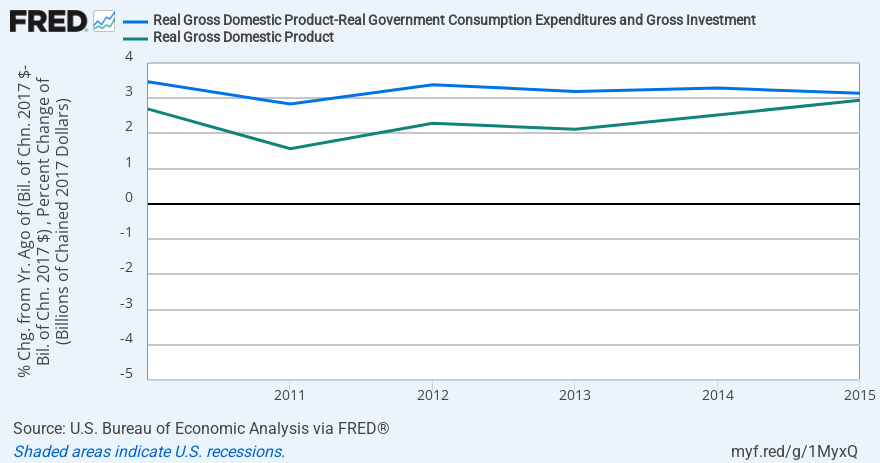
One might think that new tools created after 2008 and the centralization of the financial market would have given the Fed greater insight about the economy’s direction. At a minimum, all those gained functions should have allowed the Fed to steer the economy more effectively. That didn’t happen. In 2009, the Fed forecast that real gross domestic product would accelerate to 4% in 2011. Instead, growth slowed to 1.6%. Cumulatively over that period, the Fed’s two-year projections overstated real GDP by more than $1 trillion. Repeated misses demonstrate that the Fed placed too much faith in its own abilities and in expansionary fiscal policy to spur growth.
Successive interventions during and after the financial crisis of 2008 created what amounted to a de facto backstop for asset owners. This harmful cycle concentrated national wealth among those who already owned assets. Within the corporate sector, large firms thrived by locking in cheap debt, while smaller firms reliant on floating-rate loans were squeezed as rates rose. Homeowners saw their property values soar, largely insulated by fixed-rate mortgages. Meanwhile, younger and less affluent households, shut out of ownership and hit hardest by inflation, missed out on appreciation.
By failing to deliver on its inflation mandate, the Fed allowed class and generational disparities to widen. Its pursuit of a wealth effect to stimulate growth backfired. “Unprecedented inequality is clear proof that the wealth effect is all too effective for the wealthy, but an accelerant to economic hardship for everyone else,” financial analyst Karen Petrou wrote in her book “Engine of Inequality” (2021).
At the heart of independence lies credibility and political legitimacy. Both have been jeopardized by the Fed’s expansion beyond its mandate. Heavy intervention has produced severe distributional outcomes, undermined credibility and threatened independence. Looking ahead, the Fed must scale back the distortions it causes in the economy. Unconventional policies such as quantitative easing should be used only in true emergencies, in coordination with the rest of the federal government. There must also be an honest, independent, nonpartisan review of the entire institution, including monetary policy, regulation, communications, staffing and research.
The U.S. faces short- and medium-term economic challenges, along with the long-term consequences of a central bank that has placed its own independence in jeopardy. The Fed’s independence comes from public trust. The central bank must recommit to maintaining the confidence of the American people. To safeguard its future and the stability of the U.S. economy, the Fed must re-establish its credibility as an independent institution focused solely on its statutory mandate of maximum employment, stable prices and moderate long-term interest rates.