Is there a website for Belgium distance running or Belgium athletics in general? It does not matter if it is in Flemish or in French both work for me and I would be grateful if you could send me any details or links to any website for deals with Belgian distance running.
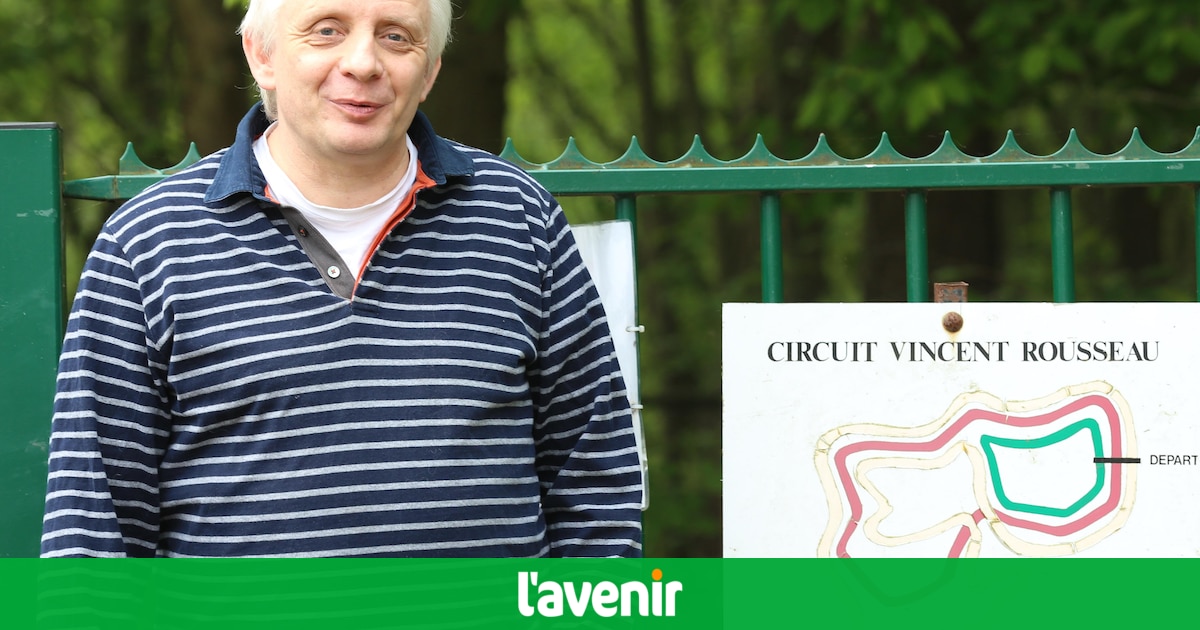
Training of Vincent Rousseau, former world champion half marathon and 2:07 marathoner
Training Advice/Discussion
-
10
-
atletiek.be (official website of Flemish athletics association)
lbfa.be (official website of Walloon athletics association)
atni.be - News about national and international track and field (Flemish)
atletiekkrant.be - again national and international news
00 -
heel erg bedankt voor deze informatie!
10 -
The athletics calendar is gradually taking shape after a months long break. Our podcast and video series "From here to Tokyo" tries to provide comfort in an uncertain period without the European Championship and the Olympic Games. In the fourth episode we look back and forward with marathon runners Koen Naert and Bashir Abdi. Naert has struggled last year with a persistent Achilles tendon injury, but there is light at the end of the tunnel. "I was blinded by my ambition towards Tokyo 2020," said the West Fleming.
The fourth episode of the podcast and video series "From here to Tokyo" can be watched and listened to at the bottom of this article.
"I'm doing better and better," Naert says. After a difficult period with pain, the European marathon champion is gradually feeling the same again. “During the corona crisis, we pressed the pause button for a moment and in the meantime we are building up again very quietly. Last year I burned my hole badly by not listening to my own body. I wanted to do too much in the fall and was blinded by my ambition towards Tokyo 2020. I left on an internship with my Achilles tendon, pushing too much and thinking away the pain because I wanted to gain experience for the Games in Japan. The obsession has now disappeared and that gives a nice feeling. ”
No international championships this summer, offering athletes the opportunity to explore other distances. At the Memorial Van Damme, Bashir Abdi and his partner Mo Farah attack the world hour record, Koen Naert will not appear at the start. “You need to know where your capabilities lie, so I don't mind that they didn't contact me at all. Bashir and Mo are a lot faster over 10 kilometers and the half marathon. I also do not want to be present just to be present, that is a thing of the past for me. ”
Will Naert appear at the start of a marathon in the autumn? “The question is whether we want to. I lost some base due to the injury burden, so it will take time to get back to my old level. Time will tell, but I may run a marathon in the spring of 2021. ”
The RESC athlete has already used the competition-free period to set new accents in training, both technically and mentally. He also views the postponement of the Games differently from a few months ago. “In retrospect, I'm not sorry about it. At the time, I was very disillusioned, but I relapsed twice into my Achilles tendon injury by starting over again. Koen Naert will be a lot better at the Games of 2021 than at the Games of 2020. If I can reach the top 16 next year, then I have run a fantastic marathon. ”
00 -
Source above: atni.be
Good stuff here, about Abdi Bashir (2:04 marathoner) who often trains with Mo Farah. The Belgian athletics calendar is going to start again in August with a number of well controlled virtual race and an actual physical race according to the calendar and some of those will be time trials. If I’m wrong in my assessment according to the websites maybe “Belgian bloke” or “another Belgian bloke” can correct this.
Thank you.
00 -
Do anybody have some training informations about Coach Tim Moriau ? He seems to get good results with his young belgian team.
10 -
INSIDE THE TEAM: training theory with coach Tim Moriau
2016_eliteA short explanation with the training schedule of Isaac Kimeli, Simon Debognies and Thomas De Bock as a practical example.
Below you will find a representation of what Isaac, Simon and Thomas already trained in 2016. All three had a long rest period. For example, they significantly reduced their volumes in December and January in order to calmly digest the exams and the European Championship cross.
At the start of the season we had already made the choice not to put everything on the Joker + Crosscup, but to focus on the summer season. So no altitude training or full training, but a planned rest period to slowly resume the build-up to summer. Perhaps this puts the lesser achievements of Isaac (Rotselaar) and Thomas (Hannut) into perspective for some. BK Cross is also only an intermediate goal for which they did virtually nothing of specific work. Life is about making choices, otherwise the story won't last until the end!
2016_dour_isaac Also striking is the relatively low volumes that they run compared to most athletes. I do not believe in the rapid advance of athletes, but in a patient multi-year plan in which you do not skip steps. It is better to train less sharply at the beginning of your career and avoid injuries. An injury quickly gives you a loss of x weeks, in short, the lesser kilometers will always yield a profit against the overtrained athletes who sustain an injury time and time again; Not to mention the mental puffs ...
The trick is to tailor schedules and workouts to the athletes' level and give their bodies time to adjust. It is important to give the right incentives at the right time and to vary enough over the years.
In the meantime, I am 2016_dour_thomas that I have been able to work with several top athletes. One tendency was very noticeable in all these athletes: all of them naturally had an (too) strong anaerobic capacity and they fell short in terms of aerobic capacity.
What many people forget (or don't know?) Is that your aerobic energy system is the predominant energy system at 1500m and is therefore much more important than your anaerobic energy system in the early stages of athletes' careers. Only when your aerobic capacity & power are sufficiently strong do I find it useful to start training the anaerobic system. Physiologically this is easy to explain because your aerobic energy system can convert part of the produced lactic acid (*) back into aerobic energy. Simply put: the better your body learns to convert part of the lactate into aerobic energy, the more energy you will be able to generate during your effort and the longer you will be able to run at a certain speed.
In practice, however, I see the exact opposite. Many athletes train their anaerobic energy system excessively, which will increase the imbalance between them and their performance will deteriorate and deteriorate over time.
* For the purists and academics: I have explained it here in a simplistic way so that it is clear to everyone, including those without any knowledge.
Legend with explanation of training:
Recovery duration run
Main goal to recover from heavier training stimuli or competitions.
Smooth endurance run
I consider it a quiet incentive to improve aerobic capacity.
Tempoloop
Just like the quiet endurance run, this endurance run is an incentive to improve aerobic capacity. With these runs, however, the athlete runs a little smoother towards the end, so the stimulus is somewhat "more intensive" than the quiet endurance run.
T2
Heaviest incentive to improve aerobic capacity without aiming for high lactate values, as the abbreviation says towards tempo 2mmol.
T4
Training incentive to improve the aerobic power (direct effect on improving performance) of the athletes. These are all tempo workouts above 2.5 and below 6 lactate. Depending on the type of athlete and the level of the athlete, the anaerobic threshold will be higher or lower. The 4mmol is only a reference, but in many cases often not the exact anaerobic threshold.
Race
Number of kilometers the athletes cover in competition form. (All cross in this case)
Anc
Anaerobic capacity training, of course, serves to improve anaerobic capacity. In this case it was distances of 100m where they had to cover the distances at a fast pace with long rest in between. Since they were still training in winter, they did not have to do this to the maximum, in addition to stimulating the anaerobic capacity, the aim was mainly to insert a few smoother faster pieces according to running technique. Isaac did not do this as he just came back from a minor injury.
In addition to all these training forms, w
10 -
What if one of the Borlee brothers ran 800m? With three of them, at least one has to be decent.
What do you think they could run?
Maybe a good race against Eddy Hellebuyck!
00 -
When in Belgium...
Tijd om te rennen!
Zeit zu rennen!
Il est temps de courir!
Time to run!
20 -
Thanks a lot Ghost1 !
He seems to build mileage very slowly and to keep it pretty moderate even for marathoners. (one of his athletes is a 2h17 ) From what I understand he puts a great emphasis on light tempos and light intervals at aerobic threshold. The fast workouts come only few weeks before the main race but nothing crazy or really hard.
00 -
Is there a reason why Rousseau stopped running after 1996?
He was only 34 and in very good form by finishing 2nd in the London Marathon in 2:10.
50 -
Rousseau had a very languid and easy running form.
40 -
Von Trips wrote:
Is there a reason why Rousseau stopped running after 1996?
He was only 34 and in very good form by finishing 2nd in the London Marathon in 2:10.
I believe it was essentially injuries that forced Rousseau to end his career relatively early.
"Why did you retire at 33?
I ran my last marathon in London. I had several injuries afterward, and when EPO came along, I couldn't keep up overnight. But I had some extraordinary moments, especially thanks to the contact with the public. It's one of the only sports that allows for that kind of contact."50
What People Are Talking About On LetsRun
No top threads at the moment. Check back soon.