It is well-known from previous studies that fitter older people live longer.
Study: Want to live longer? Move or die. The amount of exercise you get is more important than your age or even cancer diagnosis
Injury/Nutrition
-
20
-
Does my daily masturbation routine count as exercise?
20 -
mr38 wrote:
It can be pretty hard to exercise when you’re doing aggressive chemotherapy.
Ok fatty.
02 -
briguy wrote:
Does my daily masturbation routine count as exercise?
Those 2 minutes ?
10 -
I don’t run every day and on days where I don’t run, I make step goals to hit at certain periods of the day. I think sitting in one spot all day is NOT good for health… especially with a desk job.
10 -
XDFXDFXDF wrote:
My Grandmother died at age 104; she was still sharp and relatively active till the last month of her life. She never really exercised, but she was always very active, walking, hiking, biking and swimming and I think that (and having a strong social network) contributed to her long life. My wife still remember when my granny, at age 99, was out shopping with her and sprinted 100 mt to catch a bus.
What was that walking, hiking, biking, and swimming if she never really exercised?
I’m surprised this is considered some sort of new discovery. Movement is exercise and movement/exercise the key to health and longevity. Or does this board still think they are doing those 100 mpw at age 45 for good heath?
10 -
Wow as fat wrote:
rojo wrote:
Interesting read from Alex Hutchinson.
Has anyone on here taken a deep look at this? Did they account for the fact that correlation isn't the same as causation? Maybe those who move the most are already the most healthy?
So what’s your excuse for being fat and not exercising anymore
Rook?
00 -
Wow as fat wrote:
Wow as fat wrote:
So what’s your excuse for being fat and not exercising anymore
Rook?
*Rojo?
00 -
rojo wrote:
Interesting read from Alex Hutchinson.
Has anyone on here taken a deep look at this? Did they account for the fact that correlation isn't the same as causation? Maybe those who move the most are already the most healthy?
I have taken a deep look at this. In fact, I started over 20 years ago. There are several simple ways to estimate remaining life span. Here's the list from ChatGPT.
VO₂ Max (Cardiorespiratory Fitness): Measures oxygen utilization during exercise; linked to cardiovascular health.
Grip Strength: Reflects overall muscular strength; predicts frailty and mortality.
Gait Speed (Walking Pace): Indicates physical and cognitive health; slower speeds predict higher mortality risk.
Standing Balance Tests: Measures balance; poor results correlate with fall risk and mortality.
Sit-to-Stand Test: Assesses lower body strength and endurance; linked to mobility and independence.
Stair Climbing Ability: Reflects cardiopulmonary and muscular fitness; difficulty predicts shorter life expectancy.
Resting Heart Rate: Lower rates signify better cardiovascular fitness and longevity.
Flexibility (e.g., Sit-and-Reach Test): Indicates musculoskeletal aging and reduced mobility.
Chair Rise Speed: Reflects lower body strength and functional mobility; faster speeds suggest longer life expectancy.
Ability to Stand from the Floor: Combines strength, flexibility, and balance; predicts longevity.
Body Mass Index (BMI) and Waist-to-Hip Ratio: Measures body composition; central obesity predicts higher mortality.
What do ALL of these measurements have in common? It's exercise!
I read a book several years ago... can't remember the name... Younger Next Year? Anyway, it gave an outstanding analogy that changed my life. It was something like this.
Aging is like the current in a river. It's relentless, but it's slow. If you swim against that current every day, you can dramatically slow the aging process. But because the current never stops, you have to fight it every day.
I resolved to fight aging every day.
Another great book... Dare to be 100... gives similar advice.
This post was edited 40 seconds after it was posted.10 -
I was diagnosed with Follicular Lymphoma Grade 3a, an aggressive form of non-Hodgkins lymphoma at age 67. I had been running well at the time, 2:59 indoor 800 meters, felt fine. My past running history was a 2:19:15 marathoner in 1974, and I probably averaged over 100 miles a week training from 1970-1976. There are some who believe excessive endurance training can compromise your DNA. I tend to believe that may have been a factor in my disease. That said, the past history, and current fitness allowed me to handle the rigors of chemotherapy and radiation therapy that essentially rearranges that same DNA. I am now seven years cancer free.
This post was edited 15 minutes after it was posted.60 -
As an addition to the above post, at age 74 I train several days a week with two older runners 77 and 80. Yesterday we were out early in the morning on an icy snowy day for a six miler. At the conclusion the 80 year old headed to the Y for a mile swim in the pool. The guy looks like a fit 60 year old. The same can be said of the 77 year old that has a regular gym routine to supplement the running. They motivate me to get with it.
This post was edited 10 minutes after it was posted.70 -
fisky wrote:
rojo wrote:
Interesting read from Alex Hutchinson.
Has anyone on here taken a deep look at this? Did they account for the fact that correlation isn't the same as causation? Maybe those who move the most are already the most healthy?
I have taken a deep look at this. In fact, I started over 20 years ago. There are several simple ways to estimate remaining life span. Here's the list from ChatGPT.
VO₂ Max (Cardiorespiratory Fitness): Measures oxygen utilization during exercise; linked to cardiovascular health.
Grip Strength: Reflects overall muscular strength; predicts frailty and mortality.
Gait Speed (Walking Pace): Indicates physical and cognitive health; slower speeds predict higher mortality risk.
Standing Balance Tests: Measures balance; poor results correlate with fall risk and mortality.
Sit-to-Stand Test: Assesses lower body strength and endurance; linked to mobility and independence.
Stair Climbing Ability: Reflects cardiopulmonary and muscular fitness; difficulty predicts shorter life expectancy.
Resting Heart Rate: Lower rates signify better cardiovascular fitness and longevity.
Flexibility (e.g., Sit-and-Reach Test): Indicates musculoskeletal aging and reduced mobility.
Chair Rise Speed: Reflects lower body strength and functional mobility; faster speeds suggest longer life expectancy.
Ability to Stand from the Floor: Combines strength, flexibility, and balance; predicts longevity.
Body Mass Index (BMI) and Waist-to-Hip Ratio: Measures body composition; central obesity predicts higher mortality.
What do ALL of these measurements have in common? It's exercise!
I read a book several years ago... can't remember the name... Younger Next Year? Anyway, it gave an outstanding analogy that changed my life. It was something like this.
Aging is like the current in a river. It's relentless, but it's slow. If you swim against that current every day, you can dramatically slow the aging process. But because the current never stops, you have to fight it every day.
I resolved to fight aging every day.
Another great book... Dare to be 100... gives similar advice.
Living to 100 for a male is actually 1 in 100- 1%.
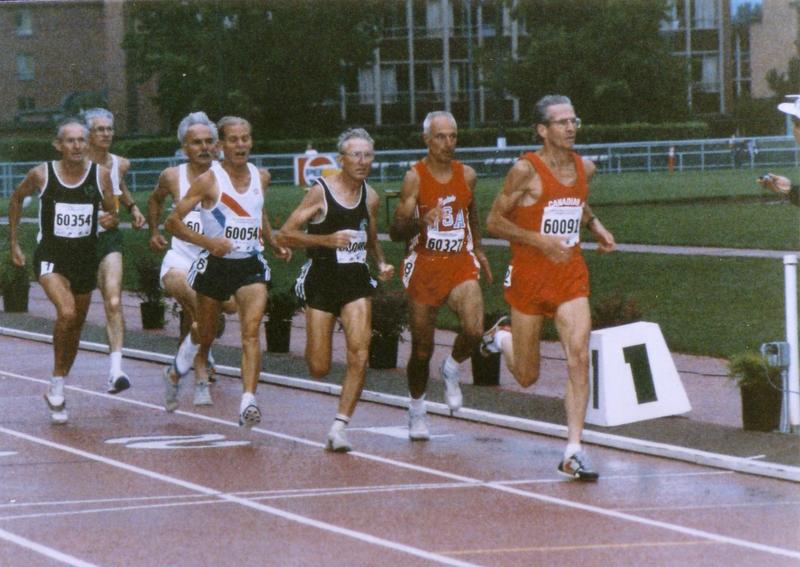
I watched Earl Fee go 2:20 800m age 70 and thought there's a guy who will live 100 years. He ran his last age record a :89- 400m at 90 then hung up the spikes. He'll be 96 in March and mighty make it to 10p. Very difficult to do so, no matter who you are. Seems long sprinters 400-800, live the longest
10 -
Any old shark knows that this is true.
00
What People Are Talking About On LetsRun
No top threads at the moment. Check back soon.