Looking at Carpenter's career numbers on the PP website, it looks like his descent in 1993 (1:15:33) was more of an outlier from his next best descents (1:25:ish) than his best ascent (2:01:06) to his next best (2:05:05 in 1992 -- a race he lost).
Plus, looking at the big picture, it looks like Mejia had a couple of 1:16 descents so Carpenter's 1993 descent does not seem out of the relm of possibility.
I love it when ultra runners get riled up about fkt's and times on courses. If Matt Carpenter cheated once 30 years ago, does it even really affect anyone? If sprinters can go on and live chasing Flo Jo's times, can we just accept Carpenter's and move on? My favorite is the outrage ultrarunners have when an FKT is set in super favorable conditions, like packed snow, etc. As a non-ultra runner hobby lifter, the idea of an FKT is like who can go and deadlift the most in a particular location. There are like 100s of designated FKT courses in my small state of Massachusetts. probably 10s of thousands of strava segments? Is it really that cool to say you have one of them? Doesn't it just mean you happen to be the fastest person who ran that route? I don't get the appeal. I would be like some record for whoever has bench pressed the most ever within the confines of the boston common. Does it really matter and why would anyone go out of their way to get that "record"?
And arguing about the validity of a 2:16:52 marathon vs. a 2:18 is like 100m runners arguing over 10.47 and 10.54 (equivalent on world athletics charts), whether the wind gauge was functioning, if there was a fast start etc. Who cares - call it a 10.5 and move on. Heck, I'd much rather be a 10.7 sprinter than a 2:15 marathoner (I was never close to either).
Given all that, my take on Carpenter.
I buy his 3:16. He had a very long and consistent career. Can I believe for one season he focused on pikes peak, it clicked on race day, and he absolutely crushed the decent? Absolutely. Good for him. Now he can be a legend among the dozen people who care about that kind of history. His successful custard business is more admirable.
I love it when ultra runners get riled up about fkt's and times on courses. If Matt Carpenter cheated once 30 years ago, does it even really affect anyone? If sprinters can go on and live chasing Flo Jo's times, can we just accept Carpenter's and move on? My favorite is the outrage ultrarunners have when an FKT is set in super favorable conditions, like packed snow, etc. As a non-ultra runner hobby lifter, the idea of an FKT is like who can go and deadlift the most in a particular location. There are like 100s of designated FKT courses in my small state of Massachusetts. probably 10s of thousands of strava segments? Is it really that cool to say you have one of them? Doesn't it just mean you happen to be the fastest person who ran that route? I don't get the appeal. I would be like some record for whoever has bench pressed the most ever within the confines of the boston common. Does it really matter and why would anyone go out of their way to get that "record"?
And arguing about the validity of a 2:16:52 marathon vs. a 2:18 is like 100m runners arguing over 10.47 and 10.54 (equivalent on world athletics charts), whether the wind gauge was functioning, if there was a fast start etc. Who cares - call it a 10.5 and move on. Heck, I'd much rather be a 10.7 sprinter than a 2:15 marathoner (I was never close to either).
Given all that, my take on Carpenter.
I buy his 3:16. He had a very long and consistent career. Can I believe for one season he focused on pikes peak, it clicked on race day, and he absolutely crushed the decent? Absolutely. Good for him. Now he can be a legend among the dozen people who care about that kind of history. His successful custard business is more admirable.
FKT's are nonsense. These are for people who don't like the competitiveness of races. If you want real records you need to run a certified course in a road race over an acknowledged distance. 10k, HM, Marathon, 100k, 24 hours.
And trail races will always have different outcomes because the conditions can change so much from race to race. That is one of the reasons why they can't be certified and you can't have records on them.
At the end people have to show up at at race day and race. "Would I, could I" doesn't matter. If you were not there, you didn't race on that day.
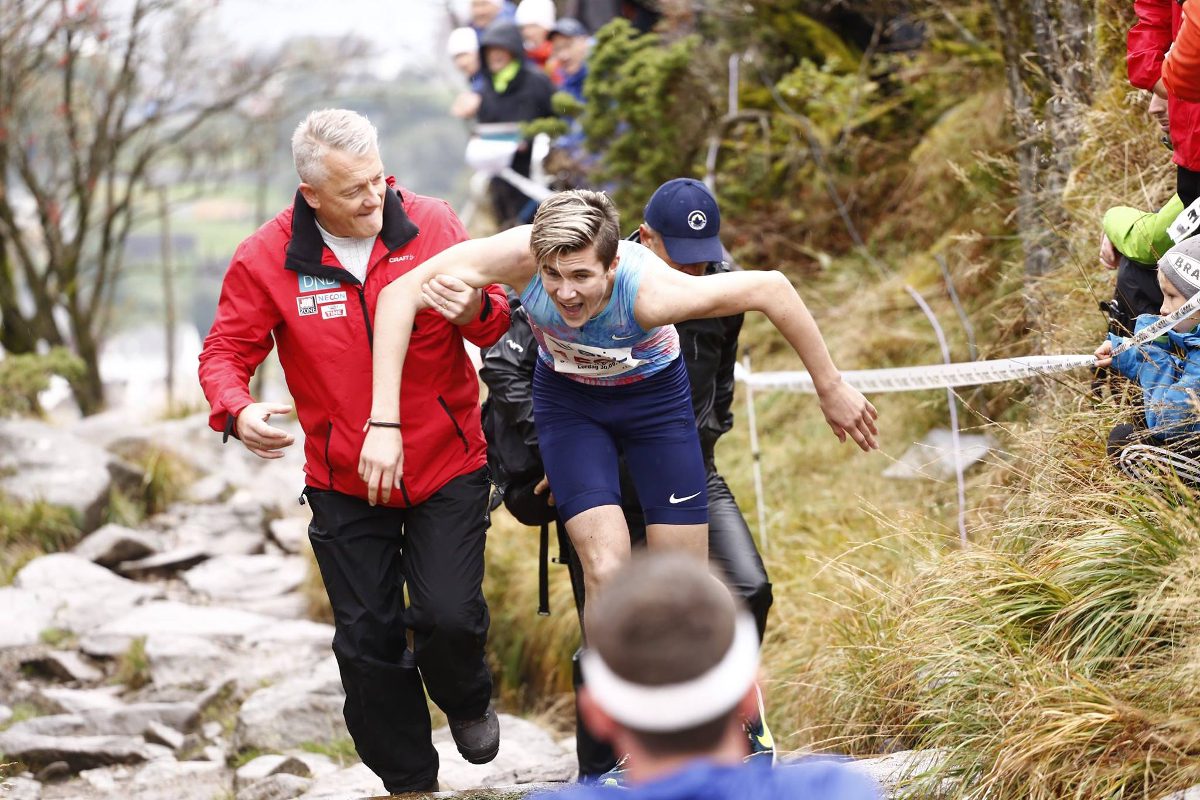
I’m not buying the course cutting argument. Other than cutting a few of the smaller individual switchbacks, the only places you could really cut big time is taking a beeline from the summit down to the A frame, or take the incline down from the top of the W’s. The middle part of the course is basically a strait line. These are so blatant that people would have noticed. Also I’m not sure either of these would be any faster than staying on the more runnable trail (to the poster who said Pikes is technical, haha).
3
4
Promoting Excellence in Running, Integrity of Character, Clarity of Mind, Sublime Humor.
I'm not sure what "Avocado's Number" and "Just Another run of the Mill ex-D1" are getting at as I'm more interested in data and facts and not "feel good stories." Lots of us distance runners of the years work hard, and have bad days and walk it in for a 100-miler, and struggle with overcoming all sorts of challenges.
And to whatever poster who said I was only a"2:18 marathoner". My PR is 2:16:52. If you don't want to count that time you can't count anyone's PR on a course like CIM, Grandmas or Boston. I also ran a 1:04 half. Legit. Clean. No super shoes back then too!
When I wrote my first post on this thread (post #33), I was really hoping that you wouldn't show up with your annual irresponsible insinuations about Matt and your cherry-picked times, sometimes going so far as to suggest that some of your own running accomplishments are comparable to or even better than Matt's. I simply don't think it's worth my time to debate you, and I've even let some of your claims about your own accomplishments and comparisons to Matt's accomplishments go unchallenged. I also know that you have a big following among average runners, and I don't want to deal with any of them. But since you purport to be unsure about what a couple of us are "getting at," I'll provide some more information.
First, regarding your claim that your marathon "PR" (personal "record") is 2:16:52, you know very well what counts as a marathon "record." Among other things, it requires that you run on a record-quality course. Here is what World Athletics (WA) says about your performances:
First, note that WA lists your best performance at any recognized event to be your 2:18:24 at the 2012 Olympic trials (on a fast course under excellent conditions). Your 2:16:52 is not listed among any of your best performances. Even your 2:21:43 on the non-record-quality course at Grandma's (Duluth) is listed as one of your best performances.
Second, note that, in listing your PRs at various distances, WA lists your 2:18:24 as your marathon record. As WA often does, it also acknowledges your faster 2:16:52, but states that your performance in that race was "not legal," which is even worse than "non-record-quality" or "not record-eligible." And yes, I realize that my standards, as well as the standards of WA and ARRS, excludes times from CIM, Boston, and Grandma's as personal "records." I know many people who list times from those races as PRs, and they are, in my view, either ignorant about record standards or lying. I don't believe you're ignorant about record standards. I can at least understand why some people, with times on non-record-quality but not horrendously aided courses, might believe that those times better reflect their true abilities than their much slower times on record-quality courses and are therefore more appropriate or informative to list as PRs, but that's not true in your case, since your 2:18:24 is, to use your term, something of an outliner, with only two mid- to high-2:19s and a ton of marathons in the 2:20s or DNFs. It's simply dishonest for you to continue to claim that you are a 2:16 marathoner, even in response to someone's entirely correct statement that you are only a "2:18 marathoner," because you actually know better.
Third, I acknowledge your half-marathon PR of 1:04:32, but WA doesn't consider it to be better than your best marathon performances, and I'm confident that Matt would have been faster than that if he had been running any sea-level half-marathons in his peak years. He mentioned to me once that when he's asked for his half-marathon PR, he's not sure what to say, because he hasn't run any half-marathon races, and his fastest half-marathon was 1:05:26 for the first half of the 1990 national marathon championship (when he happened to be leading, among others, the world half-marathon record holder on a loop and record-quality course). In WA's list of your top ten race performances, I haven't seen anything that Matt couldn't beat during his peak years if he had chosen to pursue PRs in sea-level events.
Fourth, although it's true that Matt has only run one sub-2:20 marathon, he did that in the January 1992 Houston Marathon, when he just wanted to get in an Olympic trials qualifier before the fast-approaching trials qualifying cut-off and race. (He said that he ran it very easily to get the qualifier, though he cut it a lot closer than I did or would have under similar circumstances.) Matt's goal in the late '80s through at least the fall of 1990 was to make the U.S. Olympic team in the marathon and compete against the best (non-U.S.) marathoners, and many knowledgeable people thought that he could do that. I think his meltdown in the 1990 national marathon championship after leading for the first seventeen miles was a big blow to him. He shuffled to the finish in over 2:30. I'm pretty sure that you or I would have dropped out to avoid a 2:30+ on our running resume, but -- unlike you and me -- Matt never dropped out of a marathon or any other race, except in a little local race that he was leading when his ankle was injured and a bone in his foot broke.
Finally, you seem to go out of your way to avoid discussing Matt's greatest wins and records around the world, and you often focus on times that he ran many years after his peak. Consider, for example, this: In 1990, when he was 26 years old and still fairly young in the sport of mountain running, Matt ran 2:07:36 to win the Pikes Peak Ascent. In 2006, when he was 42 years old and long past his peak years, Matt won the Pikes Peak Marathon (which also served as the World Mountain Running Association Long Course Championships) in 3:33:07 with a 2:08:27 Ascent. What do you think that you (or anyone else) will be able to do when you're 42?
For a complete list of Matt's racing over a period of close to forty years (almost all of which was at high altitudes), go to this link:
Um, okay you don't want to give me credit for a 2:16:52 marathon PR. Whatever. My 1:04:32 half is a better performance anyway. For the record I also have been top 20 at Boston and Chicago.
But my whole point of bringing up relative marathon PRs, as well as times at Sierre-Zinal and MT. WA etc is to compare them as a relative reference to a mountain race like Pikes (and because guys like Matt, Joe Gray, Max King, Kilian, Remi and myself have raced there extensively over the years).
It's not like Matt was some sub 2:09 marathoner who ran 55-min at Mt. WA and won the World Mountain Running Champs (or Sierre-Zinal 6 + times like Mejia and Kilian have). Heck even Remi has run 2:36 or so at SZ.
Anyway, back to Seth: I also think he has the talent to run sub 2:18 but just hasn't put it together yet. His 2:23 PR (or is it 2:22) is kinda close though. And he has won Pikes twice in 3:37-3:38 kind of times. His speciality is certainly uphills at high altitude (much like Matt). But Seth, myself, Adam Peterman, Max King, Jonathon Aziz, Joe Gray, Kilian and Remi etc. aren't getting ever close to 3:16 at Pikes....nobody is anymore!
You still have to be an idot to think that that 3:16 doesn't stick out like crazy.....and that is relative to EVERYTHING that Matt has ever done.
Looking at Carpenter's career numbers on the PP website, it looks like his descent in 1993 (1:15:33) was more of an outlier from his next best descents (1:25:ish) than his best ascent (2:01:06) to his next best (2:05:05 in 1992 -- a race he lost).
Plus, looking at the big picture, it looks like Mejia had a couple of 1:16 descents so Carpenter's 1993 descent does not seem out of the relm of possibility.
I don't think that anyone has settled on any particular allegation, apart from those of us who understand that Matt really was that good. Anyone who genuinely knows Matt also knows that the course-cutting idea is laughable. The one time that Matt inadvertently missed a turn in a race (not a Pikes Peak race), he simply disqualified himself. I don't think his mistake would have had any effect on the results, and I doubt that anyone else even noticed. He simply believed that he had violated a rule and should therefore be disqualified.
Also, when the Manitou Incline became really popular, with streams of people using it every day, Matt steadfastly refused to do so, because it was on a private right-of-way. He worked to get it in better shape and persuade the owner of the right-of-way (I think it may have been the Broadmoor Hotel) to allow it to placed in the public domain. Only then would he step on it. Matt was a real stickler for the rules.
After the addition of the Ascent to the so-called Marathon (I think that was in the '70s), virtually all of the best runners -- not mere mountain or trail runners, but rather a number of the country's best track, cross-country, and road racers -- ran the Ascent only. None of them were going to take the risk of getting injured running the descent when they had far more important races coming up. Matt became the first since Al Waquie to step up the competition in the Marathon. When Ricardo Mejia started running the Marathon, Matt once again had to step up the competition in the Marathon, and Mejia was too dangerous on the descent, so Matt had to put together a great effort on the entire race, both up and down. After Mejia, I don't recall serious challenges to Matt for many years thereafter.
Um, okay you don't want to give me credit for a 2:16:52 marathon PR. Whatever. My 1:04:32 half is a better performance anyway. For the record I also have been top 20 at Boston and Chicago.
But my whole point of bringing up relative marathon PRs, as well as times at Sierre-Zinal and MT. WA etc is to compare them as a relative reference to a mountain race like Pikes (and because guys like Matt, Joe Gray, Max King, Kilian, Remi and myself have raced there extensively over the years).
It's not like Matt was some sub 2:09 marathoner who ran 55-min at Mt. WA and won the World Mountain Running Champs (or Sierre-Zinal 6 + times like Mejia and Kilian have). Heck even Remi has run 2:36 or so at SZ.
Anyway, back to Seth: I also think he has the talent to run sub 2:18 but just hasn't put it together yet. His 2:23 PR (or is it 2:22) is kinda close though. And he has won Pikes twice in 3:37-3:38 kind of times. His speciality is certainly uphills at high altitude (much like Matt). But Seth, myself, Adam Peterman, Max King, Jonathon Aziz, Joe Gray, Kilian and Remi etc. aren't getting ever close to 3:16 at Pikes....nobody is anymore!
You still have to be an idot to think that that 3:16 doesn't stick out like crazy.....and that is relative to EVERYTHING that Matt has ever done.
When I wrote my first post on this thread (post #33), I was really hoping that you wouldn't show up with your annual irresponsible insinuations about Matt and your cherry-picked times, sometimes going so far as to suggest that some of your own running accomplishments are comparable to or even better than Matt's. I simply don't think it's worth my time to debate you, and I've even let some of your claims about your own accomplishments and comparisons to Matt's accomplishments go unchallenged. I also know that you have a big following among average runners, and I don't want to deal with any of them. But since you purport to be unsure about what a couple of us are "getting at," I'll provide some more information.
First, regarding your claim that your marathon "PR" (personal "record") is 2:16:52, you know very well what counts as a marathon "record." Among other things, it requires that you run on a record-quality course. Here is what World Athletics (WA) says about your performances:
First, note that WA lists your best performance at any recognized event to be your 2:18:24 at the 2012 Olympic trials (on a fast course under excellent conditions). Your 2:16:52 is not listed among any of your best performances. Even your 2:21:43 on the non-record-quality course at Grandma's (Duluth) is listed as one of your best performances.
Second, note that, in listing your PRs at various distances, WA lists your 2:18:24 as your marathon record. As WA often does, it also acknowledges your faster 2:16:52, but states that your performance in that race was "not legal," which is even worse than "non-record-quality" or "not record-eligible." And yes, I realize that my standards, as well as the standards of WA and ARRS, excludes times from CIM, Boston, and Grandma's as personal "records." I know many people who list times from those races as PRs, and they are, in my view, either ignorant about record standards or lying. I don't believe you're ignorant about record standards. I can at least understand why some people, with times on non-record-quality but not horrendously aided courses, might believe that those times better reflect their true abilities than their much slower times on record-quality courses and are therefore more appropriate or informative to list as PRs, but that's not true in your case, since your 2:18:24 is, to use your term, something of an outliner, with only two mid- to high-2:19s and a ton of marathons in the 2:20s or DNFs. It's simply dishonest for you to continue to claim that you are a 2:16 marathoner, even in response to someone's entirely correct statement that you are only a "2:18 marathoner," because you actually know better.
Third, I acknowledge your half-marathon PR of 1:04:32, but WA doesn't consider it to be better than your best marathon performances, and I'm confident that Matt would have been faster than that if he had been running any sea-level half-marathons in his peak years. He mentioned to me once that when he's asked for his half-marathon PR, he's not sure what to say, because he hasn't run any half-marathon races, and his fastest half-marathon was 1:05:26 for the first half of the 1990 national marathon championship (when he happened to be leading, among others, the world half-marathon record holder on a loop and record-quality course). In WA's list of your top ten race performances, I haven't seen anything that Matt couldn't beat during his peak years if he had chosen to pursue PRs in sea-level events.
Fourth, although it's true that Matt has only run one sub-2:20 marathon, he did that in the January 1992 Houston Marathon, when he just wanted to get in an Olympic trials qualifier before the fast-approaching trials qualifying cut-off and race. (He said that he ran it very easily to get the qualifier, though he cut it a lot closer than I did or would have under similar circumstances.) Matt's goal in the late '80s through at least the fall of 1990 was to make the U.S. Olympic team in the marathon and compete against the best (non-U.S.) marathoners, and many knowledgeable people thought that he could do that. I think his meltdown in the 1990 national marathon championship after leading for the first seventeen miles was a big blow to him. He shuffled to the finish in over 2:30. I'm pretty sure that you or I would have dropped out to avoid a 2:30+ on our running resume, but -- unlike you and me -- Matt never dropped out of a marathon or any other race, except in a little local race that he was leading when his ankle was injured and a bone in his foot broke.
Finally, you seem to go out of your way to avoid discussing Matt's greatest wins and records around the world, and you often focus on times that he ran many years after his peak. Consider, for example, this: In 1990, when he was 26 years old and still fairly young in the sport of mountain running, Matt ran 2:07:36 to win the Pikes Peak Ascent. In 2006, when he was 42 years old and long past his peak years, Matt won the Pikes Peak Marathon (which also served as the World Mountain Running Association Long Course Championships) in 3:33:07 with a 2:08:27 Ascent. What do you think that you (or anyone else) will be able to do when you're 42?
For a complete list of Matt's racing over a period of close to forty years (almost all of which was at high altitudes), go to this link:
Um, okay you don't want to give me credit for a 2:16:52 marathon PR. Whatever. My 1:04:32 half is a better performance anyway. For the record I also have been top 20 at Boston and Chicago.
But my whole point of bringing up relative marathon PRs, as well as times at Sierre-Zinal and MT. WA etc is to compare them as a relative reference to a mountain race like Pikes (and because guys like Matt, Joe Gray, Max King, Kilian, Remi and myself have raced there extensively over the years).
It's not like Matt was some sub 2:09 marathoner who ran 55-min at Mt. WA and won the World Mountain Running Champs (or Sierre-Zinal 6 + times like Mejia and Kilian have). Heck even Remi has run 2:36 or so at SZ.
Anyway, back to Seth: I also think he has the talent to run sub 2:18 but just hasn't put it together yet. His 2:23 PR (or is it 2:22) is kinda close though. And he has won Pikes twice in 3:37-3:38 kind of times. His speciality is certainly uphills at high altitude (much like Matt). But Seth, myself, Adam Peterman, Max King, Jonathon Aziz, Joe Gray, Kilian and Remi etc. aren't getting ever close to 3:16 at Pikes....nobody is anymore!
You still have to be an idot to think that that 3:16 doesn't stick out like crazy.....and that is relative to EVERYTHING that Matt has ever done.
And I thought I was OCD...sheesh!!
It's a point to point and back again course. Since it's obvious what you're implying, how could you cut it off?
When I wrote my first post on this thread (post #33), I was really hoping that you wouldn't show up with your annual irresponsible insinuations about Matt and your cherry-picked times, sometimes going so far as to suggest that some of your own running accomplishments are comparable to or even better than Matt's. I simply don't think it's worth my time to debate you, and I've even let some of your claims about your own accomplishments and comparisons to Matt's accomplishments go unchallenged. I also know that you have a big following among average runners, and I don't want to deal with any of them. But since you purport to be unsure about what a couple of us are "getting at," I'll provide some more information.
First, regarding your claim that your marathon "PR" (personal "record") is 2:16:52, you know very well what counts as a marathon "record." Among other things, it requires that you run on a record-quality course. Here is what World Athletics (WA) says about your performances:
First, note that WA lists your best performance at any recognized event to be your 2:18:24 at the 2012 Olympic trials (on a fast course under excellent conditions). Your 2:16:52 is not listed among any of your best performances. Even your 2:21:43 on the non-record-quality course at Grandma's (Duluth) is listed as one of your best performances.
Second, note that, in listing your PRs at various distances, WA lists your 2:18:24 as your marathon record. As WA often does, it also acknowledges your faster 2:16:52, but states that your performance in that race was "not legal," which is even worse than "non-record-quality" or "not record-eligible." And yes, I realize that my standards, as well as the standards of WA and ARRS, excludes times from CIM, Boston, and Grandma's as personal "records." I know many people who list times from those races as PRs, and they are, in my view, either ignorant about record standards or lying. I don't believe you're ignorant about record standards. I can at least understand why some people, with times on non-record-quality but not horrendously aided courses, might believe that those times better reflect their true abilities than their much slower times on record-quality courses and are therefore more appropriate or informative to list as PRs, but that's not true in your case, since your 2:18:24 is, to use your term, something of an outliner, with only two mid- to high-2:19s and a ton of marathons in the 2:20s or DNFs. It's simply dishonest for you to continue to claim that you are a 2:16 marathoner, even in response to someone's entirely correct statement that you are only a "2:18 marathoner," because you actually know better.
Third, I acknowledge your half-marathon PR of 1:04:32, but WA doesn't consider it to be better than your best marathon performances, and I'm confident that Matt would have been faster than that if he had been running any sea-level half-marathons in his peak years. He mentioned to me once that when he's asked for his half-marathon PR, he's not sure what to say, because he hasn't run any half-marathon races, and his fastest half-marathon was 1:05:26 for the first half of the 1990 national marathon championship (when he happened to be leading, among others, the world half-marathon record holder on a loop and record-quality course). In WA's list of your top ten race performances, I haven't seen anything that Matt couldn't beat during his peak years if he had chosen to pursue PRs in sea-level events.
Fourth, although it's true that Matt has only run one sub-2:20 marathon, he did that in the January 1992 Houston Marathon, when he just wanted to get in an Olympic trials qualifier before the fast-approaching trials qualifying cut-off and race. (He said that he ran it very easily to get the qualifier, though he cut it a lot closer than I did or would have under similar circumstances.) Matt's goal in the late '80s through at least the fall of 1990 was to make the U.S. Olympic team in the marathon and compete against the best (non-U.S.) marathoners, and many knowledgeable people thought that he could do that. I think his meltdown in the 1990 national marathon championship after leading for the first seventeen miles was a big blow to him. He shuffled to the finish in over 2:30. I'm pretty sure that you or I would have dropped out to avoid a 2:30+ on our running resume, but -- unlike you and me -- Matt never dropped out of a marathon or any other race, except in a little local race that he was leading when his ankle was injured and a bone in his foot broke.
Finally, you seem to go out of your way to avoid discussing Matt's greatest wins and records around the world, and you often focus on times that he ran many years after his peak. Consider, for example, this: In 1990, when he was 26 years old and still fairly young in the sport of mountain running, Matt ran 2:07:36 to win the Pikes Peak Ascent. In 2006, when he was 42 years old and long past his peak years, Matt won the Pikes Peak Marathon (which also served as the World Mountain Running Association Long Course Championships) in 3:33:07 with a 2:08:27 Ascent. What do you think that you (or anyone else) will be able to do when you're 42?
For a complete list of Matt's racing over a period of close to forty years (almost all of which was at high altitudes), go to this link:
Um, okay you don't want to give me credit for a 2:16:52 marathon PR. Whatever. My 1:04:32 half is a better performance anyway.
...
But Seth, myself, Adam Peterman, Max King, Jonathon Aziz, Joe Gray, Kilian and Remi etc. aren't getting ever close to 3:16 at Pikes....nobody is anymore!
...
You still have to be an idot to think that that 3:16 doesn't stick out like crazy.....and that is relative to EVERYTHING that Matt has ever done.
According to WA, a legitimate 2:16:52 would be considerably better than your 1:04:32, which WA says is equivalent to your mid-2:19 at Chicago.
Obviously, you aren't going to come close to 3:16, and I don't see Seth, Max, Joe, or Kilian ever approaching it. I don't know the other guys enough to form an opinion. But the assertion that NOBODY is going to approach it seems extremely naive. Mountain running is still a tiny part of the running world, and if the price is right, some really good East Africans will be showing up at some point.
I don't know whether Matt's 3:16 sticks out like crazy in the mountain running world. You earlier called it the greatest outlier in mountain running (or whatever you call the organization for mountain running competition -- MUT or something), not merely Matt's greatest outlier, which seems to suggest that you consider it to be perhaps the greatest performance in the history of mountain running. Perhaps you're right about that; I have no idea. I really don't pay much attention to that little part of the running world.
Remi beat carpenter on the uphill dakota beat him on the downhill Ricardo ran 2:21 and 2:24. I think the record is breakable if someone is obsessively willing enough to really go for it. #whynotwalmsley? I’d rather seen him take utmb Lower
Um, okay you don't want to give me credit for a 2:16:52 marathon PR. Whatever. My 1:04:32 half is a better performance anyway.
...
But Seth, myself, Adam Peterman, Max King, Jonathon Aziz, Joe Gray, Kilian and Remi etc. aren't getting ever close to 3:16 at Pikes....nobody is anymore!
...
You still have to be an idot to think that that 3:16 doesn't stick out like crazy.....and that is relative to EVERYTHING that Matt has ever done.
According to WA, a legitimate 2:16:52 would be considerably better than your 1:04:32, which WA says is equivalent to your mid-2:19 at Chicago.
Obviously, you aren't going to come close to 3:16, and I don't see Seth, Max, Joe, or Kilian ever approaching it. I don't know the other guys enough to form an opinion. But the assertion that NOBODY is going to approach it seems extremely naive. Mountain running is still a tiny part of the running world, and if the price is right, some really good East Africans will be showing up at some point.
I don't know whether Matt's 3:16 sticks out like crazy in the mountain running world. You earlier called it the greatest outlier in mountain running (or whatever you call the organization for mountain running competition -- MUT or something), not merely Matt's greatest outlier, which seems to suggest that you consider it to be perhaps the greatest performance in the history of mountain running. Perhaps you're right about that; I have no idea. I really don't pay much attention to that little part of the running world.
The Pikes Peak Marathon is a highly specialized race. Unless you live and train in altitude you will have a huge disadvantage. It's not like a classic Marathon where you can run good times almost anywhere in the world.
3
2
Promoting Excellence in Running, Integrity of Character, Clarity of Mind, Sublime Humor.
I buy his 3:16. He had a very long and consistent career. Can I believe for one season he focused on pikes peak, it clicked on race day, and he absolutely crushed the decent? Absolutely. Good for him. Now he can be a legend among the dozen people who care about that kind of history. His successful custard business is more admirable.
I agree with all of this, especially your last sentence. I can appreciate good running performances, but I have very little admiration of or respect for able-bodied but perpetually unemployed or grossly underemployed runners who call themselves professionals in a sport like this. It's an incredibly selfish pursuit, made even worse by constant self-promotion. I like seeing Matt doing the dignified work of showing up every day, washing all the pots and pans, mixing the ingredients, providing a good product and service with a smile that makes people happy, and eventually heading home after long hours.
I buy his 3:16. He had a very long and consistent career. Can I believe for one season he focused on pikes peak, it clicked on race day, and he absolutely crushed the decent? Absolutely. Good for him. Now he can be a legend among the dozen people who care about that kind of history. His successful custard business is more admirable.
I agree with all of this, especially your last sentence. I can appreciate good running performances, but I have very little admiration of or respect for able-bodied but perpetually unemployed or grossly underemployed runners who call themselves professionals in a sport like this. It's an incredibly selfish pursuit, made even worse by constant self-promotion. I like seeing Matt doing the dignified work of showing up every day, washing all the pots and pans, mixing the ingredients, providing a good product and service with a smile that makes people happy, and eventually heading home after long hours.
Yep, Sage lost all of my respect after his posts here.
I buy his 3:16. He had a very long and consistent career. Can I believe for one season he focused on pikes peak, it clicked on race day, and he absolutely crushed the decent? Absolutely. Good for him. Now he can be a legend among the dozen people who care about that kind of history. His successful custard business is more admirable.
I agree with all of this, especially your last sentence. I can appreciate good running performances, but I have very little admiration of or respect for able-bodied but perpetually unemployed or grossly underemployed runners who call themselves professionals in a sport like this. It's an incredibly selfish pursuit, made even worse by constant self-promotion. I like seeing Matt doing the dignified work of showing up every day, washing all the pots and pans, mixing the ingredients, providing a good product and service with a smile that makes people happy, and eventually heading home after long hours.
It's kind of ridiculous to argue that making ice cream is a selfless act of subservience to the country, but making running content and broadening the appeal of the sport is some narcissistic waste of time. Especially on a running forum of all places. I get what you are saying about the self promotion that social media and capitalism necessitate, but Sage's videos and coaching business have brought tons of people happiness, myself included. Getting people into running and improving their odds of success, whatever that means to them, is an honorable thing
I am not saying that anyone cut the course running Pikes Peak, but you certainly could save some time by doing so.
The race used to be an open course. "old timer" runners have told me they would spend time on the course before the race figuring out the best places to cut the course. These were competitive racers at the head of the race. They would not be figuring out how best to stray from the main trail if it was not worth it.
Because of the relatively slower running speeds going uphill on a trail at altitude, shortening the distance run can result in more time saving than one might first imagine.
On the downhill, one thing that slows everyone is having to squeeze by every other runner in the race as you meet them on a narrow trail in an out and back race. For race leaders trying to run as fast as possible downhill, getting by large numbers of runners grinding uphill as they run with their heads down in an oxygen deprived state presents a major obstacle. Running downhill off trail may not present as smooth a surface as the trail, but it could be faster as it would avoid the uphill runners.
Each short cut could potentially be used twice during the round trip.
Since its a trail race just about everyone is running with their head down looking at the trail, especially in the rockier upper parts of the course where most passes between ascending/descending runners occur. Its hard to identify individual runners coming by, and easy to overlook a lead runner that was never seen because they were cutting the course.
The Barr Trail up Pikes Peak is not arrow straight, and there are many corners that could be cut to shave time. This includes the lower slopes which did not always have the fencing lining the trail.
Course cutting can provide a psychological as well as temporal edge. Imaging running along straining to stay just ahead of a rival, and they you look back and notice they are no longer there. You will likely ease your pace believing you have dropped them (only to be shocked to discover they somehow got ahead of you without passing you on the course).
Or imaging how demoralizing it is to be pushing to the max to barely keep contact with a rival in front of you, but then finding they are totally out of sight after a couple corners.
I could imagine a runner who knows and practiced repeatedly on the Peak gaining a 10 minute time advantage in the round trip if they pushed it, especially years ago.
Help us build the best running shoe review site for a chance to win a LetsRun t-shirt.Help us build the best running shoe review site for a chance to win one of 10 LetsRun t-shirts.