It seems clear that bicarbonate is transforming the sport. This is only the beginning. Maurten is the go-to manufacturer, but eventually there will be other companies offering something better, which will lead to something better, and so on. These products will all be legal.
Then there will come a day that we are asking how the anti-doping agencies allowed things to “get this far” and “spiral out of control.” I can see the message board threads now. And then, pre-race bicarb will be banned.
So what happens to all these times? The times that we are marveling over now? When we look back on the “Bicarb Era”, will we view the athletes as dopers, or say things like, “Yeah, the world record is x:xx.xx, but that was during bicarb”?
I’m starting to feel a bit uneasy about the way some of these super fast 800s are concluding in an all-out sprint.
Seriously, do people really believe this? Baking soda is not responsible for big drops in times.
Why would athletes stop at bicarb if they are looking for advantage?
What happens? The long sprints and middle distance events go back to being boring. This is the golden age of track. It can’t be banned, just like carbs, ketones, creatine or caffeine can’t be banned. Natural ergogenic aids.
Why would athletes stop at bicarb if they are looking for advantage?
Because bicarb is legal, dumbo.
And safe, more importantly. Sometimes these boards get a bit lost on the topic of doping.
Authoritative bodies are not looking to ban anything that gives someone an advantage. They are looking to ban substances and technologies that are blatantly and systematically unfair (e.g. $10k tech swimsuits that only a few nations can afford) or that pose health hazards (e.g. EPO--deaths during sleep, increased cancer risk).
Bicarb doesn't fit either of these buckets, so will likely stay legal in perpetuity.
In the past I used something called TURBO from Maximuscle in the UK. I have no idea what it was though it certainly worked for me. Initially it was available as a fluid then it changed to tablet form. I reckon it gave me a good 5 mins off my half marathon time of around 1.50 at the time. Sadly it is now discontinued. So I thought I might try some BiCarb and will probably go for the Maurtens product. Any suggestions what this might do to my current very slow half marathon time of around 2 hours? Also can you use gels during a run after having taken BiCarb?
I don't think there is any talk of making such a product illegal though the letsrun podcast seems to think BiCarb is something special.
Training and talent are the very things we are measuring. Products, even if adapted from household use, and equipment cannot be what the sport is about. It cheapens the sport. We get a sugar rush from all the amazing times. Then we realize no one has gotten better on an absolute scale and our record lists are all in chaos. Remember, if it is about who is fastest and ped's don't matter, the records will be by pilots in an X-43A.
How far are you going to take this ban? No cookies or even pancakes for breakfast the day of races?
would that work? plenty of baking soda in that stuff.
However you feel about the baking soda debate, can we all please agree to abandon this line of reasoning (that baking soda is in baked goods?). For one thing, the actual amount of baking soda used to make one muffin is pretty small. But more importantly, it's not even baking soda by the time you eat it! AI Overview says: "No, the bicarbonate itself is not usually present after cooking because the heat and interaction with acid break it down to produce carbon dioxide gas. Baking soda, which is sodium bicarbonate (NaHCO₃), undergoes a chemical reaction when mixed with an acid or heated. This reaction decomposes the bicarbonate into sodium carbonate, water, and carbon dioxide gas, which causes baked goods to rise and form their texture."
I've seen dozens of posts over the last couple of years referencing the fact that we're probably all guilty of ingesting baking soda in baked goods. I don't think they were all being sarcastic - even the ones in this thread.
In the past I used something called TURBO from Maximuscle in the UK. I have no idea what it was though it certainly worked for me. Initially it was available as a fluid then it changed to tablet form. I reckon it gave me a good 5 mins off my half marathon time of around 1.50 at the time. Sadly it is now discontinued. So I thought I might try some BiCarb and will probably go for the Maurtens product. Any suggestions what this might do to my current very slow half marathon time of around 2 hours? Also can you use gels during a run after having taken BiCarb?
I don't think there is any talk of making such a product illegal though the letsrun podcast seems to think BiCarb is something special.
Not sure if bicarb helps much in long-distances, but there are a few cheaper alternatives to Maurtens out now - you may want to try these first.
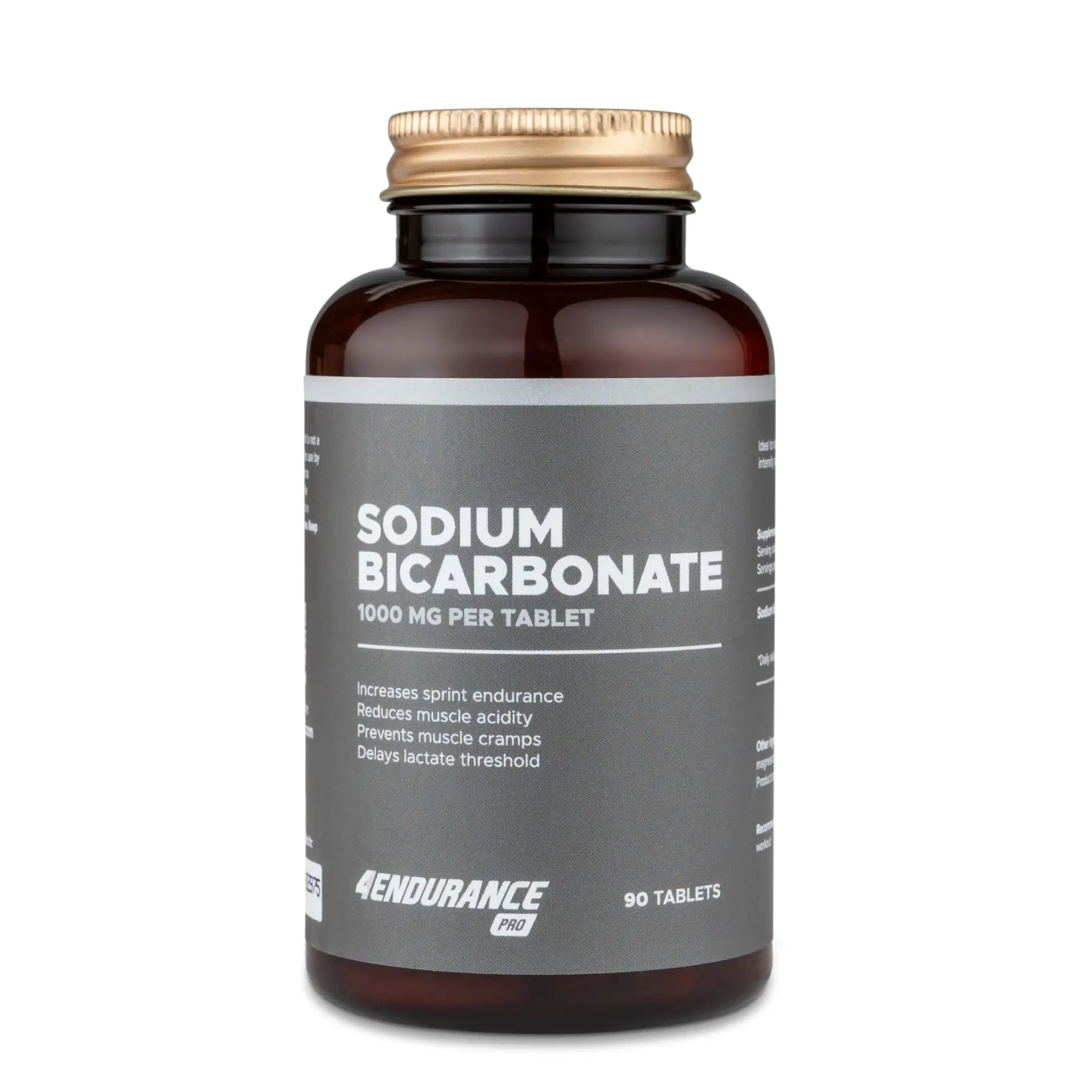
Sodium bicarbonate fights muscle acidity and improves performance during short bursts of intense efforts. Increases sprint endurance Reduces muscle acidity Increases time to exhaustion Product Description Sodium bicarbonate t...
Right. Pure baking soda is extremely alkaline. Cakes and cookies made with baking soda are more neutral.
As with caffeine, there are blood alkalinity levels that are dangerous (e.g., could cause liver failure), so it's not inconceivable that AIU would want to put limits on at some point. But my wild guess is that safe limits would extend far beyond the quantities people are taking for the desired effects.
On a related note, as far as alkalinity goes, lutefisk is to bicarb as bicarb is to a sugar pill or water. Could this be the real secret behind the success of Norwegian endurance athletes?
And safe, more importantly. Sometimes these boards get a bit lost on the topic of doping.
Authoritative bodies are not looking to ban anything that gives someone an advantage. They are looking to ban substances and technologies that are blatantly and systematically unfair (e.g. $10k tech swimsuits that only a few nations can afford) or that pose health hazards (e.g. EPO--deaths during sleep, increased cancer risk).
Bicarb doesn't fit either of these buckets, so will likely stay legal in perpetuity.
If a substance gives actual advantage or has the potential to enhance performance for those who use it then it is put on the banned list. The so-called advantages of bicarb are therefore not established or are greatly overestimated.
And safe, more importantly. Sometimes these boards get a bit lost on the topic of doping.
Authoritative bodies are not looking to ban anything that gives someone an advantage. They are looking to ban substances and technologies that are blatantly and systematically unfair (e.g. $10k tech swimsuits that only a few nations can afford) or that pose health hazards (e.g. EPO--deaths during sleep, increased cancer risk).
Bicarb doesn't fit either of these buckets, so will likely stay legal in perpetuity.
If a substance gives actual advantage or has the potential to enhance performance for those who use it then it is put on the banned list. The so-called advantages of bicarb are therefore not established or are greatly overestimated.
No, substances are not added merely because they confer an advantage. They must also pose a health risk or violate the "spirit of the sport." The latter is pretty subjective, but it's been applied mostly to actual drugs like Meldonium or to really weird stuff like inhaled argon gasses.
If a substance gives actual advantage or has the potential to enhance performance for those who use it then it is put on the banned list. The so-called advantages of bicarb are therefore not established or are greatly overestimated.
No, substances are not added merely because they confer an advantage. They must also pose a health risk or violate the "spirit of the sport." The latter is pretty subjective, but it's been applied mostly to actual drugs like Meldonium or to really weird stuff like inhaled argon gasses.
That isn't correct. The substances can be banned for any one of those reasons. It doesn't require all 3 to apply.