this seems pretty speculative. you'll need to provide evidence for this claim if you expect any reasonable person to believe it.
Yet you provided zero evidence for your claim that it seems very unlikely that one would accidentally drive while impaired by a legal substance. You’re not able to engage here kid.
this is completely braindead. for someone to be drug tested after being pulled over they need to either 1) appear intoxicated or 2.) say that they've been doing drugs or have been drinking. if person meets criterion one it is incredibly unlikely that they'd not realize it and choose to get into their vehical and drive. if they meet criterion two, then the ingestion likely was accidental. your iq is LOW.
This post was edited 23 seconds after it was posted.
Yet you provided zero evidence for your claim that it seems very unlikely that one would accidentally drive while impaired by a legal substance. You’re not able to engage here kid.
this is completely braindead. for someone to be drug tested after being pulled over they need to either 1) appear intoxicated or 2.) say that they've been doing drugs or have been drinking. if person meets criterion one it is incredibly unlikely that they'd not realize it and choose to get into their vehical and drive. if they meet criterion two, then the ingestion likely was accidental. your iq is LOW.
You are a mental midget. Plenty of people could blow .08 or more and not feel compromised. You are fooling nobody regarding your identity.
this is completely braindead. for someone to be drug tested after being pulled over they need to either 1) appear intoxicated or 2.) say that they've been doing drugs or have been drinking. if person meets criterion one it is incredibly unlikely that they'd not realize it and choose to get into their vehical and drive. if they meet criterion two, then the ingestion likely was accidental. your iq is LOW.
You are a mental midget. Plenty of people could blow .08 or more and not feel compromised. You are fooling nobody regarding your identity.
oh my god this is painful. and you actually just made my point for me. if someone drives, is pulled over and blows 0.08, then they may meet end up getting a criteria DUI, but assuming they truly thought they were sober (lets say they waited a few hours after their last drink), then the moral culpability is way, way less. the punishment is at least partially justified in this case, arguably; moral condemnation is MUCH harder to justify. This is similar to the case with Shelby. thanks for making the point yourself
This post was edited 31 seconds after it was posted.
oh my god this is painful. and you actually just made my point for me. if someone drives, is pulled over and blows 0.08, then they may meet end up getting a criteria DUI, but assuming they truly thought they were sober (lets say they waited a few hours after their last drink), then the moral culpability is way, way less. the punishment is at least partially justified in this case, arguably; moral condemnation is MUCH harder to justify. This is similar to the case with Shelby. thanks for making the point yourself
EXCEPT Shelby didn’t accidentally ingest Nandrolone. Her appearance changed. She looked more masculine. Her performances became extraordinary by her previous standards, more masculine. Her hairline was receding. Her jawline was different. She knows she intentionally ingested Nandrolone. She admitted she lied to blame the burrito because she had no other option but to admit to intentional doping, which she would never do. She is a liar and you are a liar. You go around defending her. Why? You know things only she would know. So you are Shelby.
Nothing you write is new. None of it adds to anything that hasn't been said before. None of it changes anything. A person caught cheating is seen as a cheat. You might find that an unpleasant conclusion - because you don't think she did cheat - but that is the consequence of her being caught.
Nothing you write is new. None of it adds to anything that hasn't been said before. None of it changes anything. A person caught cheating is seen as a cheat. You might find that an unpleasant conclusion - because you don't think she did cheat - but that is the consequence of her being caught.
Except this is utterly false. She was not caught cheating. She was "caught" being unable to meet the strict liability standard using the burrito defense. Being precise matters when someone's reputation and livelihood is at stake.
Nothing you write is new. None of it adds to anything that hasn't been said before. None of it changes anything. A person caught cheating is seen as a cheat. You might find that an unpleasant conclusion - because you don't think she did cheat - but that is the consequence of her being caught.
Except this is utterly false. She was not caught cheating. She was "caught" being unable to meet the strict liability standard using the burrito defense. Being precise matters when someone's reputation and livelihood is at stake.
Except this is utterly misleading. She was caught with way too much nandrolone, and her only excuse - as rekrunner just cited in one of the other Houlihan threads: " the burrito was the only possible source of the 19-NA in the Sample" is so ridiculous and obviously wrong that it will remain a story for the ages. Thus cheating / intentional doping is the only logical conclusion.
Not coincidentally, the rules literally demand that conclusion in such a case, and she was literally banned for intentional doping.
There's nothing basless about condemning an athlete who failed a drug test.
extremely low iq, low resolution take. the world is not black and white
Baseless means there is nothing in the line of factual support for an idea. A failed drug test could be incorrect but it does provide a legitimate reason to believe that an athlete who failed one cheated. A baseless accusation would look something like accusing Connor Mantz of cheating after he broke the half marathon record with no supporting evidence.
The intersection of justice and sports regulation rarely produces cases as ethically complex as that of Shelby Houlihan, the American middle-distance runner whose career was derailed by a positive test for nandrolone. Her case does not hinge on whether nandrolone could have been present in her system, but rather on the dangerous conflation of strict liability violations with intentional cheating. While strict liability serves as a necessary administrative standard for maintaining order in competitive sports, using it to make moral judgments about an athlete's character and intent represents a profound ethical error with devastating personal consequences. The anti-doping framework's strict liability standard holds athletes accountable for any prohibited substance found in their system, regardless of how it got there. This approach simplifies enforcement and creates strong incentives for vigilance, but it was designed as a regulatory tool—not a basis for moral judgment. When strict liability findings transform into accusations of deliberate cheating, they exceed their intended purpose and risk grave injustice. The scientific context of Houlihan's case highlights this distinction. Nandrolone, the detected substance, presents particular complexities in testing and interpretation. Research has documented multiple pathways for inadvertent nandrolone exposure, including contaminated meat products and certain nutritional supplements. Moreover, modern athletes seeking performance enhancement rarely choose nandrolone, given its high detectability and the availability of more sophisticated alternatives. These scientific realities underscore why the presence of a substance cannot automatically equate to deliberate misconduct. Houlihan’s character and career provide compelling evidence against the likelihood of intentional doping. Her consistent rejection of even legal performance enhancements, including the controversial "super shoes" embraced by many competitors, reflects her commitment to natural athletic achievement. Her training methods have been transparent and well-documented, with long-term performance progression consistent with natural development. The timing of her test result also raises questions, as it came during a period of consistent, rather than dramatically improved, performance—contrary to typical patterns of deliberate doping. The testimony of those closest to Houlihan carries particular weight. Coach Jerry Schumacher described her as a model of integrity whose achievements stemmed from talent and relentless discipline rather than shortcuts. Her teammates have shared specific instances of her refusing even permitted performance enhancers, establishing a consistent pattern of behavior that contradicts any suggestion of deliberate cheating. The moral implications of equating strict liability with intent extend beyond individual cases like Houlihan's. This false equivalence presents us with a stark moral choice: In one scenario, we withhold moral condemnation in ambiguous cases, meaning a guilty party might escape harsh ethical judgment while still facing penalties under strict liability. In the other, we risk destroying an innocent athlete's reputation, career, and legacy through unwarranted accusations of deliberate cheating. The moral horror of unjustly condemning an innocent athlete far outweighs any perceived injustice in withholding judgment when intent cannot be proven. This asymmetry of harm should guide our approach to such cases. Historical precedent further supports this caution. The sports world has witnessed numerous cases where strict liability violations were later revealed to have innocent explanations. Athletes have tested positive due to contaminated medications, tainted meat, or environmental exposure. The 2002 case of Alain Baxter, who lost his Olympic medal due to trace amounts of a banned substance in a Vicks inhaler, exemplifies how strict liability can penalize without implying moral fault. These examples reinforce the importance of maintaining the distinction between technical violations and ethical transgressions. Houlihan’s case reveals the dangers of conflating strict liability with intentional doping. Her character, the implausibility of nandrolone use, and the numerous testimonies supporting her integrity all point to the unlikelihood of deliberate misconduct. While strict liability serves a purpose in anti-doping enforcement, it must not be used as a tool to make moral judgments about intent. The path forward requires several key reforms. Public discourse around doping violations must carefully distinguish between proven intent and strict liability findings. Governing bodies should develop separate procedures for investigating and establishing intent, distinct from strict liability enforcement. Finally, the media and sporting community must resist the temptation to leap from technical violations to assumptions of moral fault. Shelby Houlihan’s case stands as a compelling argument for this reformed approach. While the strict liability standard led to her competitive ban, the widespread assumption of intentional cheating represents a separate and unjustified leap. The absence of proof of intent, combined with substantial evidence of her ethical commitment to clean sport, demands that we view her case through a more nuanced lens. The integrity of sport depends not only on effective anti-doping measures but on fair and ethical treatment of athletes. By maintaining the crucial distinction between strict liability and intentional misconduct, we can preserve both the administrative efficiency of anti-doping enforcement and the moral integrity of how we judge athletes. Houlihan’s case should serve as a catalyst for this more sophisticated approach to sports justice—one that recognizes that not all violations stem from the same moral root, and that punishment without proof of intent must not become punishment without proof of guilt.
Interesting work in progress.
Some preliminary points and questions:
It would help readability to put spacing between paragraphs.
Who is your intended audience? In my experience, the most atrocious moralists are not prepared to read such an essay, or see themselves in it, or agree with it, presenting the biggest obstacles to getting your intended message to those who need it most.
I would also argue that the "ethically complex" case of Houlihan is not as rare as you suggest.
I think fundamentally, your point can be made even simpler. We shouldn't make such moral judgements on the basis of presumptions, lacking some reasonable semblance of an affirmative proof of intentional doping. The case against Houlihan wasn't a case as such against Houlihan, but turned into a case against Houlihan's results of the limited investigation that was possible when put on notice 1-month after the fact, over a relevant period where much about all industries was uniquely not normal. There was no established case as such making any affirmative, evidence based, case for doping with intent to enhance performance, to any standard stronger than a "suggestion" that lab experts could recreate results "consistent with" Houlihan's in the lab, but using specific mail-order products.
Commenting on two policies that create this situation for accused athletes:
"Strict liability"
"Strict liability" has been controversial since before WADA was formed. It is argued, maybe rightfully so, as a necessary compromise, primarily because it avoids extensive and expensive litigation that would otherwise delay justice for the rich, and quickly bankrupt the ADAs/ADOS of most sports federations. (See for example, Tyson Fury and UKAD's settlement.) WADA has chosen not to compromise on the definition of what constitutes a rule violation (because competitors are potentially harmed by the mere presence, regardless of fault or intention), but rather adding complete flexibility in the subsequent sanctioning stage of the process on a specific case by case basis. This is seen as a reasonable compromise between effective anti-doping enforcement, while still permitting the athlete a chance to reduce or escape the sanctions, depending on the specific circumstances, and the mercy and sympathy of the "prosecutors" and the "adjudicators".
"Presumption of intent":
Something that seems missing in your essay is the relatively new burden placed on the accused athlete to attempt to reduce a lengthier default sanction. Before 2015, intent wasn't formally defined, and didn't explicitly factor into sanctioning, unless the ADA/ADO could prove intent, as part of "aggravating circumstances" -- a rare event due to its difficulty in proving. In 2015, that changed drastically for the worse for athletes. "Intent" became a defined term, and presumed by default, with the expensive and difficult burden shifting from the ADA/ADO, onto the athlete, to establish non-intent, in order to reduce or avoid the full consequences.
This was part of a blanket set of changes designed to increase the default ban from 2-years to 4-years.
The financial and legal burdens don't go away, but is merely transferred onto all accused athletes, regardless of innocence or guilt. This really hurts the innocent athletes the most, as the guilty ones deserve the full ban. Perversely, the guilty athletes can choose to benefit from a 1-year reduction for accepting the charges without contest, while the innocent athlete is motivated to clear their name, with low chance of success, waiving their right to a 1-year reduction with no questions asked -- ironically often resulting in a longer sanction for the innocent athlete than the guilty one.
We have already seen real consequences for innocent athletes. On no notice, the athlete must suddenly become an expert, both on how WADA Labs and ADAs/ADOs are supposed to do their job, and experts in the history and inner workings of some industry, e.g. beef, pork, and more exotic game animals, pharmaceutical, supplement, and even gummy bears, having to deal with lot numbers, and tracking down animals and ingredients at their source, with no power to compel cooperation from restaurant owners, suppliers, or distributors (assuming they are still in business). At the same time, the athlete is provisionally suspended, cutting him/her off of their primary source of income, at a time when they need to finance legal expenses, and scientific testing. Unlike other major sports, even in rich countries, most track and field athletes live at or below poverty, complicating access to competent legal and scientific support. For example, amateur handball player, Simon Getzmann, was forced to spend 10,000+ Euros of his father's money, while serving a suspension of 1+ years, to prove that his violation came from WADA legal medication for legitimate pain-relief, contaminated with a bad substance so minute, it was within the national regulations permitted. Similarly Jarrion Lawson served an 18-month suspension before a CAS Panel overturned his violation and sanction. In the cases like Houlihan's, Ross Tucker recommended an estimated a six-figure defense, launching a large scale study lasting 6-months, which still might not produce the rare result needed to clear the innocent athlete guilty of eating USDA approved intact pork.
If Simon Getzmann did not have a sample of his medication to test, his fate would be the same as Houlihan's. Even then, there is no guarantee that having your sample test positive is sufficient to establish the source (see the on-going case of Asinga). If Lawson wasn't able to pursue and appeal his case before a sympathetic CAS Panel, again. Under these conditions, how can rural East Africans get fair treatment, in a process where the rules and the prosecutions are primarily in French and English, or even the minimum education of their obligations as an athlete, with respect to traditional treatments for injuries and illness.
You touch on solutions such as governing bodies doing its own investigations. One of the justifications for WADA is harmonization of rules and enforcement independent of government influence. Some governments may agree to wholeheartedly do such investigations, while others will be reluctant, and may even sabotage such investigations, resulting in the same dis-harmonization that triggered the creation of WADA.
You also touch on the role of media which is an important one. Unfortunately, the public loves scandals more than boring truths, and some of the media caters to that desire because it is profitable. This results in "moral atrocities" even in cases where athletes are not accused or charged, due to tenuous accusations or associations e.g. by nationality, or by shared coaches or agents, as other convicted or suspicious athletes.
The "Sports Integrity Initiative" published several relevant articles about "strict liabilty" and documented the burden shift of "proving non-intent", back when Justin Gatlin was re-entering the sport. Here are a few that I bookmarked that explain these WADA concepts:
The common perception, bolstered by the media, is that US sprinter Justin Gatlin has twice used performance-enhancing drugs in an attempt to cheat. It might surprise readers to know that no tribunal has ever made such a findi...
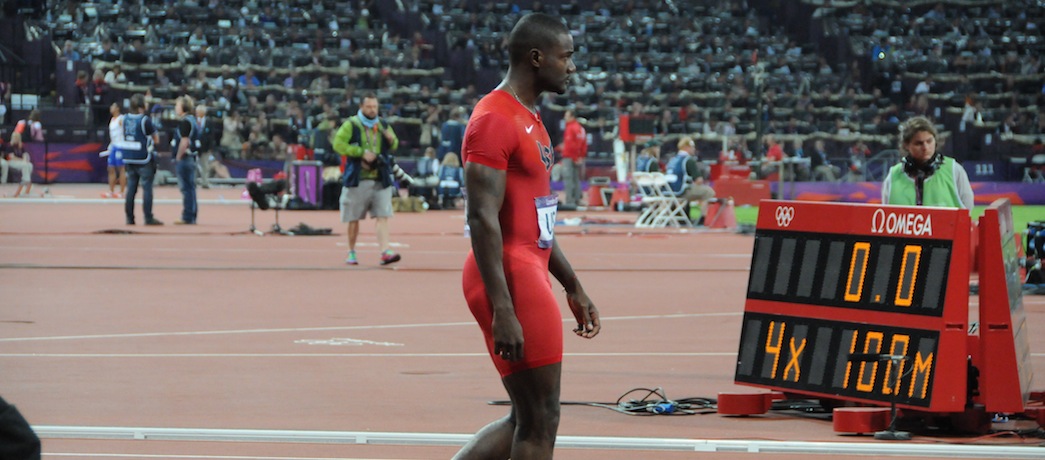
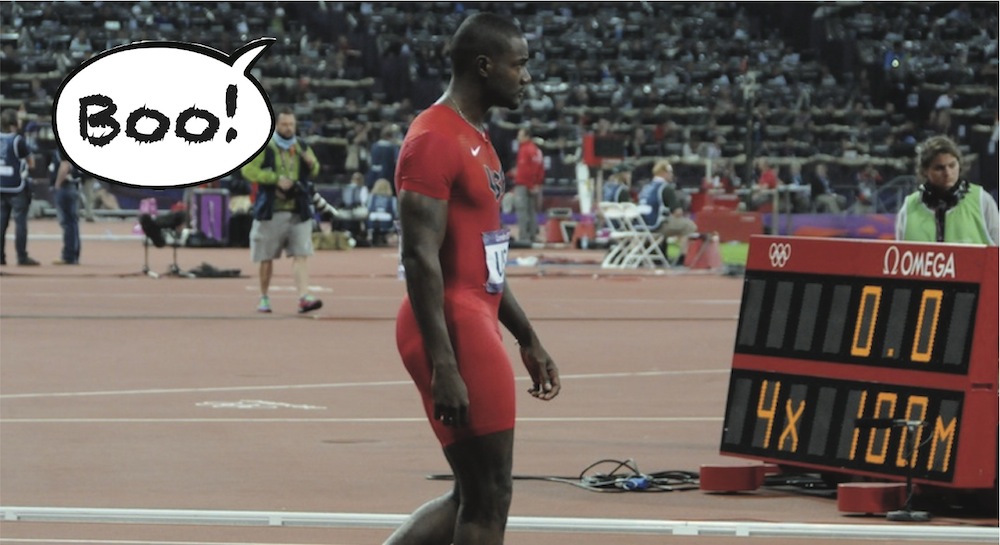
On Sunday, Justin Gatlin was booed as he received his gold medal following his victory in the 100m final at the International Association of Athletics Federations (IAAF) London 2017 World Championships on Saturday. The reason...
A two game suspension reportedly issued to Luke Gifford of Dallas Cowboys has once again highlighted differences between the World Anti-Doping Code and the anti-doping programmes of the US professional leagues. The argument t...
I've been saying for years no one knows if it was intentional and calling out people who act as if she blatantly lied simply because their minds can't fathom it getting there with no good explanation
The intersection of justice and sports regulation rarely produces cases as ethically complex as that of Shelby Houlihan, the American middle-distance runner whose career was derailed by a positive test for nandrolone. Her case does not hinge on whether nandrolone could have been present in her system, but rather on the dangerous conflation of strict liability violations with intentional cheating. While strict liability serves as a necessary administrative standard for maintaining order in competitive sports, using it to make moral judgments about an athlete's character and intent represents a profound ethical error with devastating personal consequences. The anti-doping framework's strict liability standard holds athletes accountable for any prohibited substance found in their system, regardless of how it got there. This approach simplifies enforcement and creates strong incentives for vigilance, but it was designed as a regulatory tool—not a basis for moral judgment. When strict liability findings transform into accusations of deliberate cheating, they exceed their intended purpose and risk grave injustice. The scientific context of Houlihan's case highlights this distinction. Nandrolone, the detected substance, presents particular complexities in testing and interpretation. Research has documented multiple pathways for inadvertent nandrolone exposure, including contaminated meat products and certain nutritional supplements. Moreover, modern athletes seeking performance enhancement rarely choose nandrolone, given its high detectability and the availability of more sophisticated alternatives. These scientific realities underscore why the presence of a substance cannot automatically equate to deliberate misconduct. Houlihan’s character and career provide compelling evidence against the likelihood of intentional doping. Her consistent rejection of even legal performance enhancements, including the controversial "super shoes" embraced by many competitors, reflects her commitment to natural athletic achievement. Her training methods have been transparent and well-documented, with long-term performance progression consistent with natural development. The timing of her test result also raises questions, as it came during a period of consistent, rather than dramatically improved, performance—contrary to typical patterns of deliberate doping. The testimony of those closest to Houlihan carries particular weight. Coach Jerry Schumacher described her as a model of integrity whose achievements stemmed from talent and relentless discipline rather than shortcuts. Her teammates have shared specific instances of her refusing even permitted performance enhancers, establishing a consistent pattern of behavior that contradicts any suggestion of deliberate cheating. The moral implications of equating strict liability with intent extend beyond individual cases like Houlihan's. This false equivalence presents us with a stark moral choice: In one scenario, we withhold moral condemnation in ambiguous cases, meaning a guilty party might escape harsh ethical judgment while still facing penalties under strict liability. In the other, we risk destroying an innocent athlete's reputation, career, and legacy through unwarranted accusations of deliberate cheating. The moral horror of unjustly condemning an innocent athlete far outweighs any perceived injustice in withholding judgment when intent cannot be proven. This asymmetry of harm should guide our approach to such cases. Historical precedent further supports this caution. The sports world has witnessed numerous cases where strict liability violations were later revealed to have innocent explanations. Athletes have tested positive due to contaminated medications, tainted meat, or environmental exposure. The 2002 case of Alain Baxter, who lost his Olympic medal due to trace amounts of a banned substance in a Vicks inhaler, exemplifies how strict liability can penalize without implying moral fault. These examples reinforce the importance of maintaining the distinction between technical violations and ethical transgressions. Houlihan’s case reveals the dangers of conflating strict liability with intentional doping. Her character, the implausibility of nandrolone use, and the numerous testimonies supporting her integrity all point to the unlikelihood of deliberate misconduct. While strict liability serves a purpose in anti-doping enforcement, it must not be used as a tool to make moral judgments about intent. The path forward requires several key reforms. Public discourse around doping violations must carefully distinguish between proven intent and strict liability findings. Governing bodies should develop separate procedures for investigating and establishing intent, distinct from strict liability enforcement. Finally, the media and sporting community must resist the temptation to leap from technical violations to assumptions of moral fault. Shelby Houlihan’s case stands as a compelling argument for this reformed approach. While the strict liability standard led to her competitive ban, the widespread assumption of intentional cheating represents a separate and unjustified leap. The absence of proof of intent, combined with substantial evidence of her ethical commitment to clean sport, demands that we view her case through a more nuanced lens. The integrity of sport depends not only on effective anti-doping measures but on fair and ethical treatment of athletes. By maintaining the crucial distinction between strict liability and intentional misconduct, we can preserve both the administrative efficiency of anti-doping enforcement and the moral integrity of how we judge athletes. Houlihan’s case should serve as a catalyst for this more sophisticated approach to sports justice—one that recognizes that not all violations stem from the same moral root, and that punishment without proof of intent must not become punishment without proof of guilt.
Interesting work in progress.
Some preliminary points and questions:
It would help readability to put spacing between paragraphs.
Who is your intended audience? In my experience, the most atrocious moralists are not prepared to read such an essay, or see themselves in it, or agree with it, presenting the biggest obstacles to getting your intended message to those who need it most.
I would also argue that the "ethically complex" case of Houlihan is not as rare as you suggest.
I think fundamentally, your point can be made even simpler. We shouldn't make such moral judgements on the basis of presumptions, lacking some reasonable semblance of an affirmative proof of intentional doping. The case against Houlihan wasn't a case as such against Houlihan, but turned into a case against Houlihan's results of the limited investigation that was possible when put on notice 1-month after the fact, over a relevant period where much about all industries was uniquely not normal. There was no established case as such making any affirmative, evidence based, case for doping with intent to enhance performance, to any standard stronger than a "suggestion" that lab experts could recreate results "consistent with" Houlihan's in the lab, but using specific mail-order products.
Commenting on two policies that create this situation for accused athletes:
"Strict liability"
"Strict liability" has been controversial since before WADA was formed. It is argued, maybe rightfully so, as a necessary compromise, primarily because it avoids extensive and expensive litigation that would otherwise delay justice for the rich, and quickly bankrupt the ADAs/ADOS of most sports federations. (See for example, Tyson Fury and UKAD's settlement.) WADA has chosen not to compromise on the definition of what constitutes a rule violation (because competitors are potentially harmed by the mere presence, regardless of fault or intention), but rather adding complete flexibility in the subsequent sanctioning stage of the process on a specific case by case basis. This is seen as a reasonable compromise between effective anti-doping enforcement, while still permitting the athlete a chance to reduce or escape the sanctions, depending on the specific circumstances, and the mercy and sympathy of the "prosecutors" and the "adjudicators".
"Presumption of intent":
Something that seems missing in your essay is the relatively new burden placed on the accused athlete to attempt to reduce a lengthier default sanction. Before 2015, intent wasn't formally defined, and didn't explicitly factor into sanctioning, unless the ADA/ADO could prove intent, as part of "aggravating circumstances" -- a rare event due to its difficulty in proving. In 2015, that changed drastically for the worse for athletes. "Intent" became a defined term, and presumed by default, with the expensive and difficult burden shifting from the ADA/ADO, onto the athlete, to establish non-intent, in order to reduce or avoid the full consequences.
This was part of a blanket set of changes designed to increase the default ban from 2-years to 4-years.
The financial and legal burdens don't go away, but is merely transferred onto all accused athletes, regardless of innocence or guilt. This really hurts the innocent athletes the most, as the guilty ones deserve the full ban. Perversely, the guilty athletes can choose to benefit from a 1-year reduction for accepting the charges without contest, while the innocent athlete is motivated to clear their name, with low chance of success, waiving their right to a 1-year reduction with no questions asked -- ironically often resulting in a longer sanction for the innocent athlete than the guilty one.
We have already seen real consequences for innocent athletes. On no notice, the athlete must suddenly become an expert, both on how WADA Labs and ADAs/ADOs are supposed to do their job, and experts in the history and inner workings of some industry, e.g. beef, pork, and more exotic game animals, pharmaceutical, supplement, and even gummy bears, having to deal with lot numbers, and tracking down animals and ingredients at their source, with no power to compel cooperation from restaurant owners, suppliers, or distributors (assuming they are still in business). At the same time, the athlete is provisionally suspended, cutting him/her off of their primary source of income, at a time when they need to finance legal expenses, and scientific testing. Unlike other major sports, even in rich countries, most track and field athletes live at or below poverty, complicating access to competent legal and scientific support. For example, amateur handball player, Simon Getzmann, was forced to spend 10,000+ Euros of his father's money, while serving a suspension of 1+ years, to prove that his violation came from WADA legal medication for legitimate pain-relief, contaminated with a bad substance so minute, it was within the national regulations permitted. Similarly Jarrion Lawson served an 18-month suspension before a CAS Panel overturned his violation and sanction. In the cases like Houlihan's, Ross Tucker recommended an estimated a six-figure defense, launching a large scale study lasting 6-months, which still might not produce the rare result needed to clear the innocent athlete guilty of eating USDA approved intact pork.
If Simon Getzmann did not have a sample of his medication to test, his fate would be the same as Houlihan's. Even then, there is no guarantee that having your sample test positive is sufficient to establish the source (see the on-going case of Asinga). If Lawson wasn't able to pursue and appeal his case before a sympathetic CAS Panel, again. Under these conditions, how can rural East Africans get fair treatment, in a process where the rules and the prosecutions are primarily in French and English, or even the minimum education of their obligations as an athlete, with respect to traditional treatments for injuries and illness.
You touch on solutions such as governing bodies doing its own investigations. One of the justifications for WADA is harmonization of rules and enforcement independent of government influence. Some governments may agree to wholeheartedly do such investigations, while others will be reluctant, and may even sabotage such investigations, resulting in the same dis-harmonization that triggered the creation of WADA.
You also touch on the role of media which is an important one. Unfortunately, the public loves scandals more than boring truths, and some of the media caters to that desire because it is profitable. This results in "moral atrocities" even in cases where athletes are not accused or charged, due to tenuous accusations or associations e.g. by nationality, or by shared coaches or agents, as other convicted or suspicious athletes.
The "Sports Integrity Initiative" published several relevant articles about "strict liabilty" and documented the burden shift of "proving non-intent", back when Justin Gatlin was re-entering the sport. Here are a few that I bookmarked that explain these WADA concepts:
The intersection of justice and sports regulation rarely produces cases as ethically complex as that of Shelby Houlihan, the American middle-distance runner whose career was derailed by a positive test for nandrolone. Her case does not hinge on whether nandrolone could have been present in her system, but rather on the dangerous conflation of strict liability violations with intentional cheating. While strict liability serves as a necessary administrative standard for maintaining order in competitive sports, using it to make moral judgments about an athlete's character and intent represents a profound ethical error with devastating personal consequences. The anti-doping framework's strict liability standard holds athletes accountable for any prohibited substance found in their system, regardless of how it got there. This approach simplifies enforcement and creates strong incentives for vigilance, but it was designed as a regulatory tool—not a basis for moral judgment. When strict liability findings transform into accusations of deliberate cheating, they exceed their intended purpose and risk grave injustice. The scientific context of Houlihan's case highlights this distinction. Nandrolone, the detected substance, presents particular complexities in testing and interpretation. Research has documented multiple pathways for inadvertent nandrolone exposure, including contaminated meat products and certain nutritional supplements. Moreover, modern athletes seeking performance enhancement rarely choose nandrolone, given its high detectability and the availability of more sophisticated alternatives. These scientific realities underscore why the presence of a substance cannot automatically equate to deliberate misconduct. Houlihan’s character and career provide compelling evidence against the likelihood of intentional doping. Her consistent rejection of even legal performance enhancements, including the controversial "super shoes" embraced by many competitors, reflects her commitment to natural athletic achievement. Her training methods have been transparent and well-documented, with long-term performance progression consistent with natural development. The timing of her test result also raises questions, as it came during a period of consistent, rather than dramatically improved, performance—contrary to typical patterns of deliberate doping. The testimony of those closest to Houlihan carries particular weight. Coach Jerry Schumacher described her as a model of integrity whose achievements stemmed from talent and relentless discipline rather than shortcuts. Her teammates have shared specific instances of her refusing even permitted performance enhancers, establishing a consistent pattern of behavior that contradicts any suggestion of deliberate cheating. The moral implications of equating strict liability with intent extend beyond individual cases like Houlihan's. This false equivalence presents us with a stark moral choice: In one scenario, we withhold moral condemnation in ambiguous cases, meaning a guilty party might escape harsh ethical judgment while still facing penalties under strict liability. In the other, we risk destroying an innocent athlete's reputation, career, and legacy through unwarranted accusations of deliberate cheating. The moral horror of unjustly condemning an innocent athlete far outweighs any perceived injustice in withholding judgment when intent cannot be proven. This asymmetry of harm should guide our approach to such cases. Historical precedent further supports this caution. The sports world has witnessed numerous cases where strict liability violations were later revealed to have innocent explanations. Athletes have tested positive due to contaminated medications, tainted meat, or environmental exposure. The 2002 case of Alain Baxter, who lost his Olympic medal due to trace amounts of a banned substance in a Vicks inhaler, exemplifies how strict liability can penalize without implying moral fault. These examples reinforce the importance of maintaining the distinction between technical violations and ethical transgressions. Houlihan’s case reveals the dangers of conflating strict liability with intentional doping. Her character, the implausibility of nandrolone use, and the numerous testimonies supporting her integrity all point to the unlikelihood of deliberate misconduct. While strict liability serves a purpose in anti-doping enforcement, it must not be used as a tool to make moral judgments about intent. The path forward requires several key reforms. Public discourse around doping violations must carefully distinguish between proven intent and strict liability findings. Governing bodies should develop separate procedures for investigating and establishing intent, distinct from strict liability enforcement. Finally, the media and sporting community must resist the temptation to leap from technical violations to assumptions of moral fault. Shelby Houlihan’s case stands as a compelling argument for this reformed approach. While the strict liability standard led to her competitive ban, the widespread assumption of intentional cheating represents a separate and unjustified leap. The absence of proof of intent, combined with substantial evidence of her ethical commitment to clean sport, demands that we view her case through a more nuanced lens. The integrity of sport depends not only on effective anti-doping measures but on fair and ethical treatment of athletes. By maintaining the crucial distinction between strict liability and intentional misconduct, we can preserve both the administrative efficiency of anti-doping enforcement and the moral integrity of how we judge athletes. Houlihan’s case should serve as a catalyst for this more sophisticated approach to sports justice—one that recognizes that not all violations stem from the same moral root, and that punishment without proof of intent must not become punishment without proof of guilt.
are we really enforcing PED rules to the letter? didn't knighton just successfully escape a positive test with an excuse? i assume houlihan trotted out this same story -- i am a good person, anti doping, got it in a burrito -- to every panel that got her case. hence we all know some details, people make burrito jokes, etc. i assume she wasn't convincing vs. knighton was. which is why one kept running and the other didn't. it might be that knighton expressed certainty and i think had food from the restaurant tested, where houlihan was speculating it was the food truck, and supposedly not with 100% certainty.
Help us build the best running shoe review site for a chance to win a LetsRun t-shirt.Help us build the best running shoe review site for a chance to win one of 10 LetsRun t-shirts.