But you see it just doesn’t add up. You walk around limping, or so you say, and we might feel some compassion for you, and suddenly you are a lunatic transphobic ultimate fighter.
But you see it just doesn’t add up. You walk around limping, or so you say, and we might feel some compassion for you, and suddenly you are a lunatic transphobic ultimate fighter.
Perhaps?
Maybe I'm in terrible pain and to have some jerk on LetsRun offer up criticism was out of line. So my point was to let this person know how out of line he/she/it is.
And you are next, why would you defend someone calling another person a "loser" because they "guess" he doesn't do anything other than run?
I am “next.” Oh really? First of all I am not defending anyone. And secondly, if I am the next victim of your oh so clever vitriol, then may you muster up something memorable.
Maybe I'm in terrible pain and to have some jerk on LetsRun offer up criticism was out of line. So my point was to let this person know how out of line he/she/it is.
And you are next, why would you defend someone calling another person a "loser" because they "guess" he doesn't do anything other than run?
I am “next.” Oh really? First of all I am not defending anyone. And secondly, if I am the next victim of your oh so clever vitriol, then may you muster up something memorable.
I purposefully held back because your offense was only not deemed major only a minor.
What is a jiffy knee? And do you have a choice between creamy and chunky?
A Jiffy knee is a different knee replacement than traditional knee replacement where they do not cut tendons/ligaments.
Much faster recovery
(1) How can you possibly have such a diversity in recommended procedures, between a ‘jiffy knee’ (whatever that is) install according to your ortho, versus simply pain that PRP will take care of according to your PT?
(2) What exactly did the PT say is causing the pain in order to be able to recommend PRP versus just doing conservative PT exercises?
A Jiffy knee is a different knee replacement than traditional knee replacement where they do not cut tendons/ligaments.
Much faster recovery
(1) How can you possibly have such a diversity in recommended procedures, between a ‘jiffy knee’ (whatever that is) install according to your ortho, versus simply pain that PRP will take care of according to your PT?
(2) What exactly did the PT say is causing the pain in order to be able to recommend PRP versus just doing conservative PT exercises?
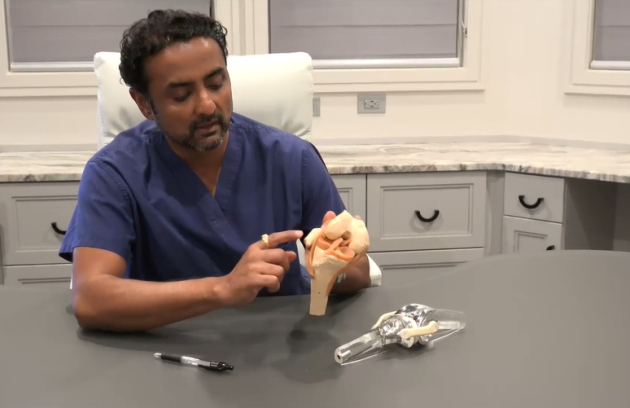
Opt for Jiffy Knee's revolutionary knee replacement. Faster healing, minimal pain, and a 30-minute procedure. Start your journey to pain-free living today.
This is a hot topic for us boomers, wondering how concerned to be some aches and pains induced from running (whether it’s knees, hips, ankles, metatarsal joints, etc.).
A Jiffy knee is a different knee replacement than traditional knee replacement where they do not cut tendons/ligaments.
Much faster recovery
(1) How can you possibly have such a diversity in recommended procedures, between a ‘jiffy knee’ (whatever that is) install according to your ortho, versus simply pain that PRP will take care of according to your PT?
(2) What exactly did the PT say is causing the pain in order to be able to recommend PRP versus just doing conservative PT exercises?
Excellent questions, 1} the ortho said it went like this, it's not an injury per say, the MRI showed it's just bone on bone and he did not think 'scoping it it" like they used to do would do any good, it's just "wore out". The next step is when it hurts so bad you can't walk was to get a traditional knee replacement.
2/ my acupuncturist said to check out this pain doc who does PRP. I decided to check it out as going to acupuncture really helps. The Pain doc said she disagreed with ortho's take on MRI. She said it looked like an injury and was confident PRP would stop the pain and keep me active. She also adjusted my knee and it helped. Nobody has mentioned conservative PT.
Some days I walk and ride my Peloton and other days just do my 2 mile walk with dog in the morning. But I have god awful pain off and on throughout the day.
With PRP you can nothing that thins the blood a week before and a week after, so I am in more pain than usual. I appreciate your questions.
(1) How can you possibly have such a diversity in recommended procedures, between a ‘jiffy knee’ (whatever that is) install according to your ortho, versus simply pain that PRP will take care of according to your PT?
(2) What exactly did the PT say is causing the pain in order to be able to recommend PRP versus just doing conservative PT exercises?
Excellent questions, 1} the ortho said it went like this, it's not an injury per say, the MRI showed it's just bone on bone and he did not think 'scoping it it" like they used to do would do any good, it's just "wore out". The next step is when it hurts so bad you can't walk was to get a traditional knee replacement.
2/ my acupuncturist said to check out this pain doc who does PRP. I decided to check it out as going to acupuncture really helps. The Pain doc said she disagreed with ortho's take on MRI. She said it looked like an injury and was confident PRP would stop the pain and keep me active. She also adjusted my knee and it helped. Nobody has mentioned conservative PT.
Some days I walk and ride my Peloton and other days just do my 2 mile walk with dog in the morning. But I have god awful pain off and on throughout the day.
With PRP you can nothing that thins the blood a week before and a week after, so I am in more pain than usual. I appreciate your questions.
I’m having trouble understanding this part (from your ortho):
1} the ortho said it went like this, it's not an injury per say, the MRI showed it's just bone on bone and he did not think 'scoping it it" like they used to do would do any good, it's just "wore out". The next step is when it hurts so bad you can't walk was to get a traditional knee replacement.
What specifically do you mean by “scoping it”? Using a fiber optic scope to just look at it should not make things worse. What else is he referring to with “scoping it”? Why would it do no good? What exactly does he want to do?
A degenerative meniscus is a tear in the meniscus cartilage of the knee that occurs as part of the aging process and is often not caused by an injury:
What it is The meniscus is a C-shaped tissue that cushions the knee and helps with joint stability. A degenerative meniscus is a tear in this cartilage that can include multiple small tears, irregularities, or fraying.
Who it affects Degenerative meniscus tears are most common in middle-aged or older people.
Symptoms Symptoms include pain, swelling, stiffness, clicking, catching, or locking in the knee. Symptoms can develop slowly or start suddenly.
Causes Degenerative meniscus tears can be caused by a number of factors, including being overweight, having weak thigh and bottom muscles, or having tight lower limb muscles.
Treatment Treatment options depend on the location of the tear and other factors.
Significance Although uncomfortable, small tears in the meniscus don't necessarily mean the joint will deteriorate.
Why all the hate? Yes, posters are snarky, but that is no reason to sh\t on their faces, slap them, attack the trans community, and generally lose your mind.
You need to start a different thread called "How Was Your PRP Therapy and Recovery?" and try to build a network of fellow runners who came back from what you experienced.
If they all tell you to start hiking, rowing, rock climbing, swimming, or biking, don't scoff at that idea. I know a lot of runners who can't run anymore. The only real question is will you become sedentary or will you learn to love some other athletic challenge?
Excellent questions, 1} the ortho said it went like this, it's not an injury per say, the MRI showed it's just bone on bone and he did not think 'scoping it it" like they used to do would do any good, it's just "wore out". The next step is when it hurts so bad you can't walk was to get a traditional knee replacement.
2/ my acupuncturist said to check out this pain doc who does PRP. I decided to check it out as going to acupuncture really helps. The Pain doc said she disagreed with ortho's take on MRI. She said it looked like an injury and was confident PRP would stop the pain and keep me active. She also adjusted my knee and it helped. Nobody has mentioned conservative PT.
Some days I walk and ride my Peloton and other days just do my 2 mile walk with dog in the morning. But I have god awful pain off and on throughout the day.
With PRP you can nothing that thins the blood a week before and a week after, so I am in more pain than usual. I appreciate your questions.
I’m having trouble understanding this part (from your ortho):
1} the ortho said it went like this, it's not an injury per say, the MRI showed it's just bone on bone and he did not think 'scoping it it" like they used to do would do any good, it's just "wore out". The next step is when it hurts so bad you can't walk was to get a traditional knee replacement.
What specifically do you mean by “scoping it”? Using a fiber optic scope to just look at it should not make things worse. What else is he referring to with “scoping it”? Why would it do no good? What exactly does he want to do?
He wants to do nothing until it hurts so bad that I don't want to walk. Do yoga{which I did daily} or exercise. The ortho {Georgetown medical degree} said scoping the knee brings harm to the knee. No such things as a harmless operation. He feels too many orthos want to cut. I know nothing about fiber optic scopes.
I’m having trouble understanding this part (from your ortho):
1} the ortho said it went like this, it's not an injury per say, the MRI showed it's just bone on bone and he did not think 'scoping it it" like they used to do would do any good, it's just "wore out". The next step is when it hurts so bad you can't walk was to get a traditional knee replacement.
What specifically do you mean by “scoping it”? Using a fiber optic scope to just look at it should not make things worse. What else is he referring to with “scoping it”? Why would it do no good? What exactly does he want to do?
He wants to do nothing until it hurts so bad that I don't want to walk. Do yoga{which I did daily} or exercise. The ortho {Georgetown medical degree} said scoping the knee brings harm to the knee. No such things as a harmless operation. He feels too many orthos want to cut. I know nothing about fiber optic scopes.
Well obviously, you are currently pain-wise past the point where any further light jogging (and maybe even walking) will do anything regeneratively. Back up and reassess after the pain goes down. You probably want to avoid the bike initially (the bike can screw up knees). That leaves the water for getting in exercise mobility; you can do stuff in the water besides just swimming.
You should stop doing things that cause harm. It doesn’t make sense to have surgery for a preventable situation.
That's what I am not understanding. I am accepting that I may not be able to run again. I'd like to walk without pain. I ride the family Peloton and walk a couple miles in the morning and it causes great pain. All these recommendations to rock climb and so forth are not going to happen in my current state. Maybe I am not good at explaining?
Just wondering did it just happen? If so the first week or two are difficult . There is no hiding everyone will know you are hurt when you walk on stairs. The pain is awful. If you read online a meniscus may be able to heal. If the ligament is involved it will not. Online they have you do some isometric quad strengtheners and other exercise to do. Last year in 2 weeks will be the anniversary. I had a sore knee and the meniscus suddenly tore. As of three weeks ago I am doing my regular training. I did do the equivalent of about 1257 miles of aqua jogging in the pool and added distance out of the pool gradually over many months. I did not go to a doctor. About 37 years ago I had a snap while running 120 miles a week. The other knee. It took me 13 months until I had my first day without pain. The PT at the school had me do the same things that are online today. I think I am living some karma in this life. I did something wrong last time.
The first time I did my knee exercises every day for an hour the second time is 5 days a week for about 20 minutes.
Excellent questions, 1} the ortho said it went like this, it's not an injury per say, the MRI showed it's just bone on bone and...
I had this on my right knee. It was bone on bone on the lower (bottom) edge of the kneecap and the place where the knee cap rubs the lower leg bone. An MRI showed that the cartilage was gone along those locations. In my case... stressing that IN MY CASE... the knee cap was scraping against the lower leg bone when my knee was fully extended. That also coinsides almost with when the foot impacts the ground. Thus, the impact was moving up the leg to the knee cap when it was in that compromised position and putting a lot of wear on that spot. That was six years ago. It's no longer a problem, although I do have to manage it when I feel a knee twinge.
Here are the steps I took. (NOTE: I'm not claiming this will work for you. It's just input for a successful resolution of a very similar problem.)
1. I got a synthetic hyaluronic acid injection in the knee. (Synvisc? It sounded something like that.) I was given the option of two injections three months apart or a larger, one time dose. I chose the one time dose. I was told it would last maybe six months. It's been six years, but that's not all I did.
2. I went to PT. I don't think the PT helped much, but maybe it was part of the process.
3. I changed my stride to never land with my knee fully extended. To help prevent that, I did 3/4 hamstring curls to tighten and shorten the hamstring. I NEVER did hamstring curls to full extension. NOTE: You know how some bodybuilders have done so many short arm curls that they walk with their elbows always bent? Well, I decided it would try to do something like that. This made a BIG difference. It was so big that when I slack off on the hamstring curls for a few weeks, I can feel a twinge in the knee cap so I have to hit the gym again to make sure my knee wasn't slightly hyperextending on impact.
Synvisc is covered by Medicare so I didn't have to pay for it.
- - - - - -
New Topic: PRP
I had a partially torn glute medius insertional tendon that got so bad it prevented me from running. I did two PRP injections about 3 months apart. The first inject was about 80% effective, but I retore the tendon and had to get a 2nd PRP injection. I was more careful in recovery that time and in hasn't returned.
You're doing the right thing by getting the PRP injections. If they don't work, you can move on to knee cap surgery or whatever the jiffy knee is.
This post was edited 6 minutes after it was posted.
Excellent questions, 1} the ortho said it went like this, it's not an injury per say, the MRI showed it's just bone on bone and...
I had this on my right knee. It was bone on bone on the lower (bottom) edge of the kneecap and the place where the knee cap rubs the lower leg bone. An MRI showed that the cartilage was gone along those locations. In my case... stressing that IN MY CASE... the knee cap was scraping against the lower leg bone when my knee was fully extended. That also coinsides almost with when the foot impacts the ground. Thus, the impact was moving up the leg to the knee cap when it was in that compromised position and putting a lot of wear on that spot. That was six years ago. It's no longer a problem, although I do have to manage it when I feel a knee twinge.
Here are the steps I took. (NOTE: I'm not claiming this will work for you. It's just input for a successful resolution of a very similar problem.)
1. I got a synthetic hyaluronic acid injection in the knee. (Synvisc? It sounded something like that.) I was given the option of two injections three months apart or a larger, one time dose. I chose the one time dose. I was told it would last maybe six months. It's been six years, but that's not all I did.
2. I went to PT. I don't think the PT helped much, but maybe it was part of the process.
3. I changed my stride to never land with my knee fully extended. To help prevent that, I did 3/4 hamstring curls to tighten and shorten the hamstring. I NEVER did hamstring curls to full extension. NOTE: You know how some bodybuilders have done so many short arm curls that they walk with their elbows always bent? Well, I decided it would try to do something like that. This made a BIG difference. It was so big that when I slack off on the hamstring curls for a few weeks, I can feel a twinge in the knee cap so I have to hit the gym again to make sure my knee wasn't slightly hyperextending on impact.
Synvisc is covered by Medicare so I didn't have to pay for it.
- - - - - -
New Topic: PRP
I had a partially torn glute medius insertional tendon that got so bad it prevented me from running. I did two PRP injections about 3 months apart. The first inject was about 80% effective, but I retore the tendon and had to get a 2nd PRP injection. I was more careful in recovery that time and in hasn't returned.
You're doing the right thing by getting the PRP injections. If they don't work, you can move on to knee cap surgery or whatever the jiffy knee is.
Risky, Sounds very similar. Getting my PRP injections this afternoon.