A highly reductive view of running is that your vo2 max, running economy and body weight give you your performance.
Don't @ me that it's more complicated than that, I know it is.
I'd love to hear more about Kristian Blummenfelt's performance and how much they've looked into it.
He clearly is carrying a high % body fat relative to his competition.
If him and his team leave no stone unturned as they claim, they've come to the conclusion that reducing his body weight would either impact running economy or vo2 max more than the benefits.
There was another female Norwegian triathlete with a similar build which makes me wonder what they're up to.
Would love to know more of their thinking - it's rare you get extreme outliers at the highest level of sport and that's where a lot of learning can happen for subjects like this.
Why is any discussion about weight and running off limits now? It seems we can both acknowledge that we have to be sensitive with those who have a history of disordered eating and not tell lies about food having no effect on running? We can both eat foods that help us achieve our goals and not be obsessed with the number on the scale. The eat anything seems like a lie, especially when it comes from someone who is smaller than the majority of the population.
Because certain coaches trying to make a stick figure out of people like Mary Cain, destroying her health, self-esteem and overall self was not and will never be okay.
But so many women would be faster if they lost some weight. Most people are overweight.
You’ll get no argument from me. But it isn’t worth a career to tell the female athlete that she needs to lose weight. And that’s exactly what it cost you. A male will be considered guilty until proven innocent.
Alistair has women that are near death from weight loss and had 2 women that entered the Olympic Marathon with bone issues as well as others that couldn’t race at the Olympic Trials for the same reason and he still has a job.
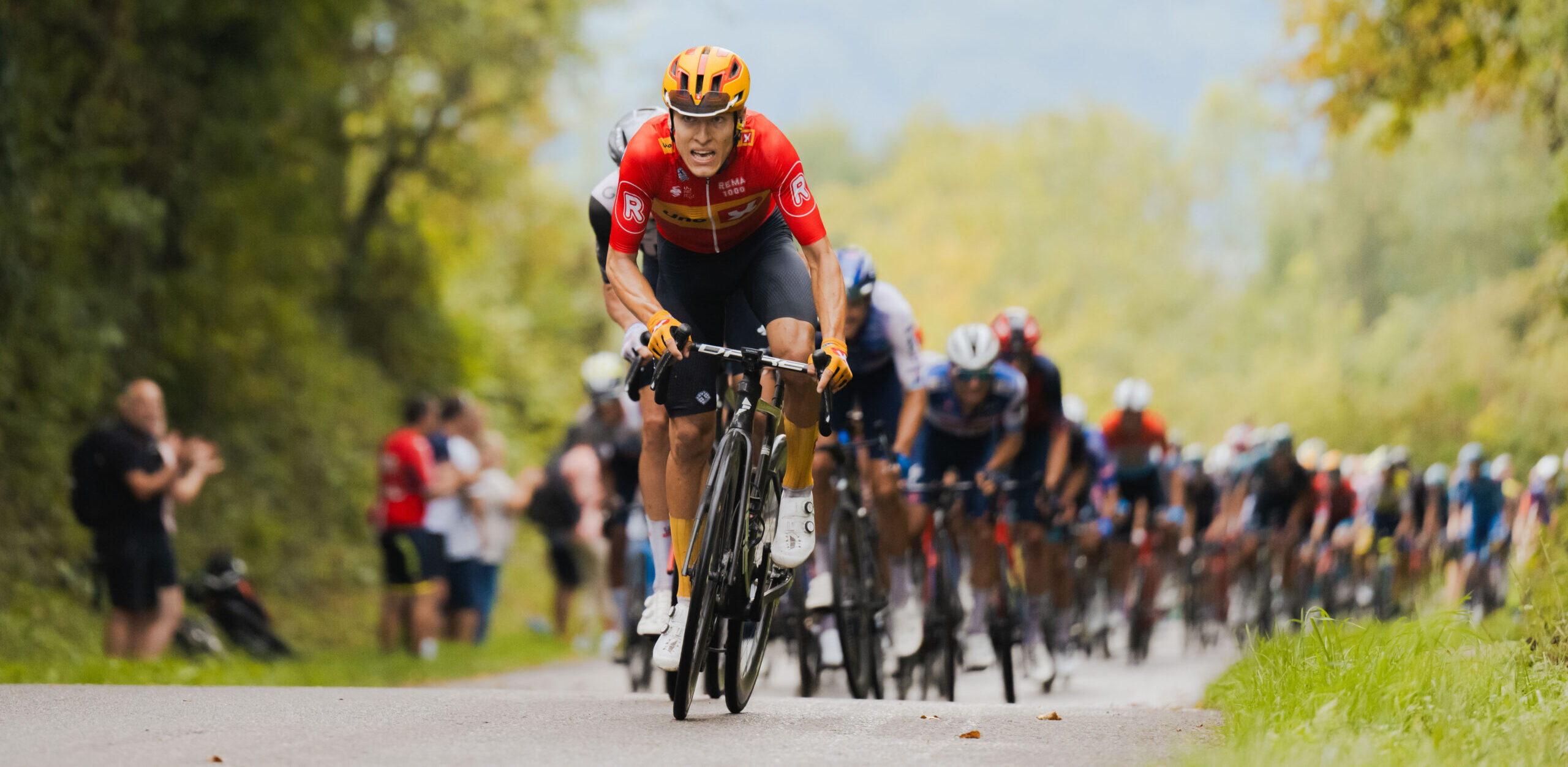
Slightly different as cycling has different elements (climber vs roleur) but another example is Jonas Abrahamsen - also Norwegian - gained 20kg to become more competitive at cycling. MVP for my fantasy TDF team this year. Here's an article from last year about him:
Slightly different as cycling has different elements (climber vs roleur) but another example is Jonas Abrahamsen - also Norwegian - gained 20kg to become more competitive at cycling. MVP for my fantasy TDF team this year. Here's an article from last year about him:
Yeah, it's such a difficult thing to balance, especially with women. When you consider just how bad RED-S is and look at the percent of women distance runners who have had RED-S (40% iirc), and think about how many years of running have been ruined via that (stress# etc) along with reproductive health you quickly eer on the side of caution. Especially if interested in long term development where consistency in terms of injury and sufficient fuelling for adaptations is necessary. Men can afford to fly a bit closer to the sun but there are still risks, and it is so important to do it in a very slow and cautious manner.
With all that in mind I think it's generally discussed less these days as actively trying to lose weight has such a high risk of causing RED-S, whilst with sufficient training excess weight will naturally be lost.
Such weight problems can be solved from one day to the other:
The solution is to provide a lower BMI limit, where people, with a BMI value lower than that, are not allowed to run or get a penalty. This was very successful introduced at sky-jumping, where they also had such weight problems and solved that from one day to the other.
Any university/federation could easily implement such BMI limit. Problem solved, easy.
Such weight problems can be solved from one day to the other:
The solution is to provide a lower BMI limit, where people, with a BMI value lower than that, are not allowed to run or get a penalty. This was very successful introduced at sky-jumping, where they also had such weight problems and solved that from one day to the other.
Any university/federation could easily implement such BMI limit. Problem solved, easy.
Terrible solution, RED-S is common even in female athletes with normal healthy weight (as measured via BMI). Likewise, I've had female healthy athletes (menstrual/hormonal/bone health) with BMIs down at 17.
there is really no comparable performance enhancer like losing weight
for the majority of runners that aren't already/naturally extremely lean, it's more effective to lose significant weight than it is to use a gold standard oxygen vector substance like EPO
because of this fact, combined with women tending to be more attractive when on the leaner side in an otherwise obese world, women and girls are at somewhat extreme risk of compromising their health mostly unconsciously in the pursuit of athletic, social and sexual relevance/advancement
there are an order of magnitude more horror stories (almost every top female hs distance runner ever) than success stories (many successful female pros were not quite the best of the best in hs, though almost always very close)
the result is that discussion is highly censored, though i totally understand it's for the best intentions, even if i don't agree as it's my opinion ignorance only perpetuates the problem
While both arguments ("losing weight is a performance enhancer" and "losing weight makes one more attractive in an obese world") are valid, I don't think they work together as competitive runners (of any sex) who would care about that performance enhancements are already quite lean, some would actually benefit in looks from gaining mass. This last one depends on the standards, of course. But getting that performance edge means going from 'lean' to 'emaciated' in most cases.
This does not disprove your resulting point though, perhaps even makes it more straightforward. Losing more weight means sacrificing health, attractiveness, food habits and whatever else just for the sake of cutting a few seconds off your track times; and even with all that effort how likely are you to get to the Olympics? There's only a handful of Olympic track athletes out of 8 billions of earthlings. Of course encouraging athletes to go for it is questionable at best.
On the contrary, they're more likely to take it too seriously and end up with amenorrhea and a bone injury for which you are directly responsible.
Good, consistent, progressive, well-fuelled training will eventually do the work for you over the long term.
You need to read more on this. Its about a probability to get it, reducing the risk of it.
Any kind of sport that has a weight factor in it (e.g. running), will be at higher risk (of RED-S) than other sports.
I understand that. But BMI is established to be an absolutely terrible measure of healthy weight with public health researchers trying to move past it (and failing) for decades (ease trumping accuracy), especially given how it varies so markedly with body proportion. For example, female athletes with long legs and short torso get far far far lower BMI scores than shorter legs, longer torso for the same body fat %. At best it could be use as a screening tool to signal for further testing, excluding people from participating based on a low BMI is frankly nonsense.
1. You seem to have been able to start a thread about it :-)
2. The majority of runners should focus on their training and recovery before diet. If you're thoughtful about training and recovery, your body will be in a sustainably fit version of itself.
3. When weight itself is the goal, most people lose weight incorrectly. Therefore it's good to be sensitive/thoughtful. Rather than simply eating less, improve the quality of what you're eating. Always eat when you're hungry, but do so with healthier, more filling foods that you still enjoy. Work with a nutritionist or medical professional.
Reading advice on these boards -- simple comments like "most people eat too much" -- pushed me to restrict my eating, develop an eating disorder, and my running worsened.
Why is any discussion about weight and running off limits now? It seems we can both acknowledge that we have to be sensitive with those who have a history of disordered eating and not tell lies about food having no effect on running? We can both eat foods that help us achieve our goals and not be obsessed with the number on the scale. The eat anything seems like a lie, especially when it comes from someone who is smaller than the majority of the population.
Well, the bigger question is, what is it that you feel like you "need" or "have" to say about weight yet feel silenced about? That will tell you more than any of us can tell you.
And to me, the problem is that there are thousands if not millions of people out there who have something to say about how "I" should be eating, looking, etc. Many of them are posting here. The "weight" issue is simply a red herring for the bigger issue that, for whatever reason, a bunch of insecure losers want to build fantasy hierarchies and then force others to participate in them.
Help us build the best running shoe review site for a chance to win a LetsRun t-shirt.Help us build the best running shoe review site for a chance to win one of 10 LetsRun t-shirts.