Please explain, in specifics, how hedge funds take advantage of the poor and middle class.
The fact that you don't understand it shows how far OUT OF TOUCH you are.
Poor and middle class people generally don't have money to invest in hedge funds, so by definition hedge funds exist only to serve the already wealthy.
The whole system is set up to exploit low wage workers to maximize profits for the fat executives and fat investors.
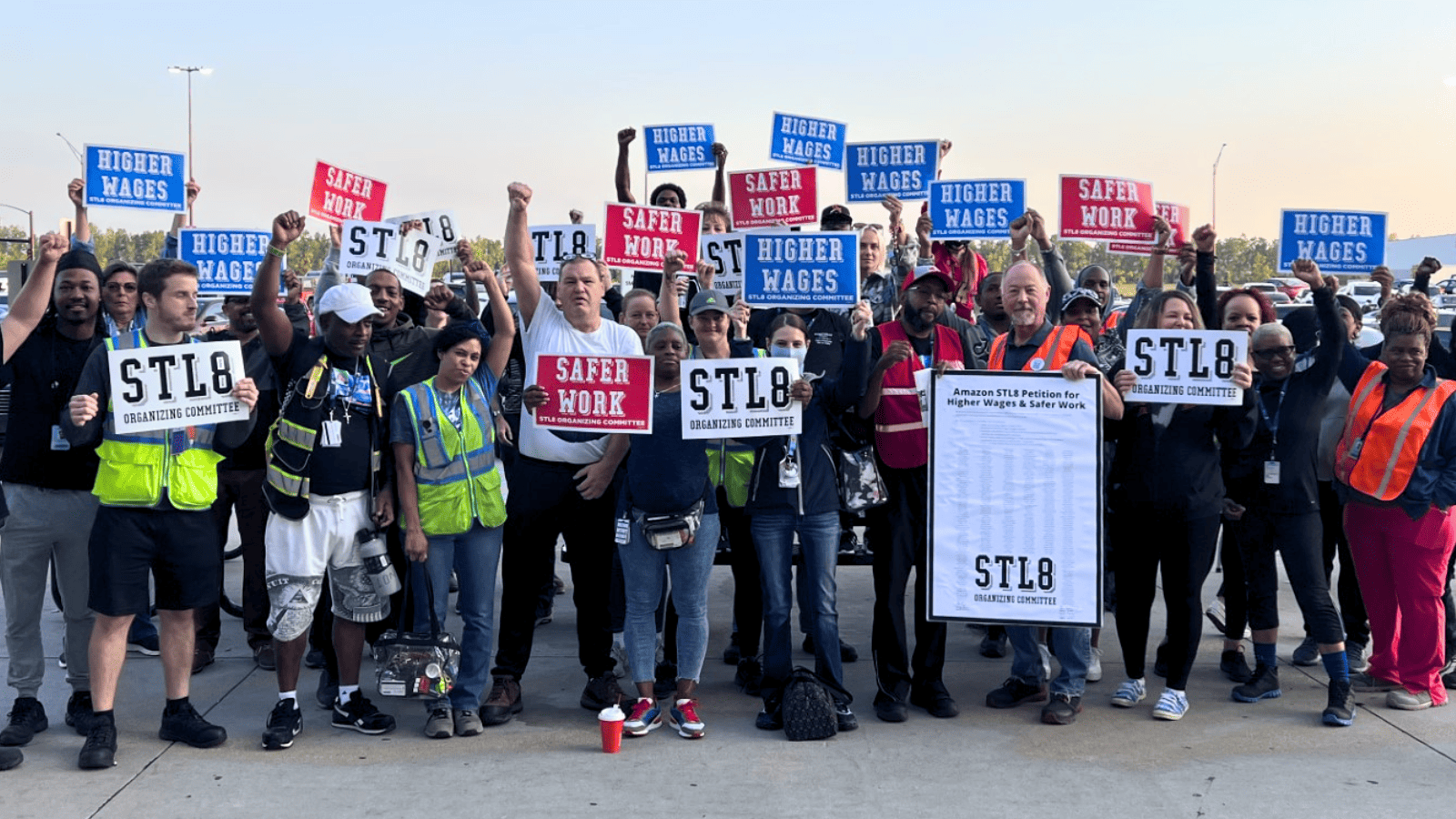
Amazon is a great example, Bezos becomes the richest person in the world, the investors make billions, and the workers get paid terribly and even have to urinate in water bottles because they don't get bathroom breaks. Amazon goes to extreme lengths to prevent workers from forming a union.
A more direct example is the common hedge fund practice of "short-selling" that is highly unethical, but legal. This involves selling a stock that you don't own so you can buy it back later at a lower price. They are betting that a company will fail, and they frequently take steps to increase the chances that those companies fail.
Short selling generally always causes market crashes, or makes market crashes MUCH worse. Short sellers made record profits in the 2008 crash and the recent bank crashes.
This popped up after my post re: JS not being a hedge fund and is just so laughably incorrect that it's worth addressing.
Plenty of blue collar/working class/middle class individuals have $$$ in hedge funds in the form of pensions and retirement account holdings. Firefighters, teachers, tradespeople, etc. The notion that hedge funds only exist as a tool for the wealthy is flat wrong. The purpose of a hedge fund is to make their investors returns uncorrelated with major indices -- i.e., to provide a steady +X%/year even in S&P down years. This is incredibly attractive to organizations that want consistent, low-risk returns + the ability to park money without getting wiped out in a single big market move [again: employee pension funds, retirement holdings, etc].
Short selling occurs in every single shortable financial product every market hour of the day and is neither inherently unethical nor detrimental. At its core, short selling is a risk management tool -- you have two similar assets, you buy one / short the other to keep your exposure to large market swings low. Markets that disallow short selling (i.e., certain foreign equity markets) are actually way more prone to violent crashes -- and when those violent crashes occur, they wipe out investors [for the third time: organizations, Roth IRAs and 401ks, pensions and retirement funds, etc. -- not just ultra-rich individual investors]. There's a coherent argument to be made against pure speculative short selling (you haven't made it) -- which is, in fact, illegal for many institutional market participants.
Perella Weinberg paid 23 yr old first years a $400k bonus this yr making the starting package a new record of over $600k total. Rare year where traditional analyst beat the Quants. PW one of the few forms though with big 23 payout.
I'm answer to your question, it's about location Citadel is Chicago/Miami? and Jain is NYC. Less tax then w Citadel, but NYC more fun.
BS. Complete BS. No bank paid over $600k as a starting salary to an analyst.
Yes. My son started as an analyst last year with a BS from one of the top Business Schools (but not Ivy) and it was a well know firm, but not one of the handfull of elite firms, and his starting was about $120 K base salary and something like $40 annual bonus on average, first year analyst. Working from memory here, with a margin of error of maybe $20K but not more.
Please explain, in specifics, how hedge funds take advantage of the poor and middle class.
The fact that you don't understand it shows how far OUT OF TOUCH you are.
Poor and middle class people generally don't have money to invest in hedge funds, so by definition hedge funds exist only to serve the already wealthy.
The whole system is set up to exploit low wage workers to maximize profits for the fat executives and fat investors.
Amazon is a great example, Bezos becomes the richest person in the world, the investors make billions, and the workers get paid terribly and even have to urinate in water bottles because they don't get bathroom breaks. Amazon goes to extreme lengths to prevent workers from forming a union.
A more direct example is the common hedge fund practice of "short-selling" that is highly unethical, but legal. This involves selling a stock that you don't own so you can buy it back later at a lower price. They are betting that a company will fail, and they frequently take steps to increase the chances that those companies fail.
Short selling generally always causes market crashes, or makes market crashes MUCH worse. Short sellers made record profits in the 2008 crash and the recent bank crashes.
One of the worst posts I've seen on here. You claimed hedge funds take advantage of the poor and middle class. When I asked for examples of how exactly this happens, you begin spouting about Amazon (completely unrelated to the topic at hand). The bit that you do connect back to hedge funds, although indirectly, shows you do not understand ethics or even more generally how trading/investing works.
I somewhat agree with your point that HFs exist only to serve the wealthy. I do not agree, and one can not make the statement, that they take advantage of the poor and middle class. Clearly this is something you heard and emotionally agreed with, without actually taking time to understand how it (or in this case, how it doesn't) work.
Sounds interesting. Both firms have underperformed the S&P historically. Crazy to me that there are jobs that pay that much and use that advanced of techniques just to underperform the market.
I would be willing to underperform the S&P for $250k. DM me.
The fact that you don't understand it shows how far OUT OF TOUCH you are.
Poor and middle class people generally don't have money to invest in hedge funds, so by definition hedge funds exist only to serve the already wealthy.
The whole system is set up to exploit low wage workers to maximize profits for the fat executives and fat investors.
Amazon is a great example, Bezos becomes the richest person in the world, the investors make billions, and the workers get paid terribly and even have to urinate in water bottles because they don't get bathroom breaks. Amazon goes to extreme lengths to prevent workers from forming a union.
A more direct example is the common hedge fund practice of "short-selling" that is highly unethical, but legal. This involves selling a stock that you don't own so you can buy it back later at a lower price. They are betting that a company will fail, and they frequently take steps to increase the chances that those companies fail.
Short selling generally always causes market crashes, or makes market crashes MUCH worse. Short sellers made record profits in the 2008 crash and the recent bank crashes.
One of the worst posts I've seen on here. You claimed hedge funds take advantage of the poor and middle class. When I asked for examples of how exactly this happens, you begin spouting about Amazon (completely unrelated to the topic at hand). The bit that you do connect back to hedge funds, although indirectly, shows you do not understand ethics or even more generally how trading/investing works.
I somewhat agree with your point that HFs exist only to serve the wealthy. I do not agree, and one can not make the statement, that they take advantage of the poor and middle class. Clearly this is something you heard and emotionally agreed with, without actually taking time to understand how it (or in this case, how it doesn't) work.
You are DENSE. Amazon is a perfect example because everyone who invested in Amazon early got extremely rich, including hedge funds. But you know who didn't get rich? THE AMAZON WORKERS. 1000000x more profit is shared with the investors than with the workers. Amazon profits $250 BILLION and pays employees far BELOW the average for their positions.
Citadel is a much larger org, active in almost all markets.
Jane Street is smaller, but still a large player in HFT and market making. Less principal trading.
I am a geek, and so would probably pick Jane Street, just because it's a good name, they are focused, and it's less of a meat grinder. More of a O'Connor Trading (90s) vibe.
A friend of mine was renting an apartment to a first year JS analyst. I forget the exact number, but the renter sent him the offer letter with something like a $275 base salary on it. Doesn’t surprise me that all-in comp could be this high
Did you apply to Renaissance technologies? There's a joke that the best physicists/mathematicians are not at MIT/Harvard/etc, but in Jim Simons office....
What is the Fractal Market hypothesis? Is it a claim that the fluctuations in market are fractal? If so, people could make a lot of money (but why haven't they yet, -- isn't Black-Scholes pretty good?)
"Fractal market hypothesis utilizing elements of chaos theory" sounds like something out of a satire. Read J R by William Gaddis before you start...these words sound meaningful to someone who doesn't really understand dynamical systems, or markets. Chaos theory is what you hear about in undergrad that makes physics sound cool.
Zero chance Jane Street offered you that much straight out of school.
They pay upwards of $400k even to new (under)grads. But they hire math (physics, or even chemistry) olympiad medalists from schools like MIT, Caltech, Princeton.
One of the worst posts I've seen on here. You claimed hedge funds take advantage of the poor and middle class. When I asked for examples of how exactly this happens, you begin spouting about Amazon (completely unrelated to the topic at hand). The bit that you do connect back to hedge funds, although indirectly, shows you do not understand ethics or even more generally how trading/investing works.
I somewhat agree with your point that HFs exist only to serve the wealthy. I do not agree, and one can not make the statement, that they take advantage of the poor and middle class. Clearly this is something you heard and emotionally agreed with, without actually taking time to understand how it (or in this case, how it doesn't) work.
You are DENSE. Amazon is a perfect example because everyone who invested in Amazon early got extremely rich, including hedge funds. But you know who didn't get rich? THE AMAZON WORKERS. 1000000x more profit is shared with the investors than with the workers. Amazon profits $250 BILLION and pays employees far BELOW the average for their positions.
61% of Americans own stocks (either directly or through 401Ks). Based on Amazon's size, it can be assumed that most of those individuals own at least one partial share (if not much more) of Amazon.
Amazon employs 1.1M people in the US compared to the number of adults who own stocks in the US (258M * 61% = 157M), of course they returned more to their shareholders than they did to employees. Amazon has made many many people rich, most of whom were not in any way related to a hedge fund.
Even if what you were saying is true, which it isn't, this is totally unrelated to your initial claim that hedge funds exploit the lower and middle class.
Nice thread. I am an engineer who founded a firm that creates microwave towers that we sell to your firms for tens of millions a year. I laugh at all of you as you walk into your office as I am finishing my daily long run. I drive a Pagani Zonda HP Barchetta and run a 13:05 5,000... in trainers.