Distance running doesn't speed up the aging process. Activating sirt1 protects you from aging, and endurance exercise is the ideal way to increase sirt1 levels throughout your body. https://www.ncbi.nlm.nih.gov/pmc/articles/PMC4113516/
-
00
-
RyecorDone wrote:
Distance running doesn't speed up the aging process. Activating sirt1 protects you from aging, and endurance exercise is the ideal way to increase sirt1 levels throughout your body.
https://www.ncbi.nlm.nih.gov/pmc/articles/PMC4113516/Here's the article I thought I was linking to .
https://www.sciencedirect.com/science/article/pii/S221323172030080X00 -
On the contrary.
00 -
Jamin hypochondriac confirmed.
Dude, you're not a Funko Pop. You won't remain in "mint condition" by never opening your box. That's the whole point of life - not to maintain your highest resale value.
Although let us know how the experiment goes.
20 -
fisky wrote:
I quit "distance" running in 2000 when medical tests at an anti-aging clinic showed that I was not recovering from my hard training efforts and that over time, it would age me faster than a more moderate approach to running.
First problem: you charted your last 21 years of training based on advice at an "anti-aging" clinic.
What was the test they gave you? A "how much are you recovering from your hard efforts" test? Or did the doc (it was a doc, right?) run some bloodwork and offer a recommendation he wasn't qualified to make?
Regardless of your success in the 400/800...the willingness to take running advice from an anti-aging clinic shows where your priorities were. The fact that you constantly talk about supplements and brag about the effects of your anti-aging routine (posting pics????) shows your priorities never shifted.
20 -
fisky wrote:
Years ago, I helped write a book on anti-aging so I had access to the leading world experts at the time. I've also had special blood work done to find markers of aging. So here is my take.
Distance running is far, far better than being sedentary with age, but it's not ideal for anti-aging because it puts a lot of stress on the immune system. When you're young, your immune system is strong enough to handle the stress, but as we age, the immune system can no longer fight off the stress. OTOH, recreational runners doing less than 30 miles per week are better, but they also need more steps to stay healthy as possible for as long as possible.
In my opinion, distance runners should be doing the following.
1. True HIIT workouts called SITs. SIT stands for sprint interval training. You can read about it by searching for Phil Campbell Sprint Interval Training. SIT training boosts T and hGH levels and helps speed up the metabolism.
2. Take supplements. As we age, our cells become less efficient. They're like little factories that need both enough materials and the right kind of raw materials to function properly To counteract this effect, you have two supplement options. a) Take supplements that specifically act to keep cells young and b) Ensure that your body gets enough of the right raw materials.
The RDA for supplements is for the average person. A distance runner will run more in a week than the average person will run in their entire 60 plus years of adult life. It's obvious that you need more raw materials. And to keep those cellular factories as efficient as possible, they should be the RIGHT raw materials.
What you should take and why would be too long to type, but I'll list what I'm taking if anyone cares.
3. Lift weights at least 3x/week. Weightlifting boosts metabolism. Some lifts can be heavy, but there's no need to go max weight. A set of reps done to exhaustion counts as a SIT effort. I do SIT level lifts every day. In the past week, I've done 31 sets of various lifts to exhaustion. This is NOT crossfit. SIT requires a 90 second break between sets. That break is optimal to allow the body's energy systems to return close enough to normal to benefit from the next set of SIT. A shorter time period for recovery is counterproductive to the SIT concept. I normally do another body part lift while waiting, but it will not be a SIT (to exhaustion) lift.
4. Eat healthy for you. Everyone is different. I have a friend who can't eat gluten, but for me, I tried going gluten free for 30 days and noticed no difference at all.
5. Assuming you're lifting and running, you should be taking a protein supplement every day. I usually add a scoop of unflavored protein to my morning coffee along with MCT oil. The oil helps fight hunger, cravings, and the post-carb crash that follows a high-carb meal. But again, that's what works for me. I try to get 90-100 grams of protein every day.
6. Sleep and stress reduction are also important. Some people on this board could take a more "we're all in this together" approach when it comes to discussion on vaccines, for example. We can just agree that we see it from different perspectives and try to explain that perspective.
Fisky could you list your supplements..top 5/6 that you find the most important.
00 -
Jzs wrote:
fisky wrote:
Years ago, I helped write a book on anti-aging so I had access to the leading world experts at the time. I've also had special blood work done to find markers of aging. So here is my take.
Distance running is far, far better than being sedentary with age, but it's not ideal for anti-aging because it puts a lot of stress on the immune system. When you're young, your immune system is strong enough to handle the stress, but as we age, the immune system can no longer fight off the stress. OTOH, recreational runners doing less than 30 miles per week are better, but they also need more steps to stay healthy as possible for as long as possible.
In my opinion, distance runners should be doing the following.
1. True HIIT workouts called SITs. SIT stands for sprint interval training. You can read about it by searching for Phil Campbell Sprint Interval Training. SIT training boosts T and hGH levels and helps speed up the metabolism.
2. Take supplements. As we age, our cells become less efficient. They're like little factories that need both enough materials and the right kind of raw materials to function properly To counteract this effect, you have two supplement options. a) Take supplements that specifically act to keep cells young and b) Ensure that your body gets enough of the right raw materials.
The RDA for supplements is for the average person. A distance runner will run more in a week than the average person will run in their entire 60 plus years of adult life. It's obvious that you need more raw materials. And to keep those cellular factories as efficient as possible, they should be the RIGHT raw materials.
What you should take and why would be too long to type, but I'll list what I'm taking if anyone cares.
3. Lift weights at least 3x/week. Weightlifting boosts metabolism. Some lifts can be heavy, but there's no need to go max weight. A set of reps done to exhaustion counts as a SIT effort. I do SIT level lifts every day. In the past week, I've done 31 sets of various lifts to exhaustion. This is NOT crossfit. SIT requires a 90 second break between sets. That break is optimal to allow the body's energy systems to return close enough to normal to benefit from the next set of SIT. A shorter time period for recovery is counterproductive to the SIT concept. I normally do another body part lift while waiting, but it will not be a SIT (to exhaustion) lift.
4. Eat healthy for you. Everyone is different. I have a friend who can't eat gluten, but for me, I tried going gluten free for 30 days and noticed no difference at all.
5. Assuming you're lifting and running, you should be taking a protein supplement every day. I usually add a scoop of unflavored protein to my morning coffee along with MCT oil. The oil helps fight hunger, cravings, and the post-carb crash that follows a high-carb meal. But again, that's what works for me. I try to get 90-100 grams of protein every day.
6. Sleep and stress reduction are also important. Some people on this board could take a more "we're all in this together" approach when it comes to discussion on vaccines, for example. We can just agree that we see it from different perspectives and try to explain that perspective.
Fisky could you list your supplements..top 5/6 that you find the most important.
He listed them on page 5.
00 -
jamin wrote:
Look at interviews with those Turpin kids, who were stuck in their rooms their rooms their whole lives ... they all look half their actual age. I noticed a similar phenomenon that acquaintenences I had who sat around and smoked weed their entire 20s usually aged well.
On the other hand, I notice that distance runners always look way older than their actual age. Probably distance running combined with the fact that distance runners are type-A personalities and so they live high-octane lives that include stressful careers, getting up early in the morning, drinking lots of coffee and taking supplements, etc.
Aging of your skin due to more exposure to the elements but not aging of your internals...
10 -
Some study showed that you're less likely to die from a heart attack if you're in your 40's and can run a mile in 7:45.
00 -
bartholomew_maxwell wrote:
Some study showed that you're less likely to die from a heart attack if you're in your 40's and can run a mile in 7:45.
Imagine the frustration of the poor 45-year old guy clutching his heart in agony after finishing in 7’46” starting at the grim reaper.
20 -
Carters Coupon Code is the best way to avail discounts on Carter's store shopping, there are lots of items on which you can avail the discount, amazing offers so visit the store by clicking the button and Save your Pocket now!
01 -
ope wrote:
fisky wrote:
I quit "distance" running in 2000 when medical tests at an anti-aging clinic showed that I was not recovering from my hard training efforts and that over time, it would age me faster than a more moderate approach to running.
First problem: you charted your last 21 years of training based on advice at an "anti-aging" clinic.
What was the test they gave you? A "how much are you recovering from your hard efforts" test? Or did the doc (it was a doc, right?) run some bloodwork and offer a recommendation he wasn't qualified to make?
Regardless of your success in the 400/800...the willingness to take running advice from an anti-aging clinic shows where your priorities were. The fact that you constantly talk about supplements and brag about the effects of your anti-aging routine (posting pics????) shows your priorities never shifted.
IIRC, the doctor, an MD, compared my blood chemistry to a database of a large number of people. The long term markers in my blood compared to people who were younger than me in this database. Note that at that time I was in my early 50s and had been an active runner for about 20 years and active in sports prior to that. However, the short term markers indicated that I was 70 years old.
Now, was this a valid test? I honestly don't know. The doctor is a very long term friend and he believes it. He's in his 80s and still plays tennis.
After the test, I started researching aging. What made sense to me was that very hard long distance running (14 miles the previous day), created a lot of byproducts that my body wasn't able to eliminate in 24 hours. Maybe it could when I was 30, but it wasn't doing the trick at 50. My body was recovering fast enough.
I'm not a doctor, but I reasoned that over time, this chronically elevated cortisol and whatever else was being measured wouldn't be healthy. Healthy aging and running were both very important to me... so what should I do?
I love running, but I hate the marathon and I'm not good at it so I made two changes. 1. I would keep running, but I would no longer train to competitively race the half or full marathon. I would focus shorter distances. 2. I would find supplements to counter these negative effects of intense training.
Subsequent research over the years, training for years with Jim Spivey (great coach!), and attending a virtual camp with Nick Willis, have confirmed (to me) that my body doesn't respond well to competitive distance training.
tl;dr
Running is very healthy. It is FAR better than a sedentary (ie, typical) lifestyle. As we age, it takes longer to recover from hard, long runs. Chronic lack of recovery doesn't eliminate running benefits, but it reduces them. Chronic lack of recovery can be treated by supplements and with training changes.
00 -
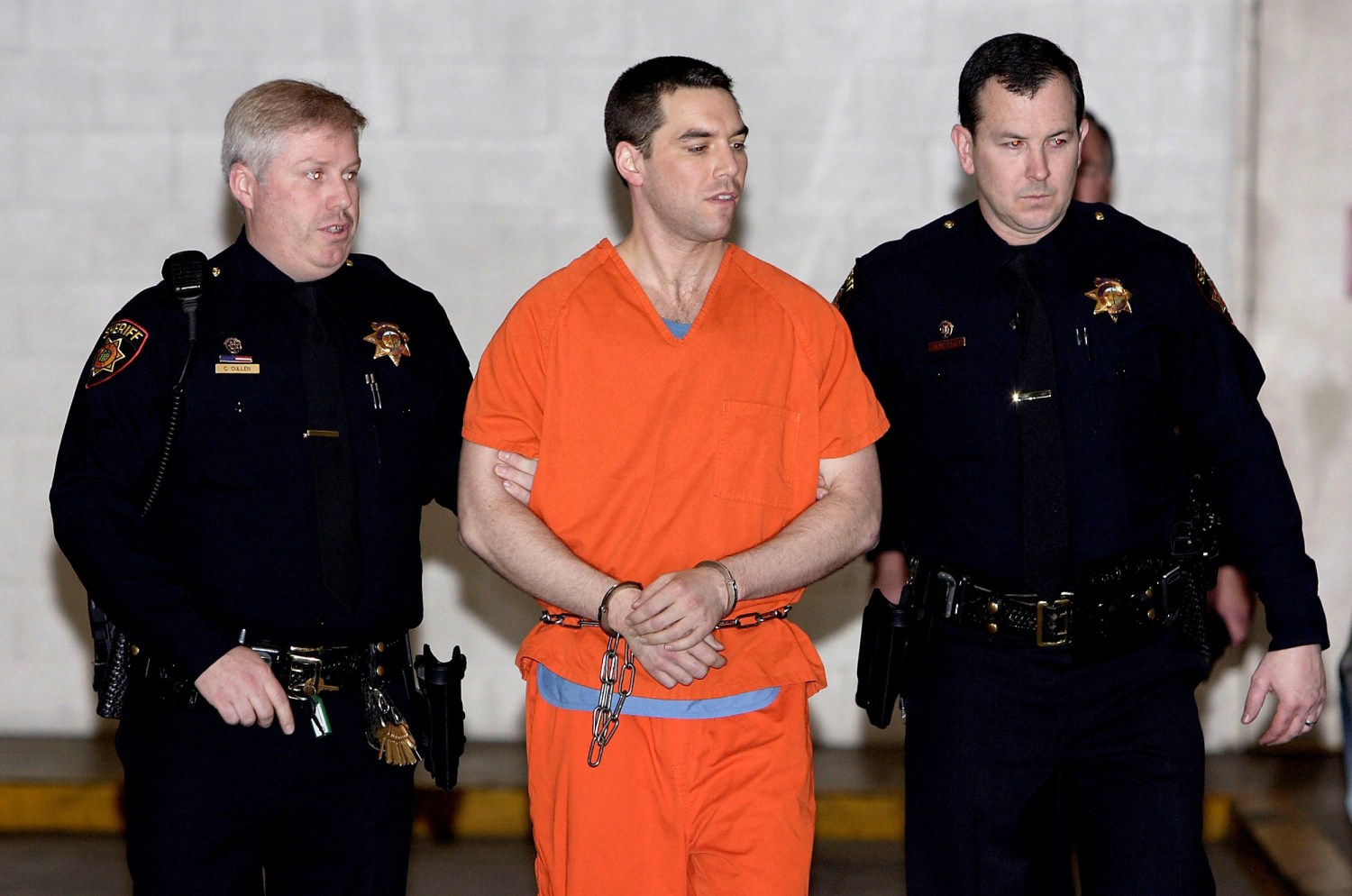
How does Scott Peterson look so young at age 48 (the age he was when pictured below)? Probably because no sun exposure or stress if you live in prison? Am I on to something here?
03 -
In my experience it is the opposite. At our HS reunion we took photos of our state champion XC team. There were six of us there. The lone soph wasn't in our class so just us six seniors. Comparing other photos those of us that were still active doing cardio type training we looked much better and younger than our other classmates.
00 -
Dermatologists: wear sunscreen every day, and avoid the sun as much as possible. Sun damage causes aging of the skin. Apply retinol every day to reverse aging, use a high quality facial cleanser and moisturizer.
Runners: I'ma run in the sun for 1-2 hours per day for a few decades with no sunscreen, wash my face with whatever soap is on sale at the grocery store, then wonder why it looks like I'm aging faster.
20 -
You probably live forty five minutes longer for every hour you run
10 -
Handfs in ukranian imagintive UNDERpANTS
00 -
sepreh wrote:
You probably live forty five minutes longer for every hour you run
So you are saying a net loss of 15 minutes of time in life.
10
2 posts were removed from this page.
What People Are Talking About On LetsRun
No top threads at the moment. Check back soon.